Steel is not supposed to float.
For decades, humanity's relationship with spaceflight was defined by a quiet, heartbreaking tragedy: disposability. We built towering monuments of engineering, fueled them with controlled lightning, and then watched them burn away in the upper atmosphere or sink quietly into forgotten ocean trenches. Millions of dollars, years of human sweat, and bleeding-edge science were treated as single-use packaging.
Then came a Tuesday off the coast of the Indian Ocean.
Picture an engineer sitting in a darkened control room in Hawthorne, California. Her eyes are bloodshot. She has spent seventy-two hours straight staring at telemetry data, running simulations of hypersonic entry, and calculating thermal tile integrity. Beside her, a half-empty cup of coffee has gone completely cold. She is not thinking about stock prices or press releases. She is thinking about plasma.
She is thinking about what happens when a stainless-steel titan, larger than a ten-story building, slams into the upper edge of Earth’s atmosphere traveling at nearly five miles per second.
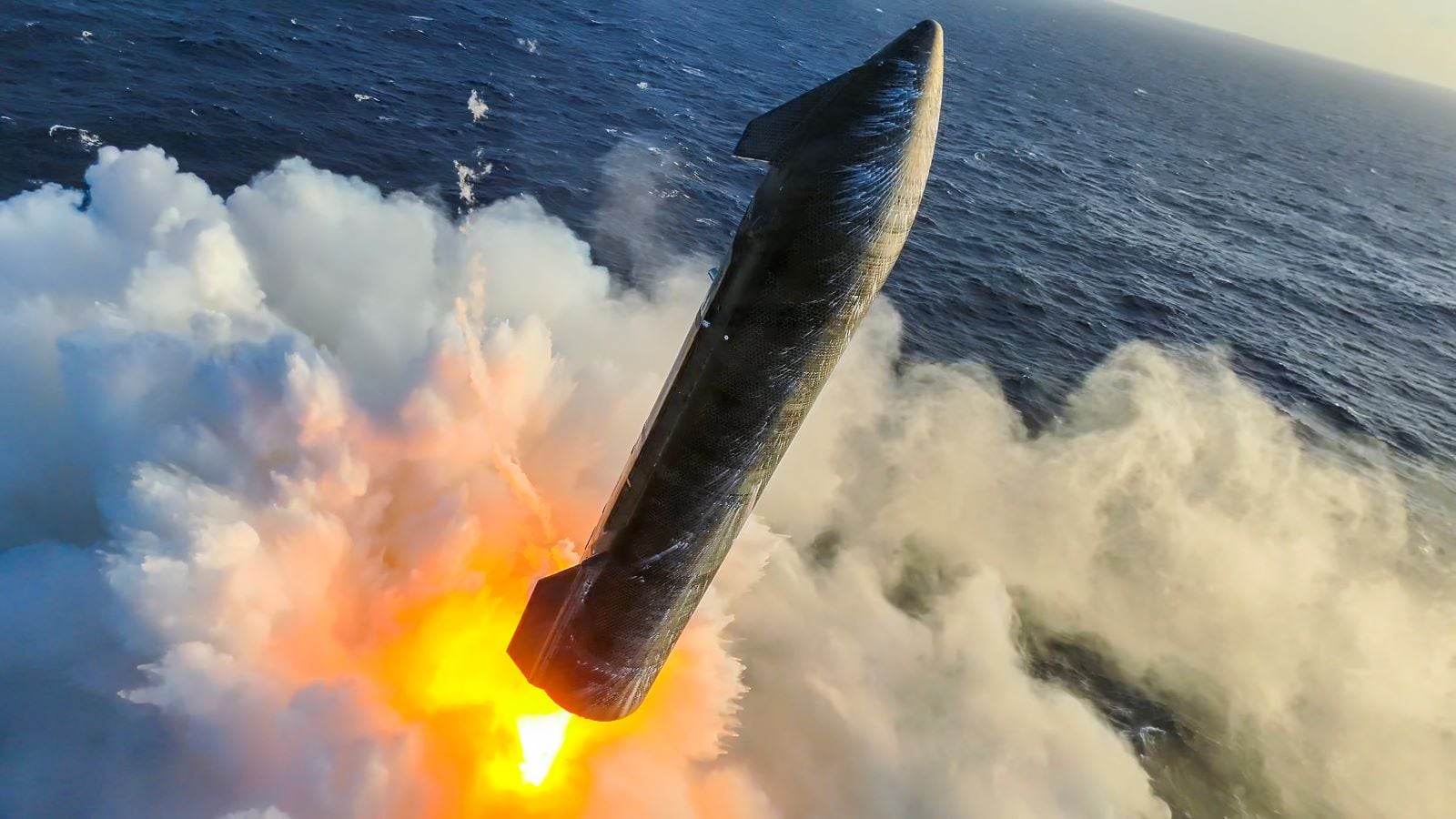
SpaceX’s Starship flight test did not just survive that fiery descent; it achieved something the aerospace industry whispered was practically impossible. It executed a controlled, propulsive landing simulation, hit the water intact, and tipped over in a brilliant plume of orange fire and white foam.
We have seen rocket launches before. We are used to the blinding flash, the low chest-rattling roar, and the white contrail piercing the blue. But those were departures. This was an arrival.
To understand why this specific splashdown matters, you have to abandon the abstraction of big numbers. Numbers numb us. Tell someone a rocket weighs five thousand metric dollars or tons, and their brain glazes over. Instead, consider the sensory reality of the machine. The skin of Starship is made of austenitic stainless steel. Why? Because aluminum melts where steel merely glows. When the vehicle screams back through the atmosphere, friction creates a localized blowtorch of plasma reaching temperatures hot enough to melt bone and steel alike.
Thousands of hexagonal black thermal protection tiles fight that heat. During earlier tests, we watched those tiles crack. We watched flaps burn away. We watched cameras go to static as the vehicle disintegrated in a brilliant, chaotic fireworks display of failure.
Failure is an editor. It crosses out what doesn't work until only the truth remains.
On this particular day, the telemetry told a different story. The flaps moved with hydraulic grace against a hurricane of air pressure. The Raptor engines reignited thousands of miles from where they launched, performing a precise suicide burn just above the water's surface to arrest a skyscraper's worth of momentum.
And then, the splash.
The video released afterward is mesmerizing precisely because it is mundane in its clarity. There is no sweeping cinematic score. There is only the raw, crackling audio of telemetry chatter and the vast, indifferent gray expanse of the ocean. The vehicle descends, upright and defiant, before gently tipping into the waves. It is a slow-motion ballet of mass and momentum.
Critics often ask why we persist in reaching outward when our own backyard is fracturing. It is a fair question. The oceans are rising. Economic anxieties press down on kitchen tables from Ohio to Osaka. Why stare at the stars?
The answer lies hidden in the metal itself. The technology required to safely guide a multi-ton cylinder from orbital velocity down to a pinpoint splashdown is the exact same discipline needed to manage closed-loop life support, orbital debris tracking, and advanced material science down here on Earth. When you solve the problem of bringing a ship back intact, you learn how to build lighter, stronger, more durable systems for everything else we do.
We are standing on the precipice of a profound transition. For all of human history, the sky was a ceiling. It was a barrier that marked the absolute limit of where our footprints could go. Now, it is becoming a highway.
The engineer in Hawthorne watches the video loop for the hundredth time. The chatroom on her second monitor is scrolling past at blinding speed, filled with expressions of awe from people who will never touch a welding torch or write a line of flight code. She takes a sip of that cold coffee, grimaces, and smiles.
There is still so much work to do. The heat shields need refinement. The catch towers need to prove they can pluck these giants out of the air. But for one afternoon, the heavy burden of gravity relented.
Somewhere out there in the vast, salt-scented dark, a piece of stainless steel is resting on the ocean floor, having journeyed to the edge of the void and back. And the world is just a little bit bigger than it was yesterday.