Commercial fishing operations face a structural inefficiency that directly threatens both ecological stability and industry profitability: non-target marine capture, universally defined as bycatch. When non-target species—ranging from marine mammals to juvenile food fish—enter commercial gear, they transform an optimized supply chain into a high-liability operation. Bycatch represents deadweight economic loss, driven by sorting labor, gear damage, regulatory fines, and the premature closure of fisheries. Resolving this crisis requires shifting the conversation away from emotional appeals and toward a rigorous framework of spatial-temporal management, mechanical selectivity, and sensor-driven feedback loops.
The Tri-Faceted Bycatch Engine
To systematically reduce non-target mortality, the problem must be deconstructed into three operational vectors. Bycatch occurs due to failures in spatial segregation, mechanical selectivity, or post-capture survival protocols.
       [Bycatch Operational Vectors]
                     │
     ┌───────────────┼───────────────┐
     ▼               ▼               ▼
 Spatial/Temporal Mechanical       Post-Capture
 Overlap          Selectivity      Handling
1. Spatial-Temporal Overlap
This vector defines the probability ($P_o$) that a commercial vessel deploys gear in the exact coordinates and depth strata occupied by non-target species. Marine life does not distribute uniformly; it clusters around thermal fronts, bathymetric features, and prey migrations. When fishing fleets rely on historical baselines rather than real-time oceanographic telemetry, the probability of intersection scales exponentially.
2. Mechanical Selectivity Failure
Once a vessel operates within a high-density zone, the gear itself becomes the primary bottleneck. Traditional netting operates on crude dimensional exclusion—if an organism is larger than the mesh lumen, it is retained. This mechanical model fails when non-target species share similar morphological profiles with the target catch, such as harbor porpoises and Atlantic cod, or sea turtles and shrimp.
3. Post-Capture Metabolic Collapse
For organisms trapped within the net or hooked on a longline, the third vector is stress-induced mortality. As gear is towed, captured animals experience prolonged forced swimming, hypoxia, and crush injuries from the accumulating biomass. Even if individuals are sorted and discarded, delayed mortality from lactic acidosis and barotrauma significantly deflates true survival metrics.
The Mechanical Bottleneck: Selectivity Optimization in Trawl Networks
Improving the physics of the net remains the most immediate engineering lever for reducing mortality. Standard trawl nets function as non-discriminatory funnels, but introducing kinetic and optical barriers can alter the sorting mechanics mid-water.
Rigid Grid Excluders
In shrimp and small-pelagic fisheries, the installation of physical sorting grids—such as the Turtle Excluder Device (TED) or Nordmøre grid—alters the internal hydrodynamic flow of the net. The framework operates on mass and behavioral differentials:
- Deflection Angle Dynamics: The grid is set at an angle (typically 30 to 45 degrees) relative to the water flow. Target catch (shrimp) passes directly through the narrow spacings between the bars into the codend.
- Mass-Based Exclusion: Larger organisms (turtles, sharks, large finfish) strike the bars and are guided upward or downward to an escape opening cut into the netting.
- Hydrodynamic Drag Constraints: If the grid angle is too steep, it increases drag, reducing vessel fuel efficiency and causing target catch to back out of the net. If the angle is too shallow, large bycatch organisms wedge against the bars, blocking the passage of target species and ruining the haul.
Kinetic Behavior Separation
Finfish possess distinct behavioral responses to moving gear based on species-specific endurance and panic reactions. For instance, when encountering a trawl mouth, certain groundfish swim downward, while pelagic species tend to rise.
Dividing a trawl net horizontally into multiple chambers allows fishers to exploit these behavioral vectors. By installing a separator panel with specific mesh sizes at strategic heights, flatfish can be isolated in the lower section while roundfish occupy the upper deck. This physical separation prevents the crushing of fragile species under the weight of larger biomass.
Sensor Integration and Automated Avoidance
Relying purely on passive mechanical fixes is insufficient when target and non-target species exhibit identical sizing. The next operational layer introduces active electronic sensing to convert dumb nets into responsive data-gathering nodes.
Active Acoustic Deterrents
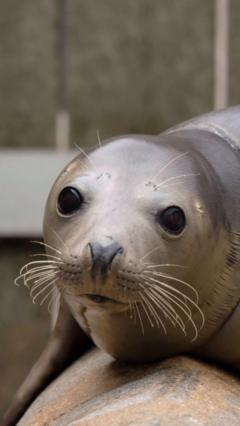
For cetaceans, the primary driver of bycatch is acoustic camouflage; harbor porpoises and dolphins frequently fail to detect fine monofilament gillnets via echolocation until entanglement occurs. Acoustic deterrents, or "pingers," mitigate this by emitting localized sound profiles.
$$\text{Pinger Effectiveness} = f(\text{Frequency}, \text{Source Level}, \text{Habituation Rate})$$
Standard pingers broadcast low-power signals between 10 kHz and 150 kHz. However, a major operational risk is habituation, where marine mammals eventually associate the acoustic signal with an available food source (the "dinner bell effect"). To prevent this, modern deterrent systems utilize randomized, pseudo-random frequency sweeps that disrupt the animal's acoustic spatial mapping without causing permanent threshold shifts or attracting them to the vessel.
Electro-Positive Alloys and Magnetism
Elasmobranchs (sharks, skates, and rays) possess highly sensitive electro-receptors known as the Ampullae of Lorenzini, which they use to detect micro-voltage fields generated by prey. Longline fisheries exploit this biological trait by treating hooks with electro-positive alloys (such as lanthanide elements) or high-strength neodymium magnets.
When immersed in saltwater, these materials create a localized galvanic voltage spike that overstimulates the shark’s sensory array, causing a flight response before the animal attacks the baited hook. This biochemical barrier operates completely independently of target bony fish, which lack these specialized electro-receptors and remain attracted to the bait.
The Economics of Spatial Management and Dynamic Closures
When engineering interventions fail, regulatory frameworks enforce spatial closures. Traditional static closures block off massive geographical sectors for months or years. While effective at protecting specific habitats, they create profound economic displacement, forcing fishing fleets into adjacent, unmanaged waters where bycatch rates of other vulnerable species may be higher.
[Static Closures] ──► Fleet Displacement ──► Unmanaged Bycatch Spikes
[Dynamic Closures] ──► Real-Time Telemetry ──► Precision Fleet Routing
Dynamic Oceanography Frameworks
A highly efficient alternative is the deployment of real-time, predictive spatial mapping. Systems compile satellite data—surface temperatures, chlorophyll-a concentrations, and sea surface height anomalies—alongside daily electronic logbook reports from the fleet.
This data builds a daily predictive probability map of where target and non-target species are likely to interact. Instead of closing a 10,000-square-mile zone permanently, maritime authorities can issue 48-hour closures on highly specific 10-mile grids. This preserves the economic viability of the fleet while lowering the probability of encountering protected species.
The True Cost Function of Bycatch
Fisheries managers must balance the marginal cost of bycatch mitigation technology against the structural losses of unmitigated operations. The financial equation dictates that the cost of implementing sensor arrays and modified gear is offset by three variables:
- Labor Reduction: Less time spent manually sorting, untangling, and discarding non-marketable biomass on deck.
- Gear Longevity: Reduced tearing of expensive netting caused by large apex predators or heavy debris entering the system.
- Quota Protection: Preventing the triggering of hard "bycatch caps," which instantly shut down multi-million dollar target fisheries for the remainder of the season when a handful of protected individuals are accidentally taken.
Structural Limitations of Current Mitigation Models
No single technological deployment offers a flawless mitigation path. Every intervention introduces distinct operational compromises that engineers and fleet managers must account for during implementation.
| Strategy | Primary Mechanism | Primary Failure Mode | Operational Trade-off |
|---|---|---|---|
| Rigid Grids (TEDs) | Physical deflection of large masses | Clogging via marine debris/kelp | Increased hydrodynamic drag; loss of small target catch |
| Acoustic Pingers | Targeted sensory deterrence | Habituation ("Dinner Bell Effect") | High battery maintenance; potential acoustic exclusion from critical habitats |
| Galvanic Hooks | Electro-receptor overstimulation | Rapid oxidation/short lifespan in saltwater | High material cost per hook; zero efficacy on non-elasmobranch bycatch |
| Dynamic Closures | Predictive spatial telemetry | Data latency and reporting deficits | Requires high compliance and expensive vessel monitoring infrastructure |
Operational Blueprint for Fleet Deployment
To scale bycatch reduction from isolated pilot studies into standard maritime operations, vessel operators must implement a multi-tiered integration framework:
- Audit Spatial Risks First: Review historical vessel logs against seasonal thermal fronts to map peak intersection zones. Shift trawling schedules to exploit temporal windows where target species and non-target species diverge in the water column.
- Implement Hybrid Mechanical-Sensory Gear: Upgrade standard bottom trawls to include both physical escape hatches (grids) and species-specific deterrents (such as green LED light strings, which have been proven to guide sea turtles and juvenile finfish out of gillnets without reducing shrimp or flatfish retention).
- Deploy Digital Catch Accounting: Transition from manual paper logs to computer-vision-based conveyor monitoring. Mount high-resolution cameras above the sorting belt to automatically log, categorize, and weigh every discarded organism. This provides the clean, granular data required to refine dynamic closure models and prove regulatory compliance without increasing the crew's administrative workload.