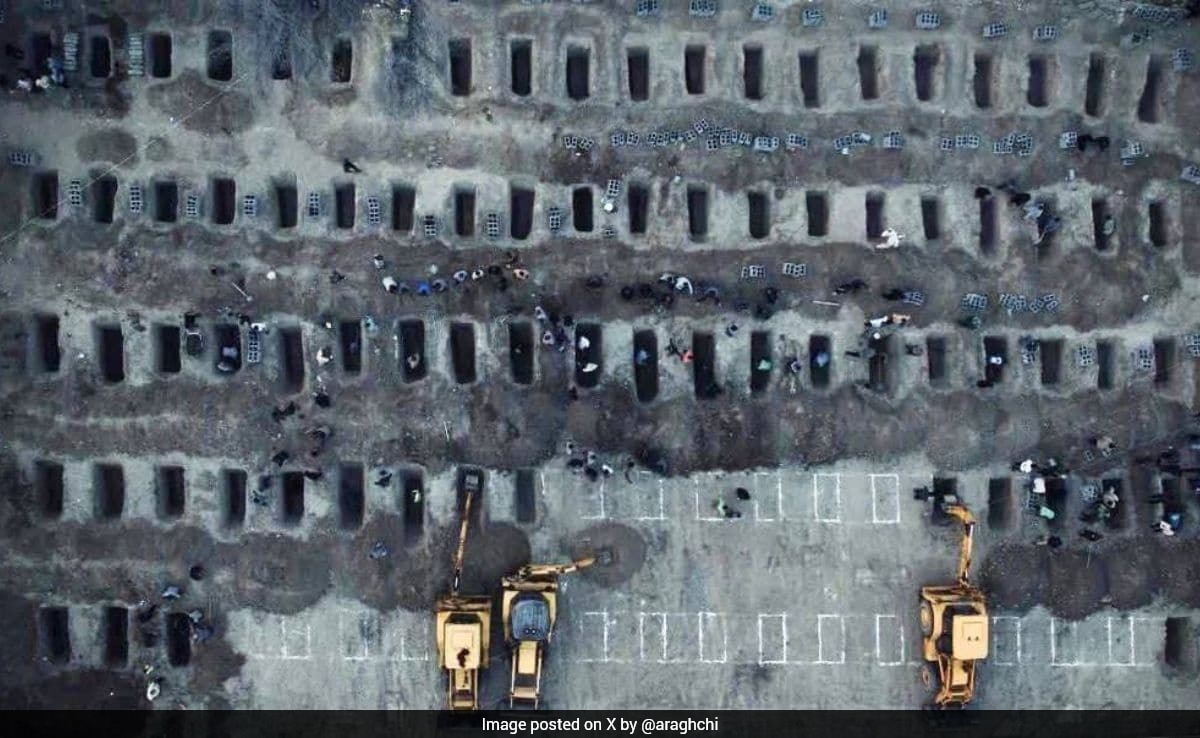
A precision strike is only as good as the intelligence behind it. On February 28, 2026, during the opening salvo of the U.S. and Israeli military campaign against Iran, a missile tore through the Shajareh Tayyebeh girls' elementary school in Minab. It wasn't a "stray" bomb in the traditional sense. Evidence suggests it was a "picture-perfect" hit on a building that planners likely thought was a military asset.
By the time the smoke cleared, at least 165 children were dead. New reports indicate that U.S. military investigators now believe American forces were likely responsible for the strike. While the Pentagon hasn't officially closed the case, the tentative assessment points to a massive failure in identifying what was actually inside that building.
The Failure of Precision Intelligence
Minab sits near the strategic Strait of Hormuz, a high-value area for the Islamic Revolutionary Guard Corps (IRGC) Navy. On the day of the attack, the U.S. was focused on dismantling naval infrastructure in the south, while Israel targeted missile sites in the west.
The school building was located within or adjacent to a compound used by the IRGC. According to satellite imagery analysis by The New York Times and Planet Labs, the building was part of the naval base back in 2013. However, it was partitioned off and repurposed as a school nearly a decade ago, in 2016.
The strike pattern suggests the military used precision-guided munitions. Four buildings inside the actual base were leveled. Two others were hit directly through the center of their roofs—a signature of modern "smart" bombs. The school received the same treatment. Wes J. Bryant, a former U.S. Air Force targeting expert, noted that the hits were technically perfect but tragically misidentified.
It's a grim reminder that "precision" refers to where the bomb lands, not whether the target was the right one.
Accountability and the Laws of War
The UN human rights office hasn't minced words. They’ve called for an immediate, independent investigation. Under international humanitarian law, schools are protected civilian objects. Attacking them is a war crime unless they are being used for military purposes.
So far, Human Rights Watch hasn't found any evidence the school was being used by the IRGC for combat operations. It was a functioning primary school full of 7 to 12-year-old girls attending classes during the morning workweek.
U.S. Defense Secretary Pete Hegseth acknowledged the investigation on March 4, stating the U.S. doesn't "target civilian targets." But "not targeting" isn't enough to escape legal or moral culpability if the military failed to verify the status of the building. War isn't just about pulling the trigger; it's about the homework done before the mission starts.
The Mounting Toll in Hormozgan
The numbers coming out of southern Iran are staggering. Iranian state media claims the death toll has reached 175, including staff and students. One report even mentions a two-month-old baby among the victims.
While the White House and Press Secretary Karoline Leavitt have pushed back, suggesting some reports might be "propaganda" from the Iranian regime, the physical evidence—verified video of residents pulling schoolbags and textbooks from the rubble—is hard to ignore.
The U.S. military's Central Command (CENTCOM) is currently "looking into" the reports of civilian harm. If confirmed, this would be one of the deadliest "collateral damage" incidents in recent American history. It echoes the 1968 My Lai massacre in terms of scale, though the modern version is delivered via high-altitude optics rather than ground troops.
What Happens Next
If you're following this conflict, the Minab strike is a turning point for international perception. The "shock and awe" phase of this campaign has reportedly involved double the number of strikes seen in the 2003 Iraq invasion. With that volume, the margin for error shrinks.
Watch for the final report from the Department of War. The U.S. will likely have to address whether its "precision" assets are operating on outdated maps or faulty human intelligence. Accountability in these cases usually moves slow, but the diplomatic pressure from the UN and human rights groups is ramping up fast.
Keep an eye on the following developments:
- Pentagon Final Assessment: Expect a formal statement on whether the munition was American or Israeli.
- Congressional Inquiries: Representative Yassamin Ansari and others are already demanding transparent answers on civilian protection protocols.
- International Criminal Court (ICC) Interest: Human rights experts are pushing for this to be treated as a war crime, which could lead to formal international filings.
The reality on the ground is that 165 families in Minab are now burying children because of a targeting error. No amount of "precision" can fix that.