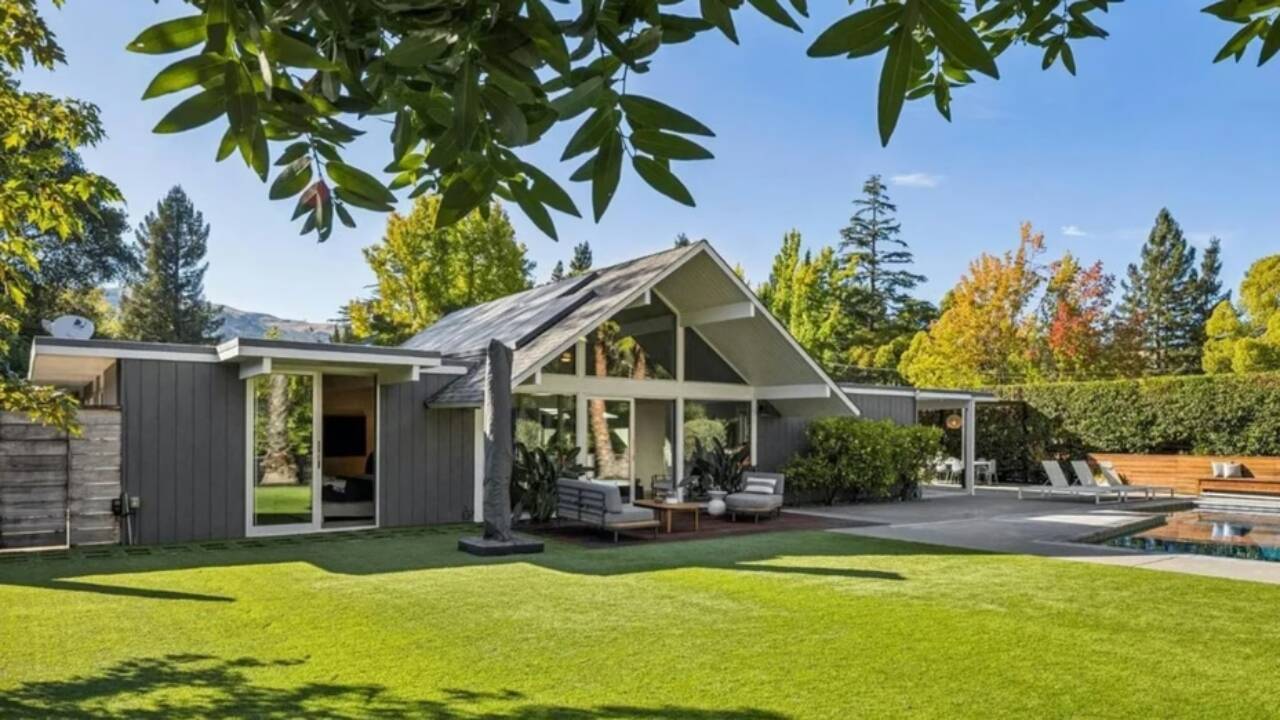
Every six months, the architectural press runs the exact same fairy tale. A couple buys a water-logged, asbestos-riddled, mid-century relic with a sagging flat roof for a modest sum, dumps six figures and three years of their life into a meticulous restoration, and emerges victorious with a property now valued at two point seven five million dollars.
Everyone reads the headline, gasps at the equity creation, and assumes they witnessed an masterclass in smart real estate acquisition. They see a triumph of design preservation and sweat equity.
They are dead wrong.
I have watched dozens of amateur speculators and starry-eyed design buffs walk into the mid-century modern trap thinking they are buying a appreciating asset, only to realize they just purchased an expensive, uninsurable science project. The narrative of the heroic homeowner flipping a broken Joseph Eichler house for millions ignores the brutal financial mechanics hiding beneath those radiant-heat concrete slabs.
Let us look at the math the glossy magazines conveniently omit.
The Arithmetic of Architectural Vanity
When you buy a dilapidated Eichler, you are not buying a home. You are buying a maintenance liability wrapped in vertical wood paneling and single-pane glass.
Take the standard acquisition path. You secure a structurally compromised property in a desirable suburban pocket for one point two million dollars. It sounds like a steal until you factor in the deferred maintenance built into the prefab post-and-beam construction style. Those expansive floor-to-ceiling windows? They are thermal sieves. Those radiant heating tubes running through the slab? They are corroded steel pipes wrapped in concrete, ticking time bombs waiting to spring a leak that requires jackhammering your entire living room floor.
To get that property to the two point seven five million dollar valuation, our hypothetical couple didn't just paint walls. They executed a gut renovation.
- Structural remediation: Fifty thousand dollars to stabilize shifting beams and repair water-damaged roof decking.
- Asbestos and lead abatement: Thirty thousand dollars just to clear the hazardous materials standard in mid-century construction before a contractor will even swing a hammer.
- Slab plumbing repipe: Sixty thousand dollars to abandon the failed under-slab radiant system and route modern PEX lines through the ceiling or walls, destroying the modernist purity in the process.
- Envelope modernization: Eighty thousand dollars for custom dual-pane glass that mimics the original sightlines without violating local historic overlay boards, plus closed-cell spray foam insulation to stop the house from acting like a walk-in freezer during winter.
Add soft costs, architectural fees, holding costs during a twenty-four-month construction delay, and a ten percent construction cost overrun buffer. Suddenly, your capital injection is pushing seven hundred thousand dollars on top of acquisition and transaction fees.
You do not have a masterpiece. You have a massive capital sinkhole.
The Myth of Sweat Equity in Post and Beam
The lazy consensus in real estate media is that anyone can capture this wealth if they possess enough vision and grit. This assumes that time is free and specialized labor grows on trees.
Eichlers and similar mid-century modernist tracts cannot be handled by your weekend handyman. You cannot call a standard suburban framing crew to work on a low-slung post-and-beam structure without risking catastrophic structural warping. The tongue-and-ceiling decking acts as both the interior finish and the structural roof diaphragm. Cut a hole in the wrong spot to run electrical wiring, and you have compromised the wind-shear resistance of the entire box.
Specialized craftsmen charge a premium because fixing sixty-year-old architectural experiments requires patience and rare skill sets. When you hire people who know how to restore mahogany paneling and match period-specific masonry, your labor costs double.
If you try to save money by doing it yourself, you invite disaster. I have seen ambitious owners try to DIY electrical updates in ungrounded conduit systems only to watch their renovation stall out halfway through permitting. Months turn into years. Carrying costs compound. The bridge loan matures. Suddenly, a forced sale at a discount looks merciful compared to bankruptcy.
The Insurance and Climate Reality Check
Let us talk about the elephant in the room that lifestyle bloggers refuse to touch: insurability and climate vulnerability.
Most classic Eichlers feature open-plan layouts with zero firebreaks, extensive wood surfaces, and massive surface areas of glass. In an era of escalating wildfire risk and volatile climate events, insurance carriers are fleeing these properties. Try securing a comprehensive homeowners policy on a timber-heavy, flat-roofed structure with mature trees touching the overhangs in California or the Pacific Northwest.
You will either face sky-high premium spikes that decimate your monthly cash flow or find yourself dumped into a state-backed FAIR plan that offers bare-minimum coverage while demanding thousands out of pocket for brush clearance and roof upgrades.
Furthermore, flat roofs are an engineering nightmare. They do not shed water efficiently; they manage it until they fail. Every heavy downpour is a stress test for the built-up tar-and-gravel membrane or the newer elastomeric coatings. When a leak develops—and it will—it doesn't drip neatly into a bucket. It travels along the hidden beams, rotting the structural core before you ever notice a stain on the ceiling.
What You Should Do Instead
If your goal is wealth generation, buying a architectural trophy project to flip or hold is one of the most inefficient allocations of capital available.
Stop treating residential real estate as a canvas for self-actualization if your primary metric is return on investment. If you want a modernist sanctuary, buy a well-maintained property where someone else already absorbed the six-figure pain of system replacements. Let the previous owner deal with the corroded slab pipes and the structural shoring.
If you insist on buying a wreck, price it like a teardown. Do not pay top dollar for a historical provenance tax. If the land value plus the cost of a modern, code-compliant, energy-efficient modular build is cheaper than restoring a rotting shell, buy the teardown. Build something that performs thermally, meets modern seismic codes, and doesn't require an act of God to keep warm in January.
The romanticized tale of the broken Eichler ignores basic economics. A house that requires millions in specialized remediation to reach a high market value is not a triumph of smart investing. It is an expensive hobby masquerading as an asset class. Keep your romance in the art gallery, and keep your capital somewhere it doesn't leak through the roof.