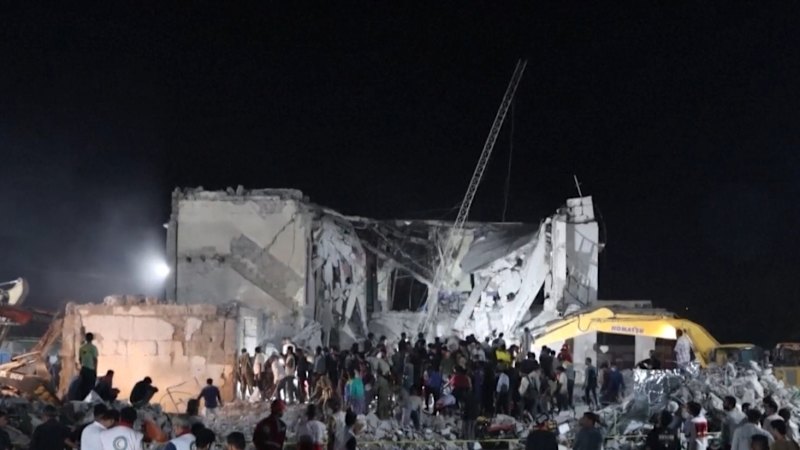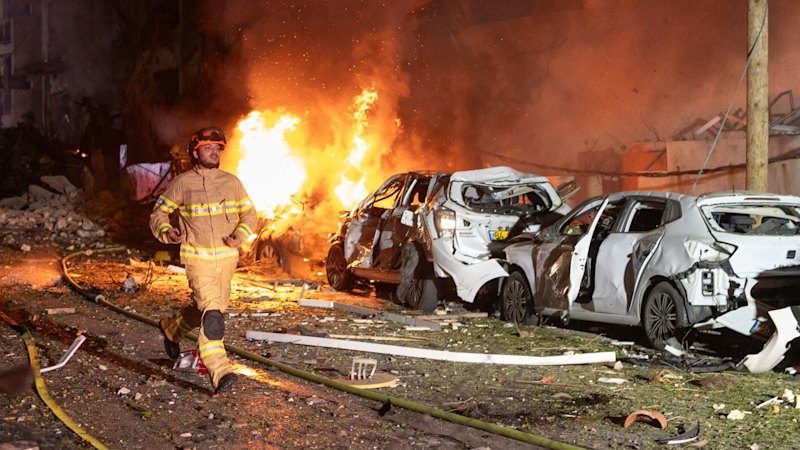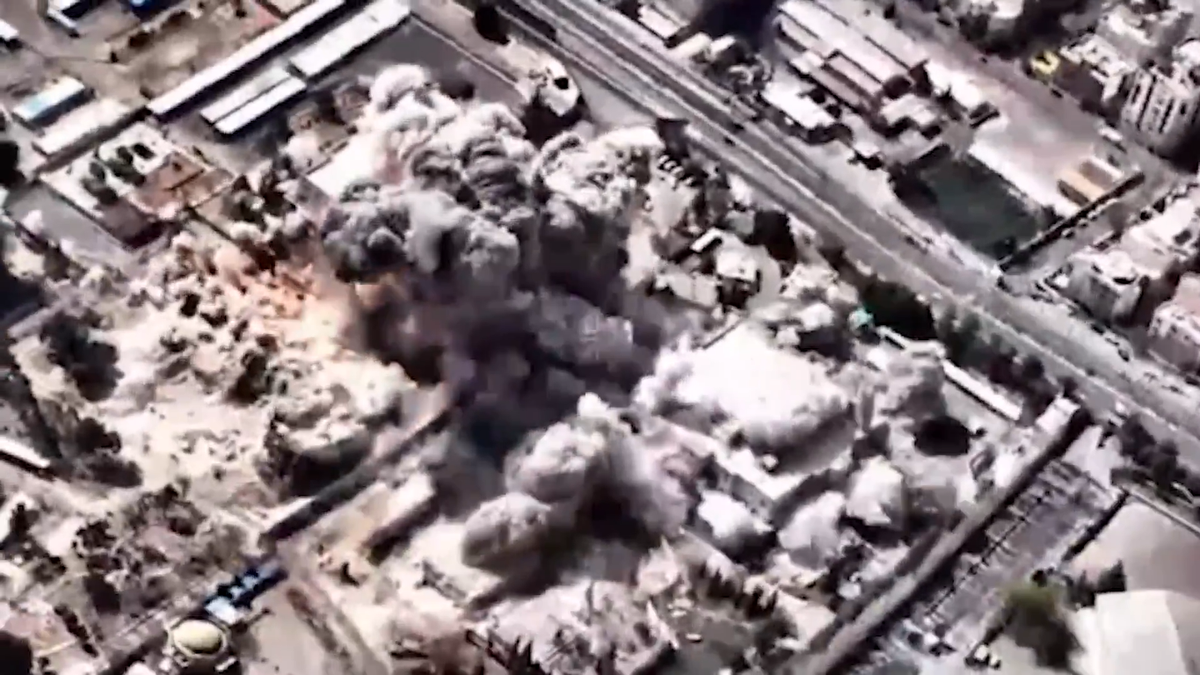
Military press releases are the junk food of geopolitics. They are high in calories, low in nutrition, and leave you feeling sick once the initial rush of "mission accomplished" fades. When the U.S. claims to have leveled a headquarters or struck over 1,000 targets, the public sees a scoreboard. They see a win.
I’ve spent years analyzing the friction between kinetic military action and long-term political outcomes. Here is the reality: you can turn a building into a parking lot without shifting the needle of power by a single millimeter. In fact, most of the time, you’re just paying $2 million for a missile to destroy a $50,000 mud-brick command center that will be rebuilt or relocated by Tuesday.
We are addicted to the "body count" and "target count" metrics of the Vietnam era, rebranded for the drone age. It is a fundamental misunderstanding of how modern asymmetric warfare functions.
The Architecture of Ghost Commands
The competitor article treats a "headquarters" like it’s the Pentagon—a centralized, immovable hub of critical thinking and data. That is a fantasy. Organizations like the Revolutionary Guards or their regional proxies don't operate out of glass towers with "HQ" on the door.
In modern insurgency and proxy warfare, a headquarters is a laptop, a satellite phone, and a rotating series of safe houses. When a strike hits a "command and control center," it usually hits a physical shell. The intellectual property of the insurgency—the leaders, the encrypted comms, the operational plans—is almost always somewhere else by the time the Tomahawk arrives.
Striking 1,000 targets sounds impressive in a briefing. In reality, it often signals a lack of prioritization. If everything is a target, nothing is a target. This is the "whack-a-mole" doctrine, and it is the most expensive way to lose a war of attrition.
The Logistics of the $100 Target
Let’s talk about the math that the Department of Defense won’t put in a slide deck.
- The Interceptor Cost: A single precision-guided munition can cost anywhere from $100,000 to over $2 million.
- The Target Cost: An insurgent weapons cache or a "logistics hub" often consists of aging AK-47s, homemade IED components, and a few technicals (pickup trucks). Total value? Maybe $15,000.
- The Replacement Rate: Because these groups operate on low-tech, high-redundancy models, they can replace their losses faster than the U.S. can navigate the bureaucratic procurement process for more missiles.
We are trading gold for lead. We are emptying our magazines to destroy things that are fundamentally disposable. This isn't a victory; it's a wealth transfer from the American taxpayer to defense contractors, with no net change in the enemy’s capability to cause trouble.
The Myth of "Degraded" Capabilities
The word "degraded" is the most overworked verb in the military lexicon. It’s a beautiful, vague term that means everything and nothing.
If I break your arm, I have "degraded" your ability to punch. But if you have three other friends who can still punch, and your arm heals stronger in six months, did I actually win?
History shows that kinetic strikes against ideological actors act as an evolutionary pressure. You kill the sloppy commanders. You destroy the easily tracked depots. What’s left? The commanders who are too smart to be caught and the depots that are too well-hidden to be seen. By "degrading" them, you are actually "optimizing" them. You are thinning the herd of the weak and leaving yourself with a leaner, meaner, more paranoid adversary.
Why We Ask the Wrong Questions
People always ask: "Did we hit the target?"
The better question is: "Why was that target there in the first place, and what fills the vacuum when it's gone?"
If you destroy a Revolutionary Guard facility but leave the local political and economic grievances untouched, you’ve done nothing but create a recruitment poster. The "People Also Ask" sections of the internet are obsessed with whether the strike was "successful."
Success in this context is usually defined as "the bomb exploded where we pointed it." That is a technical success, not a strategic one. A strategic success would be an adversary deciding that the cost of their behavior is too high to continue. Yet, after thousands of targets hit over decades, has the behavior changed? No. It has only moved.
The Intelligence Trap
I’ve seen this play out in secure rooms: intelligence officers feel pressured to provide "actionable" targets to justify their budgets. This leads to target inflation. You start classifying a shed used for grain storage as a "dual-use logistics facility" because the guy who owns the shed once shared a tea with a low-level militant.
When the military reports 1,000 targets struck, you should be asking how many of those were "fixed" targets (buildings) versus "mobile" targets (actual fighters). Fixed targets are easy to hit but rarely matter. Mobile targets are hard to hit but are the only ones that actually change the outcome of a conflict.
The Downside of Being Right
The uncomfortable truth is that doing nothing is often better than doing something poorly. But "doing nothing" doesn't win elections, and it doesn't get four-star generals their fifth star.
The contrarian approach—strategic patience and non-kinetic pressure—is boring. It doesn't look good on CNN. It doesn't have a "cool" thermal camera feed of a building collapsing. But it’s the only thing that actually works against a decentralized enemy.
The downside? It takes decades. And we are a nation with a four-year attention span.
Stop Counting Craters
If you want to understand the efficacy of a military campaign, stop looking at the map of red dots where bombs fell. Look at the flow of illicit goods. Look at the recruitment numbers. Look at the local market prices for explosives.
If the U.S. strikes 1,000 targets and the price of a rocket on the black market doesn't go up, those 1,000 strikes were a waste of fuel.
We are currently celebrating the destruction of a "headquarters" that likely existed only as a line item on a target list. We are cheering for the destruction of concrete while the ideology and the network remain perfectly intact, laughing from the shadows of the next safe house.
Go ahead and celebrate the "destroyed" headquarters if it makes you feel safer. Just don't be surprised when the same "destroyed" entity carries out an operation next month from a different set of coordinates.
Stop measuring the size of the hole. Start measuring the depth of the silence that follows. If the enemy is still talking, you didn't hit the headquarters; you just hit a building.