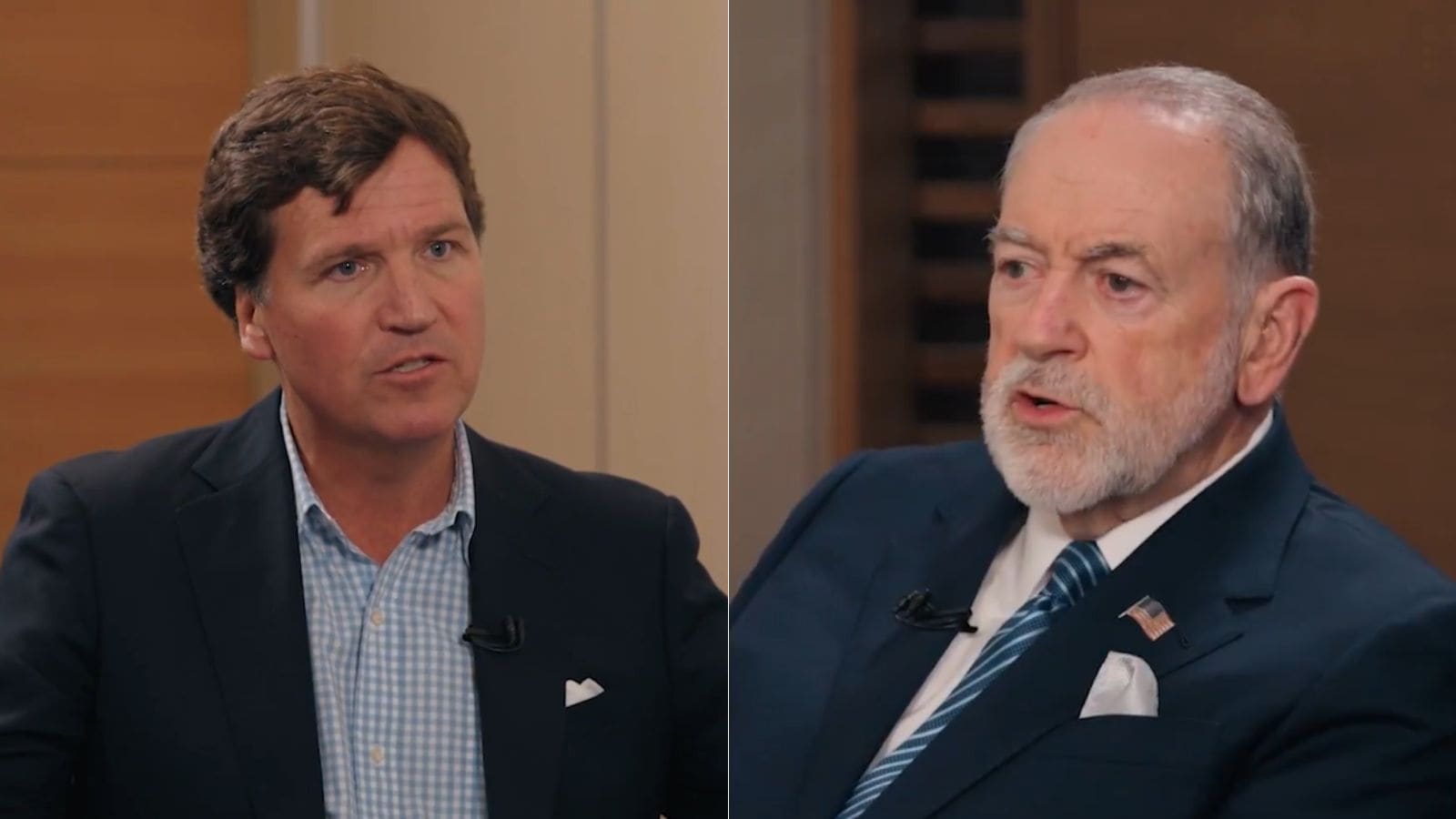
Mike Huckabee isn't interested in the usual diplomatic dance. While most US ambassadors spend their careers parsing words about two-state solutions and "mutual restraint," the man tapped to represent American interests in Jerusalem is looking at a much older map. He’s looking at a Bible. Specifically, he’s pointing to a theological claim that suggests the land promised to the Jewish people doesn't just stop at the Green Line. It stretches across the entire region.
"It would be fine if they took it all," Huckabee remarked, referring to the historical and biblical territory of Israel. It’s a statement that effectively sets a torch to decades of State Department policy. For those who follow the intersection of American evangelicalism and Middle Eastern geopolitics, this wasn't a slip of the tongue. It was a mission statement.
The Theology Behind the Diplomacy
You have to understand the world Huckabee comes from to realize why he says these things. He’s not just a politician; he’s an ordained Southern Baptist minister. In that world, the Bible isn't a book of metaphors. It's a legal deed. When he talks about Israel’s right to the land, he’s referencing what theologians call the Abrahamic Covenant.
In the Book of Genesis, there are specific descriptions of land boundaries promised to Abraham’s descendants. Some interpretations of these verses suggest a territory reaching from the "river of Egypt" to the Euphrates River. That’s a massive footprint. It covers parts of modern-day Jordan, Syria, Lebanon, and even Iraq. Most political analysts treat these ancient texts as historical curiosities. Huckabee treats them as a foreign policy briefing.
This isn't about secular Zionism or 1948 borders. This is about "Greater Israel." When Huckabee says it would be fine if they took it all, he’s validating a segment of the Israeli right wing that believes the West Bank—which they call Judea and Samaria—is not occupied territory, but a recovered inheritance.
Breaking the Two State Taboo
For thirty years, the "Two-State Solution" has been the holy grail of international relations. The idea is simple. You split the land, everyone gets a flag, and the fighting stops. It hasn't worked. Huckabee knows it hasn't worked, and he’s essentially saying the quiet part out loud: the US might be done trying to make it happen.
By leaning into biblical claims, Huckabee is signaling a shift toward "one-state reality." If Israel has a divine right to the entire Middle East, or even just the entirety of the Holy Land, then a Palestinian state becomes a theological impossibility. This isn't just a minor disagreement over a border fence. It’s a fundamental rejection of the framework that has governed every peace talk from Oslo to Camp David.
Critics argue this is dangerous. They're probably right. If you base your borders on 3,000-year-old scriptures, you aren't leaving much room for negotiation with the people currently living there. But for Huckabee’s base, this is about moral clarity. They see the survival and expansion of Israel as a prerequisite for their own religious worldview.
Why the Timing Matters Right Now
The world is a mess. The Middle East is currently a tinderbox of proxy wars and shifting alliances. Dropping an ambassador into this environment who believes in biblical expansionism is like throwing a match into a room full of gasoline vapors.
- The Abraham Accords: We’ve seen a trend of Arab nations normalizing ties with Israel based on shared economic and security interests. Huckabee’s rhetoric complicates this. Countries like the UAE or Saudi Arabia might be okay with a strong Israel, but they aren't necessarily on board with a "Biblical Israel" that claims their neighbors' land.
- Domestic Politics: Huckabee’s appointment is a massive "thank you" note to the evangelical voting bloc in the US. They are the most consistent pro-Israel constituency in the country. By choosing Huckabee, the administration is telling these voters that their theology is now official US policy.
- The Annexation Question: With Huckabee in Jerusalem, the green light for formal annexation of the West Bank has never looked brighter. If the US envoy thinks Israel has a right to "it all," he’s certainly not going to lodge a formal protest if they take another 30%.
The Reality of Greater Israel
Let’s be honest about what "taking it all" actually looks like. It’s not just a map change. It’s a demographic nightmare. If Israel were to actually govern the entire territory Huckabee alludes to, they’d face a choice. They could be a Jewish state, or they could be a democracy, but they likely couldn't be both.
Incorporating millions of non-Jewish residents into a "Greater Israel" would fundamentally change the nature of the country. This is the irony of the hardline religious position. In trying to secure the "land of Israel," they might inadvertently destroy the "state of Israel" as it currently exists.
Huckabee doesn't seem worried about the math. He’s focused on the mandate. He has famously said there is "no such thing as a Palestinian," viewing the identity as a political invention rather than an ethnic reality. When you combine that view with the belief that the land belongs to Israel by divine decree, the logical conclusion is total sovereignty. No compromises. No shared capitals. Just one flag from the river to the sea—the other sea.
Moving Past the Talking Points
The reaction to Huckabee has been predictable. The left is horrified. The religious right is ecstatic. But the real story is the death of the middle ground. We are entering an era where American diplomacy in the Middle East is no longer about being an "honest broker." It’s about picking a side and leaning in with everything you’ve got.
If you’re watching this play out, stop looking for "peace process" updates. That process is dead. Instead, watch the building permits in the West Bank. Watch the language used by the State Department regarding "occupied" vs. "disputed" territories. The vocabulary is changing.
If you want to understand where this is going, stop reading political science journals. Start reading the Old Testament. That’s clearly the syllabus Huckabee is using. The policy of the future is being pulled from the deep past, and the consequences will be felt for generations. This isn't just about a new ambassador. It's about a new map of the world.
To get a clearer picture of how this impacts actual regional stability, keep an eye on the official statements from the Jordanian and Egyptian foreign ministries over the next six months. Their reactions will tell you if this rhetoric is being treated as political theater or a genuine territorial threat. Pay close attention to whether the term "occupation" disappears from US briefing documents entirely. That will be the first sign that the "take it all" philosophy has moved from a quote to a code.