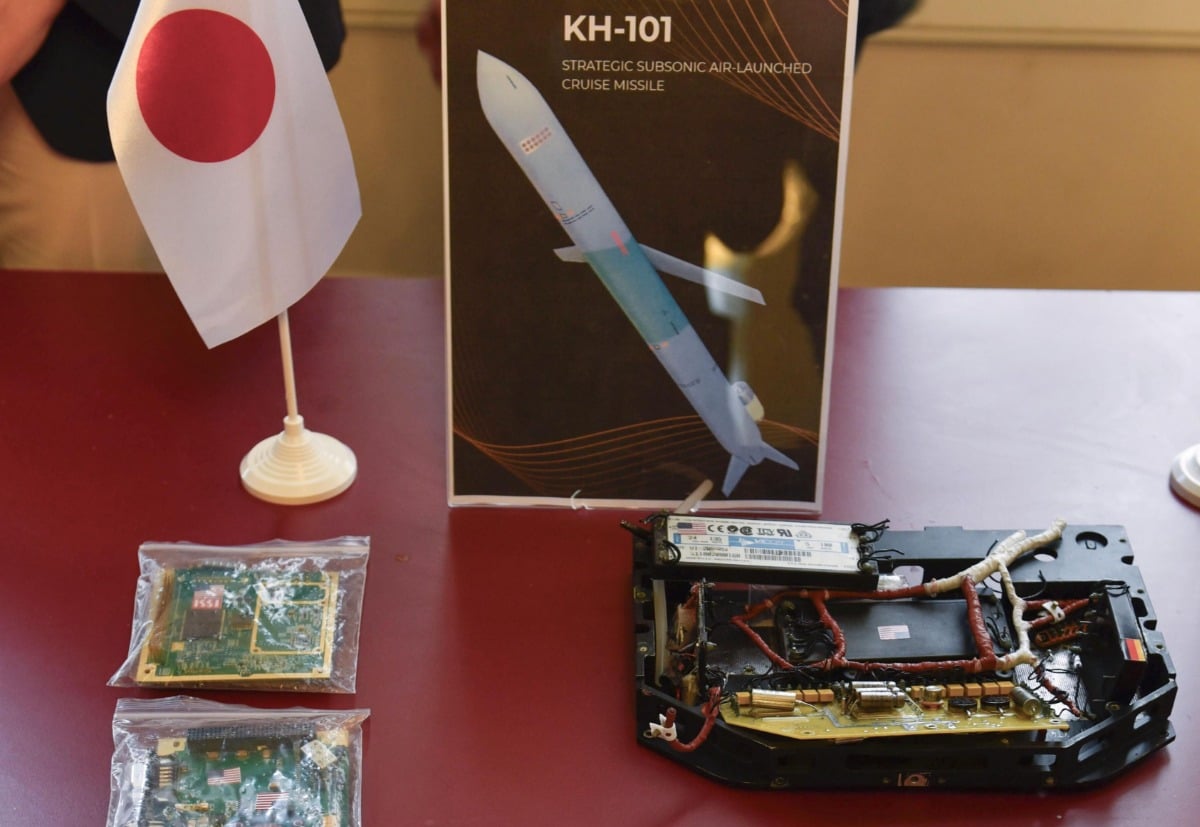
Approximately 90 percent of the cruise missiles, ballistic missiles, and unmanned aerial vehicles used by Russian forces contain components traced directly to Japanese manufacturers. This finding, documented through the forensic teardown of recovered battlefield wreckage in Ukraine, exposes a fundamental structural flaw in global export control regimes: the systemic vulnerability of dual-use, civilian-grade technology to illicit military diversion. The presence of these microelectronics in weapons platforms like the Kh-101 cruise missile, the Lancet loitering munition, and the Shahed-derivative drones demonstrates that trade restrictions targeting finished military hardware are entirely bypassed by the commoditization of commercial semiconductors.
To understand why traditional economic blockades fail to sever these supply lines, the problem must be deconstructed through a functional framework that maps the intersection of microelectronic distribution networks and state-sponsored procurement mechanisms.
The Dual-Use Supply Function
The core vulnerability relies on the structural distinction between specialized military-specification (mil-spec) components and high-volume commercial off-the-shelf (COTS) components. State-led procurement operations do not rely heavily on restricted mil-spec semiconductors to build guidance systems, optical modules, or digital signal processors. Instead, modern tactical ordnance is engineered to utilize standard industrial microcontrollers, flash memory chips, and altimeters manufactured for consumer electronics and automotive systems.
This architecture creates an asymmetric enforcement environment defined by three distinct operational layers.
1. The Distributed Component Surface
A single Kh-101 cruise missile integrates over 160 foreign-sourced components, while reconnaissance drones like the Mohajer-6 incorporate hundreds of discrete electronic units. Because these items are manufactured by the millions for global markets, tracking the ultimate point of consumption through a standard corporate sales ledger is structurally impossible. The volume of transactions provides absolute statistical cover for illicit acquisition.
2. Multi-Tiered Intermediary Arbitrage
The primary manufacturer rarely sells directly to an untrusted entity. The procurement mechanism operates via a sequence of shell companies and independent electronic component distributors located in jurisdictions with weak or absent regulatory enforcement. A component leaves a Japanese factory bound for a legitimate consumer electronics hub in East Asia, passes through secondary and tertiary brokers in Central Asia or China, and is ultimately re-exported across the Russian border.
3. High Fungibility and Low Physical Footprint
Microelectronic components are small, lightweight, and possess high value density. Shipping containers filled with industrial machinery are easily inspected; a suitcase containing 50,000 microcontrollers capable of powering guidance systems for an entire production run of loitering munitions is not. The physics of the logistics chain favors the smuggler over the customs inspector.
The Operational Bottleneck of Corporate Compliance
When confronted with debris analysis identifying their intellectual property on the battlefield, manufacturing corporations consistently state an inability to confirm or trace the origin of the specific items. This response is not necessarily a reflection of corporate malfeasance, but rather an acknowledgement of the structural limitations inherent in global multi-tier distribution models.
The standard corporate compliance framework operates on a linear tracking model that fails when subjected to secondary market divergence.
[Manufacturer] ➔ [Authorized Global Distributor] ➔ [Regional Wholesaler] ➔ [Secondary Broker (Shell Co)] ➔ [Military Assembly Facility]
The visibility of the manufacturer terminates at the third tier. Once a component enters the independent broker market, ownership changes hands through cash or cryptocurrency transactions, masking the ultimate destination. This creates a regulatory blind spot where commercial trademarks are actively leveraged by procurement networks, while the originating company maintains plausible deniability under existing legal standards.
Structural Interdiction Strategies
Remedying this systemic leakage requires shifting enforcement philosophy from a border-control paradigm to an algorithmic, data-driven architecture. Relying on voluntary reporting or retroactive diplomatic protests cannot alter the production economics of the targeted weapons programs.
A rigorous containment strategy must deploy concrete, structural mechanisms.
- Dynamic End-User Verification via Cryptographic Anchoring: Manufacturers can integrate unique, non-cloneable cryptographic identifiers into the silicon of high-priority industrial microcontrollers at the foundry stage. Global activation registries would require downstream buyers to authenticate the final assembly purpose before unlocking full component functionality, transforming a passive piece of hardware into a traceable asset.
- Harmonized Multi-Jurisdiction Liability Allocation: Current sanctions frameworks are fragmented across regional legal structures. Enforcing strict liability across the entire corporate ownership structure—regardless of where the intermediary shell company is registered—forces parent corporations to police their secondary distributors via contract termination clauses and financial penalties.
- Targeting the Financial and Logistical Arbitrage Hubs: Interdiction efforts yield higher returns when focused on the clearinghouses and shipping hubs of Central Asia and East Asia rather than individual manufacturing plants. Severing the specialized transport networks and financial nodes that facilitate the physical transfer of dual-use goods raises the transaction costs of procurement to prohibitive levels.
The data provided by battlefield analysis proves that the Russian defense industrial base remains deeply integrated with global technological supply chains. As long as commercial microelectronics are treated as simple commodities rather than foundational elements of kinetic warfare, the hardware enabling precise aerodynamic guidance and autonomous target acquisition will continue to flow across borders unimpeded. The challenge is not an absence of legal authority, but a failure of systemic design.