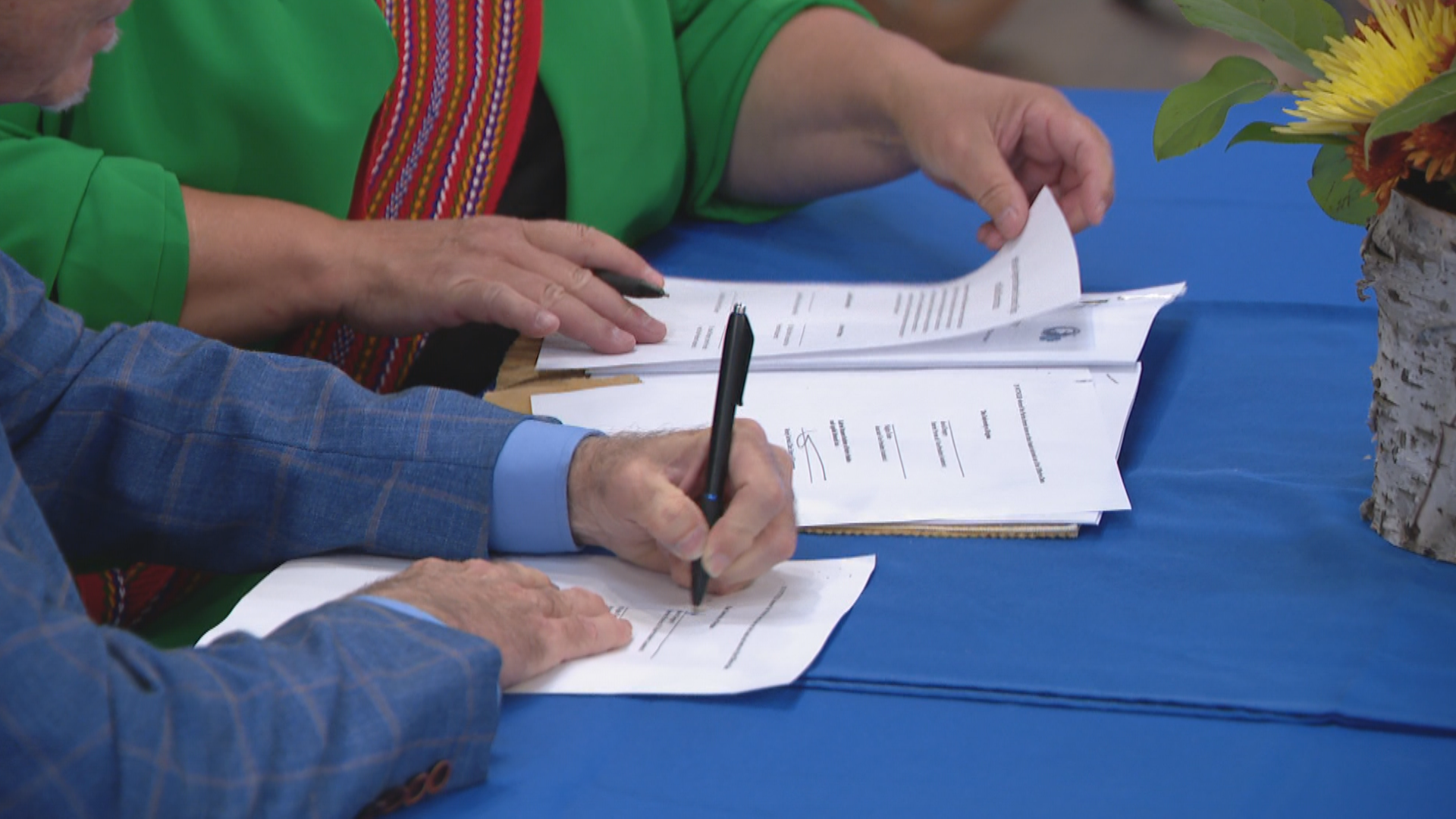
The tension inside the House of Commons right now isn't just about partisan bickering. It's a deep-seated, painful struggle over who gets to claim Indigenous rights in Canada. Bill C-53 is the lightning rod. It aims to give legal teeth to the self-government agreements between the federal government and the Métis Nations of Ontario, Saskatchewan, and Alberta. While Ottawa frames this as a long-overdue step toward reconciliation, many First Nations leaders see it as a direct threat to their land and their history.
You can't talk about Bill C-53 without talking about territory. For decades, First Nations have fought in the courts to prove their title to the land. They’ve done the hard work of documenting oral histories and defending their borders. Now, they see a piece of legislation that could potentially grant similar recognition to Métis communities on the very same soil. It's not just a paperwork shuffle. It’s a fight for the future of resource management, hunting rights, and political influence.
The Identity Crisis at the Heart of the Bill
There's a fundamental disagreement about who is actually Métis. First Nations in Ontario, specifically the Chiefs of Ontario, argue that several of the "new" Métis communities recognized by the Métis Nation of Ontario (MNO) don't have a legitimate historical basis. They’re worried that people with distant Indigenous ancestry are being lumped into a category that gives them equal footing with established First Nations.
This isn't about being mean-spirited. It’s about the legal reality of Section 35 rights. Under the Canadian Constitution, these rights are protected. If the government recognizes a group as a "rights-bearing" Indigenous community, that group suddenly has a seat at the table for every major pipeline, mine, or forestry project in the region. First Nations argue that by diluting the pool of rights-holders, the government is effectively shrinking the power of those who have always been there.
What the Métis Say
The Métis leaders aren't backing down. They point out that they've been treated as "forgotten people" for over a century. For them, Bill C-53 is about internal governance. It’s about the right to look after their own kids, manage their own elections, and run their own internal affairs. They insist that the bill doesn't actually give them new land rights or harvesting rights—at least not yet.
But "not yet" is the part that keeps First Nations leaders awake at night. Legislation has a way of evolving. Once a group is recognized as a self-governing nation through a federal treaty, the jump to land claims is a lot shorter than it used to be.
Why the Federal Government Is Rushing
The Liberals under Trudeau have made reconciliation a brand. They want big, symbolic wins before the next election cycles. Pushing Bill C-53 through is a way to show they’re serious about the United Nations Declaration on the Rights of Indigenous Peoples (UNDRIP). However, they’ve managed to alienate one Indigenous group to satisfy another. It's a messy political calculation.
The Crown has a "duty to consult." This is a legal requirement. First Nations argue this duty was completely ignored here. They say the government sat in backrooms with Métis leadership and hammered out a deal that affects First Nations territory without ever inviting the Chiefs to the room. That's a huge mistake. Honestly, it’s a classic Ottawa move—trying to solve a complex historical problem with a top-down legislative hammer.
The Legal Precedent of Powley
Everything boils down to a 2003 Supreme Court case called R. v. Powley. This case set the criteria for who counts as a Métis rights-holder. It requires a link to a historic Métis community and a modern connection to that same community.
First Nations leaders in Ontario have hired researchers who claim several of the communities MNO is representing don't meet the Powley test. They argue these communities were created recently to boost membership numbers. The MNO disputes this, claiming their research is just as valid. You have two groups of people using history as a weapon, and the federal government is stuck in the middle, trying to play referee while clearly favoring one side’s timeline.
Land and Resources Are the Real Stakes
Let’s be real for a second. If this was just about who gets to run an office in downtown Toronto, nobody would care this much. This is about the "Ring of Fire" and other massive resource projects in Northern Ontario. If Métis communities gain formal treaty status, they become mandatory partners in these projects.
- Consultation Fees: Proponents of mines must pay Indigenous groups for their time and expertise during consultations.
- Impact Benefit Agreements: These are the "deals" that bring money and jobs to communities.
- Environmental Oversight: More groups at the table means more potential for delays or vetos.
First Nations see this as an encroachment. They’ve spent centuries protecting these lands. To see a group they consider "newcomers" to the legislative table get a piece of that pie is a bitter pill to swallow.
The Growing Divide in Indigenous Relations
This conflict is creating a rift that might take decades to heal. We’re seeing First Nations and Métis people, who should be allies against a colonial system, fighting each other in parliamentary committees. It’s a "divide and conquer" scenario that the federal government might not have intended, but they certainly triggered it.
The Assembly of First Nations (AFN) has officially come out against the bill in its current form. That’s a massive blow to the government’s narrative. When the largest representative body of First Nations tells you your "reconciliation" bill is actually harmful, you have a problem.
The Problem with the Legislative Process
The House of Commons Standing Committee on Indigenous and Northern Affairs has heard hours of testimony. Much of it is emotional. Some of it is purely technical. The problem is that the committee feels like a formality. The government seems dead-set on passing this regardless of the protests outside their doors.
If you're a First Nations member in a remote community, you see this as a betrayal. You’re told the government wants to "honor the treaties," but then they create a brand new treaty that overlaps with yours. It feels like 1870 all over again, just with better suits and zoom calls.
How This Impacts You
If you live in Canada, this matters. It affects how resources are managed, how tax dollars are spent on legal battles, and whether the country can actually move forward. Unresolved Indigenous title is the biggest hurdle to economic development in the North. If Bill C-53 ends up in the Supreme Court—which it almost certainly will if passed—it means another decade of uncertainty.
Investors hate uncertainty. If a mining company doesn't know which Indigenous group they need to talk to, or if a deal they sign today might be overturned by a court tomorrow, they take their money elsewhere. The government's rush to "do the right thing" might actually create a legal gridlock that helps no one.
Immediate Steps to Follow
The situation is moving fast. Keep an eye on the Senate. If Bill C-53 clears the House, the Senate is the last line of defense for First Nations groups asking for more study. Look for amendments that specifically exclude land rights or clarify the definition of a "historic community."
You should also watch the provincial responses. While this is a federal bill, provinces like Ontario have a huge stake in land management. Their silence or support will tell you a lot about the behind-the-scenes deals being cut.
Don't expect a quiet resolution. This is a clash of two different versions of history. Until the federal government realizes they can't define Indigenous identity from a desk in Ottawa, the protests will only get louder. If you want to understand the modern Canadian political landscape, stop looking at the polls and start looking at the maps of overlapping land claims. That's where the real power struggle is happening.