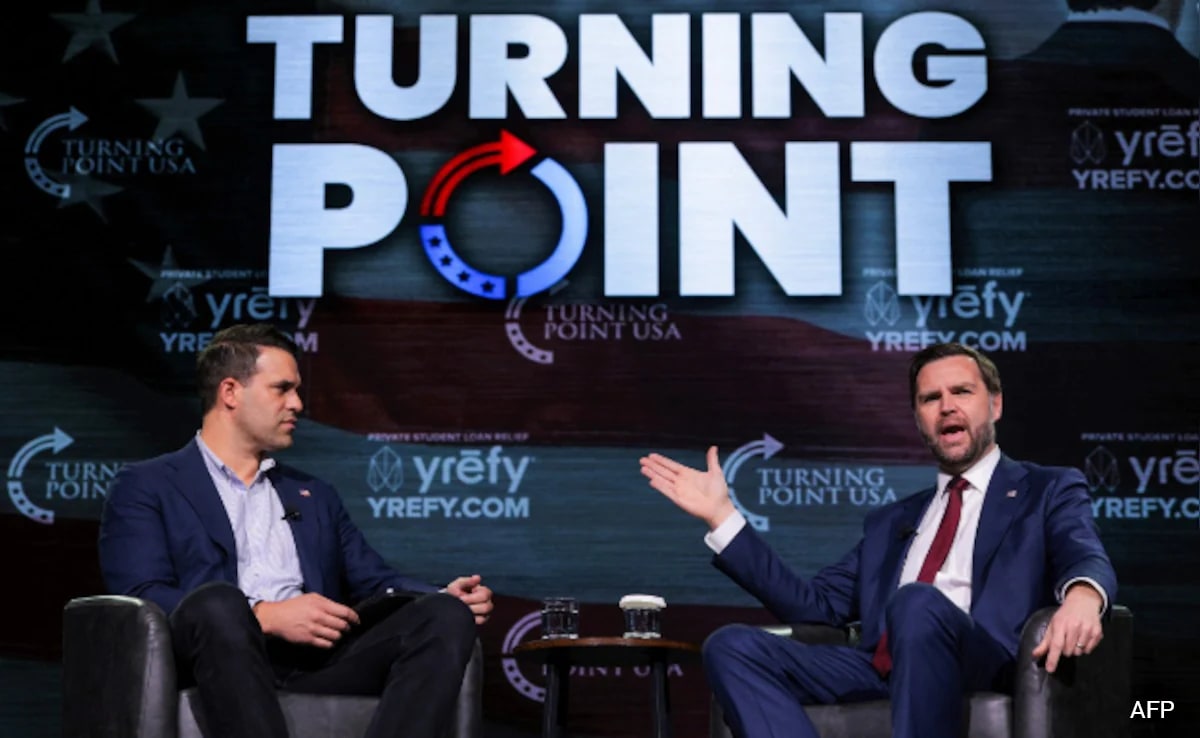
The fluorescent lights of a high-end law firm or a silicon-valley tech hub have a way of flattening the human soul into a series of data points. On paper, the H-1B visa is a logical instrument of statecraft. It is a valve. It opens to let in the "best and brightest" and closes to keep out the "frauds." But when JD Vance stands before a microphone to dissect the mechanics of American immigration, he isn't just talking about policy. He is talking about the fundamental tension of the American Dream: the line between the family we choose to honor and the strangers we choose to suspicion.
Consider the dinner table.
Vance has often spoken with a palpable, protective warmth about his in-laws. They are the success stories. They are the immigrants who "enriched" the country, the ones who played by the rules and climbed the ladder until they reached the top rungs of professional respectability. This is the narrative of the "good" immigrant—the one whose presence is justified by a high GPA, a specialized degree, and a contribution to the GDP that is visible to the naked eye. It is an easy story to love because it validates the idea that America is a meritocracy where the gatekeepers are always right.
But look closer at the shadow cast by that same dinner table.
In the same breath that he praises the enrichment brought by his wife’s family, Vance turns a cold eye toward the H-1B system itself. He describes it not as a bridge for talent, but as a "fraud." To him, the program has been hijacked by big tech corporations to suppress wages and replace American workers with cheaper, more compliant alternatives.
This isn't just a political talking point. It is a fundamental shift in how we view the person sitting in the cubicle next to us.
The Paper Trail of a Dream
Imagine a young engineer named Arjun. This is a hypothetical scenario, but one mirrored in thousands of offices from Austin to Seattle. Arjun didn't come here to commit fraud. He spent years in a cramped apartment in Hyderabad, studying until his eyes burned, all for the chance to compete in the H-1B lottery. When his name was finally drawn, it felt like winning the golden ticket.
He arrives in the United States and finds himself tied to a single employer. If he complains about the long hours, he risks his status. If he asks for a raise that matches the market rate, he is reminded that there are a thousand others waiting to take his spot.
Is Arjun the fraud? Or is he the victim of a system that treats human beings like depreciating assets?
Vance’s critique hits a nerve because it points to a real, systemic rot. Large outsourcing firms—often referred to as "body shops"—frequently flood the H-1B lottery with multiple applications for the same individuals to game the system. They snatch up the lion's share of visas, leaving smaller, innovative startups and independent workers in the dust. This is the "fraud" Vance rails against. He sees a program intended for the elite being used as a bulk-hiring tool for the mediocre.
Yet, there is a biting irony here. The very "enrichment" he praises in his own family often began with the same legal pathways he now views with skepticism. The line between a "gifted professional" and a "wage-suppressing fraud" is often drawn by whoever happens to be holding the pen at the time.
The Quiet Cost of Disbelief
When a leader labels a massive federal program as a fraud, the impact ripples far beyond the halls of Congress. It settles into the coffee shops and the school gates. It creates a climate where every person on a work visa is looked at with a slight, unspoken question: Are you here because you're the best, or are you here because you're cheap?
This is the invisible tax on the H-1B holder.
The stress is a physical weight. I’ve seen it in the hands of friends who can’t sleep because their visa renewal is stuck in a processing backlog. I’ve heard it in the voices of parents who realize that if they lose their job, their children—who speak with American accents and know nothing of their "home" country—will be uprooted in sixty days.
Vance’s rhetoric creates a tiered system of belonging. In this worldview, there are the "good ones" who have already arrived and proven their worth, and then there is the "systemic mess" that currently brings people in. It treats immigration like a closed book where we’ve already read the best chapters and are now just scanning for typos.
The problem with this approach is that it ignores the messy, unquantifiable reality of human potential. You cannot always tell who will "enrich" a country from a visa application. The person who comes in as a "mediocre" junior coder might be the person who founds the next healthcare revolution ten years later. But they need the stability to stay. They need to know they aren't viewed as a statistical error.
The Corporate Machine
If we follow Vance’s logic to its core, the real villain isn't the immigrant. It is the corporate structure that prefers a captive workforce over a free one.
The H-1B program, as it currently stands, does give employers an unhealthy amount of leverage. Because the visa is tied to the job, the worker is not truly free to participate in the open market. This does put downward pressure on wages. It does make it harder for American citizens to compete on a level playing field.
But the solution Vance proposes—labeling the whole thing a fraud and tightening the screws—often misses the human target. Instead of empowering the worker by making the visa portable, which would allow them to leave an abusive or underpaying employer and thus force wages up, the political instinct is often to build a higher wall.
It is easier to stoke resentment against the "fraudulent" outsider than it is to dismantle the corporate lobbying that keeps the system broken.
We are currently living through a period of intense fragmentation. We want the benefits of a global economy—the cheap tech, the rapid innovation, the medical breakthroughs—without the human presence that makes those things possible. We want the "enrichment" without the "entry."
The Dinner Table and the Gate
Politics is rarely about the facts on the page. It is about the stories we tell ourselves about who belongs.
When JD Vance speaks about his in-laws, he is telling a story of love and personal evidence. He knows them. He sees their humanity. They are not "data points" or "visas"; they are family. But when he speaks about the thousands of people currently waiting in the H-1B line, he is telling a story of abstractions. He is looking at a spreadsheet and seeing a threat.
The tragedy of the modern immigration debate is that we have lost the ability to see the "Arjuns" of the world as potential "in-laws." We have decided that the ladder should be pulled up the moment our own loved ones have reached the top.
The H-1B program is flawed. It is bureaucratic, it is exploited by massive corporations, and it often leaves workers in a state of legal limbo that borders on indentured servitude. But calling it a "fraud" dismisses the millions of hours of honest work, the taxes paid, the houses bought, and the lives built by those who are just trying to find a place where their talents are valued.
We are left with a fundamental question: Is America a fortress to be guarded, or a laboratory to be staffed?
If we choose the fortress, we might save a few jobs in the short term, but we lose the very spark that made the fortress worth guarding in the first place. We lose the restless, hungry energy of the person who is willing to cross an ocean just for the chance to work.
The "enrichment" Vance talks about doesn't happen because of a perfect visa process. It happens despite a broken one. It happens because the human spirit is more resilient than a government form.
As the sun sets over a suburb in Ohio or a tech campus in California, the reality remains the same. There are people sitting at tables, looking at their children, and wondering if the country they’ve poured their lives into will ever see them as more than a fraud. They aren't looking for a handout or a shortcut. They are looking for the same thing JD Vance's in-laws found: a chance to be judged by their contribution rather than their origin.
The ghost in the machine isn't a fraudulent worker. It’s the fear that there isn't enough room at the table for everyone who is willing to bring a chair.