The $259 Million Accounting Trick
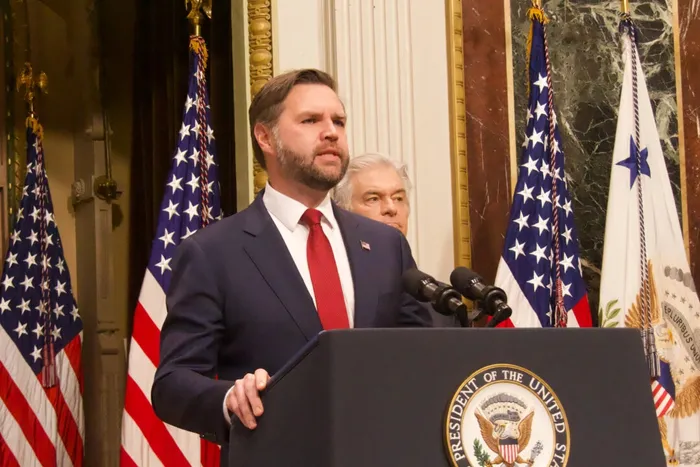
JD Vance’s announcement regarding the freezing of $259 million in Medicaid funds for Minnesota is being hailed as a victory for fiscal responsibility. It isn’t. It is a high-definition performance of "budgetary theater" designed to distract from a systemic rot that no amount of fraud-hunting will ever fix.
The consensus view—the one you’ll find in every dry news cycle—is simple: Fraud is a leak. If we plug the leak, the bucket stays full. This logic is seductive, easy to explain on a campaign trail, and fundamentally wrong. In the world of healthcare economics, focusing on the "bad actors" and the "fraud rings" is like trying to lower the ocean's temperature by throwing an ice cube into the Atlantic. Also making news recently: The Cuban Oil Gambit Why Trump’s Private Sector Green Light is a Death Sentence for Havana’s Old Guard.
When the federal government withholds $259 million from a state like Minnesota, they aren’t "saving" money. They are shifting the burden of administrative chaos onto a system that is already buckling under its own weight. I have watched state agencies burn $10 million in labor and software costs just to recover $2 million in improper payments. We are spending dollars to save dimes, all while the real engine of healthcare inflation—the misaligned incentives of the fee-for-service model—grinds on undisturbed.
The Myth of the Fraudulent Bogeyman
Most people imagine Medicaid fraud as a shadowy figure in a basement running a sophisticated hacking operation. The reality is far more mundane and far more damaging. The vast majority of what we label "fraud, waste, and abuse" (FWA) is actually administrative friction. Additional details on this are detailed by Investopedia.
It is a physician’s assistant who checks the wrong box on a 40-page digital form. It is a home health aide who forgets to log out of an app because their patient had a fall. It is a billing code that was updated in Tuesday’s federal register but didn't hit the state’s legacy COBOL-based system until Friday.
By treating these errors as criminal intent, the government creates a climate of fear that drives the best providers out of the Medicaid program entirely. When the "honest" doctors leave because they can't handle the audit risk, who stays? The very people who are good at gaming the system.
We aren't purging the "fraudsters." We are purging the competent.
The False Idols of Investigation
Vance’s "new phase" of investigations relies on the assumption that more oversight equals better outcomes. It’s an old-school management fallacy. In any complex system, adding more layers of inspection doesn't improve quality; it merely increases the cost of the process.
Consider the Detection Paradox. As you increase the sensitivity of your fraud detection algorithms, you inevitably increase your "False Positive" rate.
- The Investigation: A state agency flags a $50,000 payment to a rural clinic as "suspicious."
- The Freeze: Funding is withheld immediately under the new "aggressive" posture.
- The Fallout: The clinic, which operates on razor-thin margins, can't meet payroll. They stop taking new Medicaid patients.
- The Resolution: Eighteen months later, an audit proves the payment was legitimate. The "fraud" was actually a spike in seasonal flu cases the algorithm didn't account for.
The government "saved" $50,000 for a year and a half. Meanwhile, 300 low-income patients lost their primary care provider and ended up in the Emergency Room—where the cost of care is $1,500 per visit instead of $150.
Congratulations. You saved fifty grand and cost the taxpayers half a million.
Why Minnesota is the Wrong Target
The choice of Minnesota is politically convenient but economically lazy. Minnesota consistently ranks as one of the most efficient healthcare markets in the United States. If you want to find real, systemic bleeding of public funds, you don't look at the states with high oversight; you look at the states where the "medical loss ratio" is a suggestion rather than a rule.
The $259 million figure is a drop in the bucket compared to the **$800 billion** spent annually on Medicaid. Vance is chasing 0.03% of the budget. It’s a rounding error masquerading as a crusade.
True disruption of healthcare costs doesn't come from auditing the past; it comes from re-engineering the future. We are obsessed with who got paid, when we should be obsessed with why we are paying for those services in the first place.
The Counter-Intuitive Solution: Radical Simplification
If we actually wanted to "save" Medicaid, we would stop hiring investigators and start firing the people who write the regulations.
The Medicaid manual is thousands of pages of dense, contradictory prose. It is designed to be incomprehensible. This complexity is the fertile soil where actual fraud grows. If the rules are so complex that no one can follow them, then everyone is technically a criminal. When everyone is a criminal, the "prosecutor" (in this case, the federal government) gets to pick and choose who to punish based on political optics.
Instead of "investigating" Minnesota, the federal government should be mandated to:
- Standardize Billing Codes Nationally: Eliminate the 50 different "dialects" of Medicaid billing that allow shady billing services to hide double-charges in the gaps.
- Move to Capitation: Stop paying for every single "thump and bump" (fee-for-service). Pay providers a flat fee to keep a person healthy. If the provider keeps the person out of the hospital, they keep the profit. If they fail, they lose money. In a capitated system, "billing fraud" literally cannot exist because there is no bill to pad.
- Automated Eligibility: Use real-time IRS and labor data to verify eligibility instantly, rather than relying on "re-determination" periods that create massive gaps in coverage and administrative nightmares.
The Irony of "Withholding" Funds
Withholding funds is the ultimate "tough guy" move in politics, but in business, it’s a sign of a failing partnership. When a venture capitalist withholds a tranche of funding from a startup, it’s usually because the startup is dying. When the federal government withholds funds from a state, it’s because the federal government has lost control of the policy.
The $259 million in frozen funds isn't sitting in a vault. It’s an accounting entry. While that money stays in Washington, the people in Duluth and Minneapolis who need those services don't disappear. Their health needs don't go on "pause." They simply shift to more expensive, uncompensated care models.
This is the hidden tax of "fraud investigations." You don't eliminate the cost; you just change the name on the invoice from "Medicaid" to "Uncompensated Care Pool" or "County Indigent Fund."
The Real Fraud is the Focus
The real fraud being committed here isn't by a billing clerk in St. Paul. It is the intellectual fraud being perpetrated on the American taxpayer: the idea that we can "investigate" our way to a balanced budget.
We are currently spending roughly 17% of our GDP on healthcare. Other developed nations spend 10-11% and have better outcomes. That 6% gap is where the real money is. It’s not in the $259 million of "improper payments" in Minnesota. It’s in the billions we spend on administrative overhead, middle-man PBM (Pharmacy Benefit Manager) markups, and a legal system that requires defensive medicine at every turn.
Vance is focused on the smoke because it’s easy to see and makes for a great headline. But the house is on fire because of a faulty foundation, not because someone left a candle burning in the guest room.
Stop cheering for the "crackdown." Start demanding a system so simple that a crackdown isn't necessary.
Burn the manual. Automate the eligibility. Kill the fee-for-service model. Anything else is just a press release.