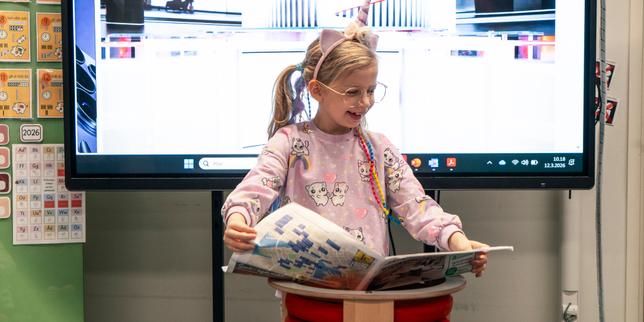
Finland is the darling of the educational world. Every few years, a fresh wave of journalists descends upon Helsinki to marvel at "media literacy" curricula that supposedly turn twelve-year-olds into elite disinformation hunters. The narrative is always the same: by "planting the seed" of critical thinking early, we create a generation immune to the toxins of the internet.
It is a beautiful story. It is also a dangerous delusion.
The industry consensus is that the solution to a broken information ecosystem is more "critical thinking." We are told that if we just teach kids to check sources, identify bias, and spot "fake news," the digital age will become a garden of reason. I have watched school boards and tech giants sink hundreds of millions into these programs. I have seen the slide decks. I have seen the curriculum maps. And I have seen the results: a generation that doesn't trust anything, which is exactly the goal of the very propagandists these programs claim to fight.
The Skepticism Trap
True critical thinking is a rigorous, high-effort cognitive process. It requires deep domain knowledge. You cannot "critically think" about a complex geopolitical conflict or a nuanced climate study if you don't know the baseline facts of the subject.
What we are teaching instead is reflexive skepticism.
We tell students to "question everything." So they do. They question the mainstream media. They question the textbook. They question the teacher. But because they lack the deep context to evaluate the answers, they fall into the "lateral reading" trap. They move from one source to another, assuming that because two things disagree, the truth must be "somewhere in the middle" or, worse, that truth is entirely subjective.
This isn't empowerment. It's intellectual nihilism. When you teach a child to doubt every piece of information before they have built a foundation of actual knowledge, you aren't building a citizen. You are building a conspiracy theorist. The leap from "The New York Times has an editorial bias" to "Everything is a lie" is much shorter than educators want to admit.
The Information Overload Myth
The "Finland Model" proponents argue that the problem is the sheer volume of information. They claim kids need filters because they are drowning in content.
This is a misunderstanding of the problem. The issue isn't volume; it's epistemic fragmentation.
In the pre-digital era, there was a shared reality. You could disagree on the interpretation of facts, but the facts were largely settled by institutional gatekeepers. Media literacy advocates want to replace those gatekeepers with individual "fact-checkers."
Think about the absurdity of that. We are asking a teenager with a developing prefrontal cortex to do the work that used to require a team of seasoned editors and subject-matter experts. We are offloading the burden of institutional integrity onto the individual student. It is the ultimate neoliberal dodge: "The system is broken, so it's your job to not get fooled."
Why Fact-Checking is a Failed Metric
Most media literacy programs focus on "fact-checking" as the gold standard. They use acronyms and checklists.
- Is the author named?
- Is the site a .org or a .com?
- Are there citations?
These are cosmetic markers. Any sophisticated disinformation agent—be it a state actor or a profit-driven troll farm—knows how to mimic these signals. They can buy a .org domain. They can cite "studies" from think tanks they funded themselves. They can provide a named author with a fake LinkedIn profile.
When we teach kids to look for these surface-level signals, we aren't teaching them to think. We are teaching them to follow a rubric. We are giving them a false sense of security. I’ve interviewed students who "verified" a piece of propaganda because it had a "professional-looking layout" and "lots of links." They followed the curriculum perfectly. And they failed the test of reality.
The High Cost of the "Critical" Mindset
There is a psychological toll to this constant state of high-alert skepticism. Education should be, at its core, an act of trust. To learn, a student must be willing to accept—at least temporarily—the authority of the teacher and the validity of the material.
By prioritizing "critical thinking" over "content mastery," we are eroding the teacher-student contract. If the primary lens of the student is "How is this person trying to manipulate me?", the window for genuine curiosity slams shut.
In Finland and elsewhere, we see a rise in intellectual arrogance. Students who have completed these programs often believe they are smarter than the information they consume. They think they have "cracked the code." This arrogance makes them more vulnerable to sophisticated misinformation, not less. They stop looking for their own blind spots because they believe their "media literacy training" has eliminated them.
The Expertise Gap
You cannot teach "thinking" in a vacuum. Critical thinking is $Domain Knowledge \times Cognitive Rigor$.
$$CT = K \cdot R$$
Where $CT$ is critical thinking, $K$ is the depth of knowledge in a specific field, and $R$ is the application of logic. If $K$ is near zero, $CT$ will always be near zero, no matter how high the rigor.
Yet, schools are cutting back on "rote" history, science, and literature to make room for "21st-century skills" like media literacy. We are producing students who know how to analyze a tweet but don't know the history of the Cold War. They can spot a logical fallacy but can't explain the basic principles of economics.
Without the $K$, the "literacy" is just a set of empty tools. It's like teaching someone how to use a high-powered microscope but never showing them what a healthy cell looks like. They’ll see things, but they won't have any idea if what they’re seeing is a breakthrough or a smudge on the lens.
The Silicon Valley Incentive
Why is this model so popular? Follow the money.
Big Tech loves media literacy programs. Google and Meta pour millions into these initiatives. Why? Because it shifts the responsibility from the platform to the user. If a platform's algorithm promotes a deepfake that incites violence, and the defense is "we provided media literacy tools to the users," the platform evades accountability.
By supporting these programs, tech giants are essentially saying, "Our product is fine; the users just don't know how to drive it." It’s the digital equivalent of an oil company telling you to recycle your plastic straws to save the ocean. It’s a distraction from the structural reality of how information is bought, sold, and prioritized.
The Finnish Anomaly
People point to Finland’s high PISA scores and low susceptibility to Russian propaganda as proof that their model works. This is a classic case of confusing correlation with causation.
Finland has high social trust. It has a robust social safety net. It has a highly homogenous population with a shared cultural history. Most importantly, it has an incredibly high standard for teacher training—teachers there are highly respected and hold master's degrees.
The "success" of Finnish students isn't because of a specific "media literacy" module. It's because they have a functional society where people generally trust their neighbors and their institutions. You can't export a curriculum to a fragmented, low-trust society like the United States or the UK and expect the same results. In a low-trust environment, media literacy training just provides better tools for people to justify their existing biases.
Dismantling the Premise
People often ask: "But shouldn't kids know how to spot a fake video?"
Yes. But that’s a technical skill, not an intellectual one. Teaching a kid to recognize an AI-generated image is like teaching them not to touch a hot stove. It’s necessary, but it’s not "critical thinking."
The wrong question is: "How do we teach kids to filter the internet?"
The right question is: "How do we rebuild the intellectual foundations that make filters unnecessary?"
If a student understands the historical context of a conflict, they don't need a "fact-checking" site to tell them when a meme is lying. They can feel the friction between the lie and their own knowledge. That friction is the only real defense we have.
The Actionable Pivot
Stop focusing on the "media" and start focusing on the "literacy."
- Prioritize Deep Knowledge: Double down on history, hard sciences, and classical literature. A student who has read Thucydides or understands the laws of thermodynamics is much harder to fool than one who has spent forty hours on "digital citizenship" modules.
- Teach Formal Logic: Move away from "spotting bias" and toward the mechanics of an argument. Can the student identify a syllogism? Can they spot a non-sequitur? This is a transferable skill that doesn't depend on the current political climate.
- Encourage Epistemic Humility: Instead of telling kids they are the "new gatekeepers," tell them the truth: the world is unimaginably complex, and they will never be experts in everything. Teach them how to identify actual expertise, which is not the same as identifying a "reliable source."
The "seed" being planted in Finland and elsewhere isn't critical thinking. It's a hyper-individualistic, skeptical rot that weakens the very foundations of shared truth. We don't need more "critical" kids. We need more knowledgeable ones.
Knowledge is the only thing that doesn't require a checklist to verify. It is the light that makes the shadows of disinformation disappear without the need for a magnifying glass.
Stop teaching kids to squint at the screen and start teaching them to read the world.
_