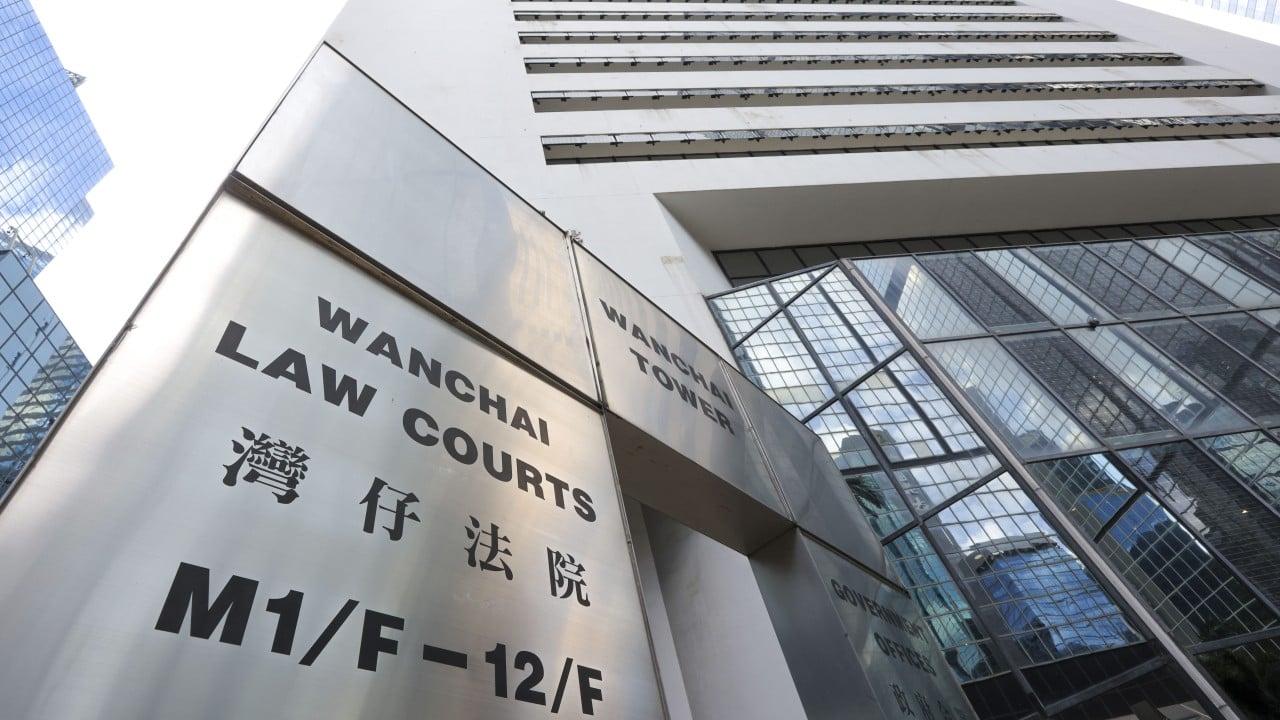
The conclusion of mass civil unrest is rarely determined on the streets; instead, it is executed through the systematic operation of the judicial system. The legal proceedings following the November 2019 Hong Kong Polytechnic University (PolyU) siege demonstrate how a state uses statutory frameworks to process, categorize, and penalize large cohorts of defendants. Rather than relying on sweeping political declarations, the post-2019 state strategy in Hong Kong operates as a high-throughput legal mechanism. This approach converts tactical street arrests into long-term prison sentences by applying joint enterprise doctrines and specific statutory thresholds under the Public Order Ordinance.
To understand how 213 arrests made on a single night—November 18, 2019, along the Nathan Road corridor—were processed into systematically organized trial groups, one must examine the structural framework of Hong Kong’s anti-rioting legislation. The prosecution's strategy relies on a multi-tiered legal architecture that minimizes the need to prove individualized acts of violence, focusing instead on spatial proximity, timing, and collective intent. You might also find this related coverage useful: The Russia China Alliance is an Expensive Illusion and Beijing Holds the Receipt.
The Legal Architecture of Mass Prosecutions
The processing of defendants from the PolyU periphery functions through a three-part legal framework. This framework allows the Department of Justice to secure high conviction rates even when direct evidence of a specific defendant throwing a projectile or destroying property is absent.
                  [ Mass Arrest Event ]
             (e.g., Nathan Road Cordon)
                         │
                         ▼
           ┌───────────────────────────┐
           │   1. Spatial-Temporal     │ -> Establishes presence within
           │      Proximity Matrix     │    defined perimeter & timeframe
           └─────────────┬─────────────┘
                         │
                         ▼
           ┌───────────────────────────┐
           │   2. Common Purpose and   │ -> Inferences drawn from gear
           │      Joint Enterprise     │    (masks, saline, black attire)
           └─────────────┬─────────────┘
                         │
                         ▼
           ┌───────────────────────────┐
           │   3. Statutory Threshold  │ -> Converts unlawful assembly
           │      Shifts (Section 19)  │    to rioting (max 10 years)
           └───────────────────────────┘
1. The Spatial-Temporal Proximity Matrix
Under Section 19 of the Public Order Ordinance (Cap. 245), the prosecution must first establish that an assembly took place and that it breached the peace. In mass arrest scenarios, such as the police containment operation between Waterloo Road and Hamilton Street, the court defines a specific geographic perimeter and a precise timeframe. As discussed in recent articles by Reuters, the effects are significant.
Presence within this designated zone during an active confrontation creates a strong circumstantial inference. The judiciary consistently rejects defense arguments of passive observation or curiosity. Individuals found within the outer cordons during active operations are legally categorized as participants rather than bystanders, unless verifiable evidence demonstrates an inability to leave.
2. Common Purpose and Joint Enterprise
The common law doctrine of joint enterprise allows the court to hold an individual liable for the collective actions of a group. In the trials stemming from the Nathan Road arrests, the prosecution relies on a standardized set of physical indicators to establish a shared intent to breach the peace:
- Uniformity of Dress: Wearing black clothing and protective gear is treated as a visual marker of alignment with the collective body.
- Possession of Specialized Equipment: Carrying items like saline solution, industrial respirators, spare goggles, or laser pointers is interpreted as preparation for tactical confrontation rather than peaceful demonstration.
- Proximity to Supply Lines: Being positioned within the active zone where defensive structures or improvised weapons (such as Molotov cocktails) are deployed signals participation in a coordinated logistical network.
3. Statutory Threshold Shifts
The transition from a charge of unlawful assembly (Section 18) to rioting (Section 19) depends entirely on whether the assembly executes a breach of the peace. The law does not require every member of the assembly to commit a violent act. Once a single member of an unlawful gathering commits a breach of the peace, the entire assembly is legally transformed into a riot.
Consequently, the liability for any property damage, arson, or physical assault committed by a subset of individuals expands to encompass all individuals within the defined group. This structural mechanism explains why defendants face significant prison terms regardless of whether they personally handled weapons or engaged in property destruction.
Strategic Defendant Decisions: The Mechanics of Guilty Pleas
The choice to enter a guilty plea in Hong Kong’s District Court involves a calculated assessment of structural penalties, evidentiary weight, and statutory sentencing discounts. In cases involving the PolyU outer perimeter, defendants face a maximum sentence of seven years in the District Court, compared to a ten-year statutory maximum in the High Court.
Sentence Reduction (%) = f(Timing of Plea)
Where:
- Plea entered at earliest opportunity = 33.3% reduction
- Plea entered mid-trial = ~20% to 25% reduction
- Conviction after full trial = 0% reduction
The sentencing discount operates on a strict timeline. A defendant who enters a guilty plea at the earliest opportunity receives a mandatory one-third (33.3%) reduction from the sentencing starting point determined by the judge. If a defendant delays the plea until the trial is underway, this discount drops to between 20% and 25%, depending on the court's discretion and the judicial resources saved.
This dynamic creates a distinct division among co-defendants, which is evident in the final trial groups processed through the West Kowloon Court:
| Defendant Group | Legal Strategy | Evidentiary Impact | Sentencing Outcome |
|---|---|---|---|
| Plea of Guilty | Immediate admission of statutory liability. | Waives the right to contest prosecution witness testimony (including anonymous law enforcement personnel). | Receives an immediate 33.3% reduction from the judicial sentencing starting point. |
| Plea of Not Guilty | Contests identity, presence, or intent. | Subjects the prosecution's case to cross-examination; tests anonymity orders and police testimony. | Forfeits the mandatory sentencing discount if convicted, risking the maximum term allowed by the court's jurisdiction. |
This structural design incentivizes guilty pleas when the prosecution's circumstantial evidence—such as a defendant's arrest in black clothing within a cordoned riot zone—is high. Entering a guilty plea serves as a pragmatic risk-mitigation strategy to shorten prison terms, rather than an expression of personal remorse.
Operational Logistics of Judicial Management
Processing more than 200 defendants from a single incident requires significant logistical adaptations within the court system. To prevent judicial gridlock, the Department of Justice divided the 213 Nathan Road corridor arrests into 17 distinct trial groups. This division reveals specific systemic operational strategies:
The first strategy involves managing witness protection and institutional security. During these proceedings, the court frequently grants anonymity orders for law enforcement witnesses. Officers testify from behind protective barriers and enter the courtroom through restricted access routes. This measure balances the requirement for oral testimony against the operational security of state security personnel, altering the open nature of traditional common law cross-examinations.
The second strategy concerns the standardization of evidentiary facts. By partitioning a massive incident into smaller, manageable trial units, the prosecution can repeatedly use a core set of evidence regarding the general riot conditions. This includes video footage of tactical movements, tallies of recovered incendiary devices (such as the 251 Molotov cocktails cited in court records), and documentation of infrastructure damage.
Once a court accepts this baseline narrative in early trials, it forms an established factual background for subsequent groups. This cumulative judicial efficiency increases the pressure on remaining defendants to settle their cases through pleas rather than proceeding to trial.
Structural Divergences in Sentencing
An analysis of judicial outcomes across the PolyU-related cases reveals that sentences are determined by age, specific items carried, and the degree of organization, rather than applying a single uniform penalty.
                    [ Judicial Evaluation Process ]
                                   │
         ┌─────────────────────────┴─────────────────────────┐
         ▼                                                   ▼
  (Adult Defendants)                               (Juvenile Defendants)
┌─────────────────────────────────┐               ┌─────────────────────────────────┐
│ Sentencing Starting Point       │               │ Age-Specific Exceptions         │
│ (Determined by gravity of riot) │               │ (Under 21 years old)            │
└────────┬────────────────────────┘               └────────┬────────────────────────┘
         │                                                 │
         ▼                                                 ▼
┌─────────────────────────────────┐               ┌─────────────────────────────────┐
│ Aggravating Factor Adjustments   │               │ Custodial Alternatives          │
│ (+Months for tools, weapons)    │               │ (Training/Rehabilitation Center)│
└────────┬────────────────────────┘               └─────────────────────────────────┘
         │
         ▼
┌─────────────────────────────────┐
│ Mitigating Factor Deductions    │
│ (-Months for guilty plea, age)  │
└─────────────────────────────────┘
For adult defendants, judges establish a starting point based on the severity of the localized riot, typically ranging from three to five years. The court then adjusts this baseline by evaluating specific aggravating factors, such as possessing tools fit for an unlawful purpose (like spanners, pliers, or chemical solvents containing toluene).
For younger defendants, the system introduces alternative custodial options. Under the Criminal Procedure Ordinance, individuals under the age of 21 can be sentenced to a Training Centre or a Rehabilitation Centre instead of a conventional prison. These institutions focus on institutional discipline and labor for indeterminate periods managed by the Correctional Services Department, balancing deterrence with age-related adjustments.
Systemic Long-Term Impact
The systematic prosecution of the PolyU siege defendants highlights a permanent shift in how Hong Kong manages public dissent. By relying on organized group trials, collective liability doctrines, and uniform sentencing starting points, the judicial system has established an efficient process for managing mass arrests. This legal framework reduces the state's burden of proof regarding individual actions, making presence within a prohibited zone a high-risk decision with significant statutory penalties.
As the final cohorts complete their trials and mitigation phases, these rulings form a rigorous body of precedent. This legal structure ensures that future expressions of civil unrest are constrained not just by immediate police action on the street, but by a highly organized judicial process designed to deliver predictable, long-term custodial outcomes.
The legal mechanisms of mass prosecution are further explained in Nine Convicted of Rioting during 2019 PolyU Siege, which covers the specific trial details and judicial rationale used to convict individuals based on spatial proximity and collective intent during the campus demonstrations.