The upcoming donor conference in Germany arrives at a critical inflection point where the gap between required capital and allocated funding for Sudan has moved beyond a humanitarian deficit into a systemic collapse of regional stability. After three years of intensified conflict between the Sudanese Armed Forces (SAF) and the Rapid Support Forces (RSF), the international community faces a math problem: the cost of containment is now exponentially higher than the cost of prevention would have been in 2021. To understand why international intervention has failed to stabilize the region, one must analyze the structural barriers in three distinct domains: the logistical bottleneck of "Access-based Financing," the erosion of the Sudanese Central Bank's sovereign functions, and the "Conflict-Entropy" effect on neighboring states.
The Triad of Humanitarian Insolvency
The crisis in Sudan is not a singular event but a convergence of three distinct failure states. Each requires a different strategic response, yet donors often conflate them into a single request for "aid."
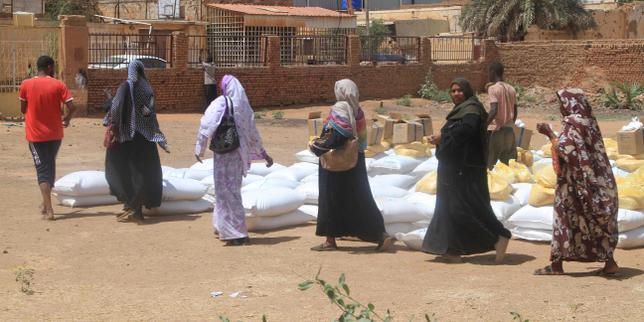
- Supply Chain Disintegration: The physical movement of goods is restricted by a dual-gatekeeper system. Both the SAF and RSF utilize "administrative taxation"—the slowing of permits and the demand for fees—to weaponize the starvation of territories held by the opposition.
- Monetary Displacement: The collapse of the Sudanese Pound (SDG) has moved the economy toward a fragmented barter and dollarized shadow system. This makes traditional cash-transfer programs ineffective because the local markets they are meant to stimulate no longer possess the inventory to meet demand.
- The Refugee Multiplier: Sudan’s neighbors—primarily Chad, South Sudan, and Egypt—are absorbing millions of displaced persons while their own fiscal buffers are exhausted. This creates a "contagion of fragility" where the collapse of one state's infrastructure triggers a chain reaction across the Sahel and East Africa.
Structural Bottlenecks in the German Pledging Framework
Donors gathering in Berlin are operating under an antiquated "Pledge-to-Disbursement" model that is fundamentally mismatched with the speed of Sudanese hyper-inflation and territorial shifts. The primary friction points are not just the lack of funds, but the velocity and modality of those funds.
The Problem of Static Pledges
When a nation pledges $100 million in April, the real-world purchasing power of that commitment in Port Sudan or Darfur often degrades by 30-40% by the time contracts are signed and goods are shipped. The volatility of the regional grain market, coupled with the exorbitant "conflict premiums" charged by logistics providers, means that a 2026 dollar buys significantly less than a 2024 dollar did. Donors have failed to implement indexed funding—adjusting pledges to the consumer price index of regional hubs—which results in chronic under-provisioning.
Sovereignty and the "Last Mile" Paradox
International law and diplomatic protocol force donors to interact with the SAF-aligned government in Port Sudan as the legitimate sovereign entity. However, the RSF controls significant agricultural and mineral-rich swaths of the country. This creates a paradox:
- Sending aid through official channels allows the SAF to divert resources or block delivery to RSF-controlled civilian populations.
- Bypassing official channels to reach RSF-held areas risks de facto recognition of a paramilitary group and violates international sovereignty norms.
This "Last Mile" paradox remains the primary reason why only a fraction of pledged aid ever reaches the "hunger hotspots" in Khartoum and Darfur.
The Cost Function of Regional Destabilization
A data-driven analysis of the Sudanese conflict reveals that for every $1 of humanitarian aid withheld, the neighboring countries incur roughly $4.50 in secondary costs related to security, health infrastructure, and lost trade.
- South Sudan’s Oil Dependency: The conflict has damaged the infrastructure required to transport South Sudanese oil to the Red Sea. Because oil exports account for over 90% of South Sudan's revenue, the Sudanese civil war is effectively bankrupting the South Sudanese state.
- Chad’s Resource Strain: Chad, already one of the world's poorest nations, is managing a refugee influx that has increased its population density in border regions by 400%. The pressure on water and grazing land is triggering localized ethnic conflicts within Chad itself.
- The Mediterranean Migration Pipeline: As the internal displacement in Sudan exceeds 10 million people, the "push factor" toward the Central Mediterranean route intensifies. The European Union’s interest in the Berlin conference is driven by the realization that failing to fund the camps in eastern Chad today will result in a 200% increase in irregular migration arrivals in 2027.
The Failure of Neutrality in Financial Distribution
The myth of "neutral aid" is one of the most significant obstacles to a successful outcome in Germany. In a total-war scenario, there is no neutral ground. Every calorie delivered into a conflict zone is a strategic asset.
Donors have historically relied on UN agencies to maintain a neutral stance, but the RSF and SAF have both mastered the art of "bureaucratizing" the UN out of existence. By requiring multiple travel permits for a single convoy or "inspecting" medical shipments until the supplies expire, the warring parties have successfully integrated the international aid apparatus into their military strategies.
To break this cycle, the international community must move toward Decentralized Humanitarian Logistics (DHL). This involves shifting the bulk of funding away from centralized international NGOs and toward local "Emergency Response Rooms" (ERRs). These are grassroots, civilian-led networks that operate beneath the radar of the warring factions. While they lack the scale of the World Food Programme, they possess the local intelligence to navigate the "gray zones" where traditional aid cannot go.
The Weaponization of the Agricultural Cycle
Sudan’s crisis is moving from a conflict of bullets to a conflict of soil. The timing of the German conference is significant because it precedes the main planting season.
Sudan was once envisioned as the "breadbasket of the Arab world." Today, the Gezira Scheme—the world's largest irrigation project—is a battlefield. The RSF’s occupation of Wad Madani disrupted the supply of seeds, fertilizers, and fuel. If the 2026 planting season is missed, the famine will move from a localized phenomenon in Darfur to a nationwide catastrophe that no amount of international aid can remediate via imports alone.
The mechanism of this failure is a feedback loop:
- Displacement leads to abandoned farms.
- Looting of grain silos destroys seed stocks for the next year.
- Fuel shortages prevent the operation of irrigation pumps.
- Food scarcity drives further displacement, feeding back into step one.
Redefining the "Success" Metric for the Berlin Conference
The success of the international meeting in Germany should not be measured by the total dollar amount of pledges. Instead, it must be measured by the Delta of Accessibility.
A successful outcome requires the following structural shifts:
- Conditional Sovereign Debt Relief: Leveraging Sudan’s massive external debt as a tool. Access to future debt restructuring must be explicitly tied to the opening of humanitarian corridors and the cessation of administrative interference with aid.
- Cross-Border Mandates: Strengthening the legal framework for aid to enter Sudan directly from Chad and South Sudan without the express permission of the Port Sudan government. This is a violation of traditional sovereignty that is justified under the "Responsibility to Protect" doctrine.
- Direct ERR Funding: Establishing a "rapid-response" fund that bypasses the UN's 15-20% administrative overhead and flows directly to local Sudanese mutual aid groups.
The Geopolitical Risk of the Vacuum
The hesitation of Western donors has created a vacuum being filled by "transactional actors." Countries like the UAE, Iran, and Russia have various interests in the Red Sea coastline and Sudan’s gold mines. Their "aid" is often tied to military support, which extends the duration of the conflict.
The Western strategy has been one of "de-escalation through starvation"—withholding major reconstruction funds until a ceasefire is reached. This is a fundamental miscalculation. The warring parties do not care about the macro-economy; they care about their immediate tactical survival. By allowing the formal economy to die, the international community is handing the keys of the country to whoever can control the black market and the militia-run gold trade.
Strategic Recommendation
The immediate priority for the participants of the Germany conference is the creation of a Humanitarian Escrow Account. This account should be funded by the seizure of assets tied to the warring generals and their shell companies in international jurisdictions. Instead of relying on the fluctuating generosity of taxpayer-funded budgets, the reconstruction of Sudan must be funded by the very wealth that fueled its destruction.
The second move is the deployment of Technical Support for Regional Hubs. Rather than focusing solely on the interior of Sudan, donors must over-fund the infrastructure of Chad and South Sudan. By turning the border regions into "stabilization zones" with robust healthcare, schools, and markets, the international community creates a pressure valve that prevents the total collapse of the surrounding states.
The window for a coordinated, low-cost intervention closed in 2023. We are now in the era of high-stakes damage control. The math is simple: either the international community funds a massive, decentralized logistical operation now, or it will fund a multi-decade refugee and security crisis on its own borders for the next twenty years. The Berlin conference is the final opportunity to choose the former.