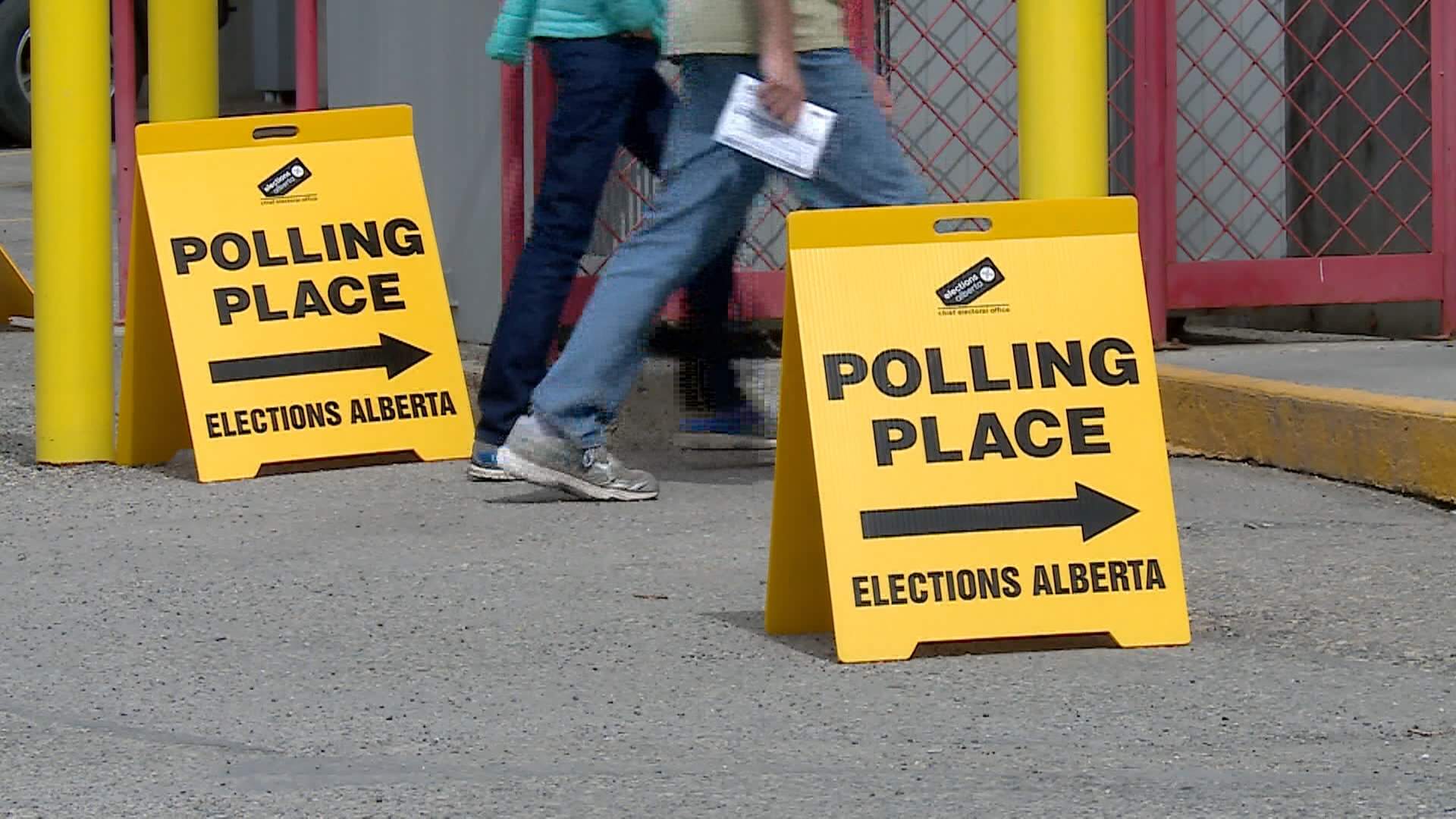
The decision by Alberta’s United Conservative Party (UCP) to review and potentially delay proposed changes to provincial electoral boundaries represents a calculated prioritization of incumbency stability over immediate demographic rebalancing. While electoral boundary commissions are ostensibly designed to maintain the principle of "one person, one vote," the timing of these adjustments functions as a critical variable in party-wide resource allocation and candidate retention. Postponing or altering the implementation of new ridings prevents the sudden fragmentation of established voter coalitions and donor networks, providing the governing party with a predictable map for the 2027 election cycle.
The Structural Tension of Electoral Redistribution
Electoral redistribution is governed by a fundamental tension between Mathematical Parity and Community of Interest. In Alberta, the Electoral Boundaries Commission Act mandates a review every eight to ten years to ensure that riding populations do not deviate more than 25% from the average provincial quotient. However, the application of this law is not a purely mechanical exercise. It involves a "Spatial Allocation Trade-off" where the commission must weigh three competing variables: Meanwhile, you can read other events here: Federal Shield Cracks in Minnesota as Prosecutors Take on ICE.
- Demographic Velocity: The rapid growth in the Calgary-Edmonton corridor relative to stagnant or shrinking rural populations.
- Geographic Cohesion: The necessity of maintaining boundaries that respect municipal limits and natural geographic features.
- Representative Accessibility: The physical ability of an MLA to serve a massive rural constituency compared to a compact urban one.
When the UCP signals a desire to revisit or delay these changes, they are responding to the fact that the current demographic shift favors urban expansion. Under strict parity, rural Alberta—the UCP’s traditional base—would see a net loss of seats, while Edmonton and Calgary would gain influence. This creates a "Representation Deficit" for the governing party’s core demographic, forcing a choice between upholding strict population equality or protecting the rural voice.
The Three Pillars of Electoral Delay Logic
The strategic rationale for revisiting proposed riding changes rests on three distinct operational pillars. To understand the bigger picture, we recommend the detailed analysis by NBC News.
I. Mitigation of Internal Cannibalization
A boundary shift often forces two sitting MLAs into the same revised district, a process known as incumbent pairing. This creates an immediate internal power struggle, depleting the party’s war chest through contested nominations and alienating local constituency associations. By delaying the implementation of new maps, the UCP leadership maintains internal caucus cohesion and avoids "Purple Zone" friction—areas where new boundaries introduce significant numbers of opposition-leaning voters into previously safe seats.
II. Optimization of Ground Operations
Political campaigns are built on historical data. Moving a boundary by even a few city blocks can render years of door-knocking data and "Get Out The Vote" (GOTV) metrics obsolete. The cost of re-profiling a riding is high; it requires a complete re-analysis of voter intent and a new strategy for local advertising. A static map allows the UCP to refine its existing "Voter Efficiency Ratio"—the ability to win the maximum number of seats with the minimum necessary vote margin.
III. Retention of Rural Legislative Weight
The rural-urban divide in Alberta is the primary cleavage in provincial politics. The proposed changes would likely concentrate more power in urban centers that have shown increasing volatility or a lean toward the NDP. The UCP's move to "revisit" the proposals is a structural defense mechanism. It seeks to preserve the "Rural Weighted Factor," ensuring that the vast geographic stretches of the province do not lose their proportional influence in the Legislative Assembly.
The Cost Function of Status Quo Boundaries
While the UCP gains short-term stability by delaying boundary changes, this strategy introduces a specific set of risks defined by the Constitutional Parity Threshold. The Canadian Charter of Rights and Freedoms, specifically Section 3 (the right to vote), has been interpreted by the Supreme Court in the Carter decision (1991) to mean "effective representation," not absolute mathematical equality. However, there is a breaking point.
If the population of a Calgary-Chestermere riding reaches 60,000 while a rural riding like Lesser Slave Lake remains at 25,000, the "Vote Value Differential" becomes a liability. This creates two specific bottlenecks:
- Legal Vulnerability: Opposition parties or civil society groups can file constitutional challenges if the deviation from the provincial average exceeds the 25% limit for too long.
- Urban Alienation: Voters in high-growth areas perceive a "Dilution Effect," where their individual vote carries less weight than a rural counterpart. This sentiment can be harvested by opposition parties to frame the governing party as anti-growth or anti-urban.
The Mechanical Advantage of Timing
The UCP’s intervention in the commission’s timeline is a mastery of "Inertia Management." By controlling the pace of the review, the government ensures that the 2027 election is fought on familiar terrain.
Consider the Incumbency Protection Variable (IPV). In a stable riding, an incumbent enjoys a 5–8% "recognition premium." When boundaries change, this premium is slashed by the percentage of new voters introduced into the district. If 30% of a riding’s population is new due to a boundary shift, the incumbent starts at a significant disadvantage, essentially running a partial "open seat" campaign. For a party holding a slim majority, protecting the IPV across 40 or 50 seats is the difference between a second term and a loss.
Tactical Diversion and Legislative Sequencing
The decision to revisit the changes is rarely framed as a partisan necessity. Instead, it is typically presented through the lens of "Public Consultation Quality." This is a classic legislative sequencing tactic. By arguing that the initial commission did not sufficiently hear from rural stakeholders or specialized interest groups, the government gains the moral high ground to reset the clock.
This creates a Consultation Loop, where:
- A preliminary report is released.
- The government identifies "procedural gaps" or "under-represented voices."
- A secondary review period is established.
- The final implementation is pushed past the next election window.
This sequence is not merely a delay; it is a recalibration of the "Electoral Calculus." It allows the party to monitor polling trends and see if their standing in urban areas improves. If the UCP gains ground in Calgary in the next 18 months, their resistance to new Calgary seats may vanish. If they remain weak in the cities, the resistance will solidify.
The Strategic Forecast for Alberta’s Map
The UCP will likely move to adjust the Electoral Boundaries Commission Act itself or issue a specific directive to the commission to increase the weight of "Special Considerations" for rural geography. This is the "Variance Expansion" play. By allowing for greater deviations (perhaps up to 30% or 35% in extreme cases), the government can maintain rural seat counts even as the population moves toward the cities.
The immediate move for the UCP leadership is to finalize the 2027 map by the end of the current legislative session. Any delay beyond this point risks a mid-campaign legal injunction or a logistical failure in candidate nominations. The strategic play is to lock in a "Defensive Map"—one that preserves the rural floor while creating just enough urban growth seats to satisfy the minimum requirements of the Electoral Boundaries Commission Act.
Voters should expect a narrative shift where "Protecting Alberta's Diversity" becomes the code for "Protecting Rural Boundaries." The success of this strategy depends entirely on the party's ability to frame the debate as a matter of fairness for remote communities, rather than a mathematical dilution of the urban vote. The final map will not be a reflection of where Albertans live today, but rather a blueprint for how the UCP intends to maintain its coalition through the end of the decade.