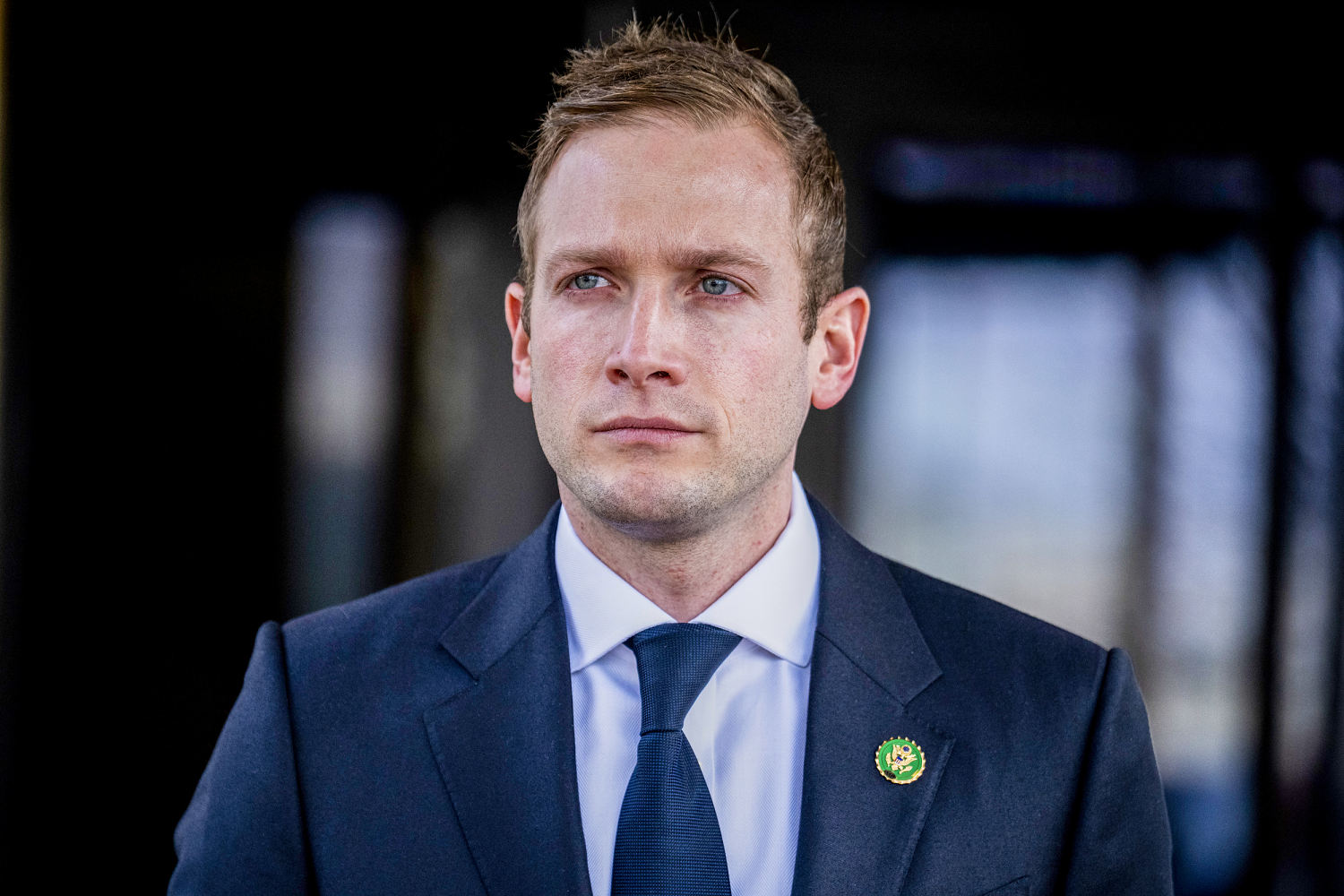
Political pundits love a clean morality play. When a congressional incumbent goes down in flames right after ugly personal allegations hit the press, the narrative writes itself before the final precinct even reports. Scandal breaks, voters recoil, justice is served.
That story is comforting. It makes politics feel rational, predictable, and vaguely karmic.
It is also completely backwards.
If you look at the fall of Ohio Republican Representative Max Miller—and the breathless media post-mortems pinning his loss squarely on the abuse allegations from his ex-wife—you are watching the political class make its favorite mistake. They are confusing the spark with the gasoline. Personal scandals rarely destroy modern incumbents on their own. What actually kills a campaign is structural rot that existed long before the court filings went public, combined with a donor and activist class looking for an exit ramp they were already desperate to take.
I have spent years watching campaigns implode from the inside, and I have seen strategists burn millions of dollars trying to "crisis-manage" scandals that weren't actually the disease. When a candidate is structurally sound, voters treat personal headlines like background noise. When a candidate is hollow, a scandal becomes a convenient excuse for allies to pull the plug and voters to stay home.
The Myth of the Moral Voter
Let's dismantle the lazy consensus first. The prevailing media take treats voters like an ethics committee weighing character evidence in a vacuum. The assumption is simple: voters heard the allegations from Miller's ex-wife, experienced a collective wave of revulsion, and switched their allegiance.
Anyone who has ever looked at cross-tabs in a modern primary or general election knows that is fantasy.
In an era of intense negative partisanship, voters routinely forgive, rationalize, or flatly ignore behavior that would have ended careers thirty years ago. Political scientists like Larry Bartels and Christopher Achen have spent decades documenting how group loyalty and partisan identity dictate voter behavior far more than candidate-specific moral evaluations. Voters don't evaluate character first and pick a side second. They pick a side first and retroactively decide what character flaws are acceptable.
When an incumbent loses after a scandal, the scandal is almost never the cause of death. It is the autopsy report's cover page.
Think about the mechanics of how political support actually erodes. A campaign does not collapse because thousands of loyal voters suddenly develop an acute sensitivity to domestic filings. A campaign collapses because its coalition was already fractured, its fundraising was already softening, or its local ground game had already alienated the precinct captains who actually drag people to the polls.
What Actually Happened in Ohio
To understand why Miller's loss happened the way it did, you have to stop looking at the tabloids and start looking at district fundamentals, primary dynamics, and elite abandonment.
Miller was never a traditional, organically grown Ohio politician who spent twenty years on city council, worked the county fair circuit, and built an unshakeable local machine. His rise was vertical, rapid, and heavily dependent on nationalized endorsements and top-down political capital. That kind of ascent gets you into office fast, especially in a favorable cycle or a redrawn district. It also leaves you with paper-thin roots when the wind shifts.
When your entire political brand is borrowed equity rather than earned local trust, you have zero margin for error.
Local party chairs, county commissioners, and grassroots organizers tolerate parachuted or top-down candidates as long as those candidates bring money, media heat, and effortless wins. The second that candidate becomes a liability—the second local officials have to spend their own political capital defending headlines at Rotary Club breakfasts—the calculation changes overnight.
The allegations from his ex-wife didn't magically turn Ohio voters into puritans. Instead, they handed every local power broker who already resented Miller's top-down rise a clean, morally unassailable reason to walk away.
Nobody in politics ever says, "I am abandoning this incumbent because he ignored my phone calls, starved the county party of resources, and took our district for granted." They say, "In light of recent troubling reports, we must focus on the future of the party."
The media quotes the statement at face value. The insiders know what just happened.
The Anatomy of Elite Abandonment
People always ask why some politicians survive horrific scandals while others vanish within weeks. The answer has nothing to do with the severity of the allegations and everything to do with institutional leverage.
Consider a thought experiment. Imagine two incumbents facing identical, documented personal scandals three months before an election.
Candidate A has spent a decade funneling state and federal infrastructure money into local districts, has personally raised millions for down-ballot state legislators, and commands fierce loyalty from the local business chamber. When the scandal breaks, those stakeholders have a massive financial and political incentive to circle the wagons. They pressure donors to hold the line. They tell local reporters the story is overblown. They suppress primary challengers or starve general election opponents of local business backing. Candidate A survives by three points.
Candidate B rode a national wave into office, treated local officials like staffers, focused exclusively on cable news hits, and let the district's constituent services atrophy. When the exact same scandal breaks, nobody picks up the phone to defend him. Donors freeze their checks—not out of moral outrage, but because they were already looking for a reason to stop writing them. Local operatives quietly sit on their hands during get-out-the-vote weekends. Candidate B loses and the press blames the scandal.
This is the core mechanism that political journalism routinely misses. Scandals are stress tests, not death sentences. They expose whether an incumbent actually built a durable coalition or merely rented a voting bloc.
Why Crisis PR Firms Love This Narrative
There is a massive industry dedicated to keeping this misconception alive. Every time a politician loses after a bad headline, crisis communications firms and political consultants point to the wreckage and tell their next client: See? That's why you need to pay us $50,000 a month to manage your narrative.
It is a brilliant racket. If consultants admit that elections are won and lost on boring, unglamorous fundamentals—constituent casework, local donor maintenance, precinct-level organization, and ideological alignment with the median district voter—then nobody needs a high-priced media strategist to spin court documents.
So the consulting class reinforces the myth that headlines dictate outcomes. They obsess over message discipline, rapid-response war rooms, and strategic silence while ignoring the fact that the campaign's field operation hasn't knocked on a door in three weeks.
I have watched candidates spend their final $400,000 on glossy reputation-rehabilitation TV spots while their ground game died on the vine. You cannot buy back trust in thirty-second increments when your own base refuses to walk precincts for you.
Answering the Wrong Questions
When readers search for what happened to Max Miller, they usually ask variations of the same predictable questions: How much did the allegations hurt him? Could he have survived with a better apology? Did swing voters decide the race?
Every one of those questions rests on a flawed premise.
- Did a better PR strategy exist? No. Once a campaign loses the quiet backing of local institutional actors, no combination of carefully worded statements will put the coalition back together. Apologizing alienates the combative wing of the base; attacking the accuser alienates the suburban moderates who already disliked the candidate's style. The trap closes because the foundation wasn't there to hold the weight.
- Did swing voters suddenly turn on him? Swing voters rarely decide low-turnout primaries or off-cycle shifts on character alone unless the opposition offers a compelling alternative. What actually moves the needle in these races is differential turnout. Soft supporters simply stay home. When five percent of an incumbent's baseline coalition decides not to bother driving to the precinct on a Tuesday, the math flips instantly. You don't need voters to switch sides to lose an election; you just need them to lose enthusiasm.
- Is this a sign that character matters again in politics? Do not kid yourself. If character suddenly mattered as a universal standard, half the incumbents in Washington would be updating their LinkedIn profiles tomorrow morning. Character only "matters" when a politician lacks the power to make it irrelevant.
The Uncomfortable Downside of This Reality
There is an obvious, bleak downside to viewing politics through this lens, and it is worth stating plainly. If personal misconduct only destroys politicians who are already structurally weak, then strong, deeply entrenched politicians are effectively immune to accountability for their private behavior.
That is not an endorsement of the system; it is a clear-eyed diagnosis of how the machinery actually operates. Pretending that voters acted as a pure moral tribunal in Ohio feels good, but it blinds citizens and political operatives alike to how power is actually gained, protected, and lost.
When observers misdiagnose a structural failure as a moral awakening, they draw completely wrong lessons for the next cycle. Challengers think all they need is oppo research to topple an incumbent, so they underinvest in voter registration and persuasion. Incumbents think all they need is a clean background check to stay safe, so they neglect the grueling, unsexy work of district maintenance.
Both sides end up flying blind.
What Smart Operatives Actually Do
If you are running a campaign, managing a public figure, or simply trying to read political news without getting fooled by narrative fluff, stop reading the headlines about what happened yesterday and look at what was built two years ago.
- Audit the coalition before the crisis hits. Look at who actually shows up when there are no cameras around. If an incumbent's inner circle consists entirely of national consultants and social media cheerleaders rather than local mayors, union leaders, business owners, and precinct captains, that politician is a dead man walking. The first stiff breeze will knock them over.
- Ignore national noise in local races. National media outlets cover congressional races like reality television because conflict drives clicks. They amplify personal drama because drama is easy to explain in a two-minute cable segment. Explaining redistricting shifts, suburban turnout drop-off, and county-level fundraising fatigue puts viewers to sleep. Always discount the most dramatic explanation by at least fifty percent.
- Watch the money, not the quotes. Politicians and party leaders lie constantly in press releases. Donors rarely lie with their checkbooks. When local major donors stop maxing out two quarters before a scandal breaks, the race was already over. The scandal just gave the press a story to write about the funeral.
- Build equity through friction, not shortcuts. Any political career built on shortcuts—celebrity, borrowed endorsements, viral moments—carries massive hidden debt. Real political durability comes from years of unglamorous transactional loyalty: showing up to small-town meetings, solving mundane bureaucratic problems for constituents, and sharing credit with local allies.
Max Miller didn't lose his seat because voters suddenly developed an intolerance for messy personal headlines. He lost because he built a political house on sand, and when the storm finally rolled through Ohio, there wasn't a single load-bearing wall left standing.
Stop reading political obituaries for moral lessons and start reading them for structural engineering failures.


