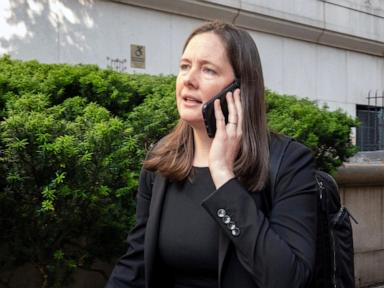
The standard legal reporting on Maurene Comey’s lawsuit is a masterclass in missing the point. Most outlets are obsessing over the procedural "win" for the government—the ruling that this case belongs in federal court rather than D.C. Superior Court. They frame it as a dry tug-of-war over venue. They are wrong. This isn't just a administrative shuffle. It is a calculated burial ground for a whistleblower's narrative.
When a judge moves a high-profile employment case from a local court to the federal docket, the "lazy consensus" says it’s about legal precision. In reality, it’s about tactical suffocation. Federal courts are where messy, human stories go to be sterilized by the cold machinery of sovereign immunity and the Westfall Act. If you think Maurene Comey’s team is crying over the venue change just because of the commute, you don't understand how the Department of Justice (DOJ) actually functions.
The Jurisdictional Trap
Most legal analysts treat jurisdiction like a neutral referee. I’ve watched enough federal litigation to know better. In cases involving the DOJ and its own former stars, the venue is the verdict.
By pulling this case into federal territory, the government achieves two things immediately:
- It triggers a set of procedural hurdles—specifically the Federal Tort Claims Act (FTCA)—that act as a meat grinder for individual accountability.
- It moves the case away from a D.C. jury pool that might actually have a pulse regarding internal DOJ politics.
The competitor articles suggest this is a "setback" for Comey. That’s an understatement. It’s a structural pivot designed to ensure the merits of her claims are never actually heard. When you sue the people who write the rules, and they successfully move the game to their home stadium, the outcome is usually written before the first deposition.
Why the "Fired Prosecutor" Label is a Distraction
The media loves the "daughter of James Comey" angle. It’s easy. It’s clickable. But focusing on the name ignores the far more dangerous precedent being set here. Maurene Comey wasn't just any prosecutor; she was a lead on the Jeffrey Epstein case. When a high-level litigator claims she was retaliated against for internal whistleblowing, and the court’s first instinct is to shield the government via jurisdictional technicalities, we are witnessing the erosion of the Civil Service Reform Act (CSRA).
The "status quo" logic argues that federal employees must follow specific, restrictive paths for grievances. The nuance everyone is missing is that these "paths" are increasingly becoming dead ends. The CSRA was intended to protect workers, but in the hands of a skilled government defense team, it is used as a shield to prevent transparency.
The Myth of the Neutral Federal Bench
There is a pervasive myth that federal judges are somehow "more elite" or "more objective" than local judges. This is a fairy tale told to law students. Federal judges are often more attuned to the "interests of the state."
Imagine a scenario where a local judge in D.C. allows discovery into the internal communications of top DOJ officials. That judge is accountable to a local community. A federal judge, however, is part of the same ecosystem as the defendants. The move to federal court isn't about finding a "fairer" judge; it’s about finding a judge who speaks the language of "national security" and "executive privilege" fluently enough to shut down uncomfortable inquiries.
The Hidden Cost of the Westfall Act
We need to talk about the Westfall Act. It’s the elephant in the courtroom that most reporters are too lazy to explain. This act allows the Attorney General to certify that a federal employee was acting within the scope of their office. Once that happens, the United States is substituted as the defendant, and the individual supervisors who actually did the alleged dirty work walk away scot-free.
By moving Comey's case to federal court, the DOJ is setting the stage for this exact maneuver. They want to turn a story about specific people making specific, potentially malicious decisions into a faceless battle against "The United States." You can't put a faceless entity on the stand and make it sweat. You can’t hold a budget line item accountable for a ruined career.
The Professionalism of Retaliation
I have seen agencies spend five times the amount of a potential settlement just to ensure they don't have to admit a mistake. This isn't about the money. The DOJ has an infinite supply of your tax dollars to fight Maurene Comey. It’s about the hierarchy.
The "nuance" the mainstream media misses is that this lawsuit is a threat to the internal discipline of the most powerful law enforcement agency on earth. If a Comey can win, anyone can. Therefore, the Comey must not only lose; the case must be dismantled procedurally so that no "lesser" prosecutor ever thinks about following suit.
Stop Asking if She Can Win
The wrong question being asked is: "Does Maurene Comey have a strong case?"
The brutally honest answer is: It doesn't matter.
In the federal system, a strong case is a liability. The stronger your facts, the harder the government will work to ensure those facts never see the light of day via "summary judgment" or "failure to exhaust administrative remedies."
If you want to understand the reality of this litigation, look at the exhaustion of resources. The government wins by outlasting you. They win by making the process so tedious, so expensive, and so buried in federal procedure that by the time you get a ruling, nobody remembers why you sued in the first place.
The Counter-Intuitive Truth About Whistleblowing
We tell people to "speak truth to power." That is terrible advice for anyone who values their career. In the DOJ, truth is a commodity, and power is the only currency that matters.
Maurene Comey is a formidable litigator, but she is fighting a system designed to protect itself from people exactly like her. The move to federal court isn't a "procedural update." It is the system's immune response to a perceived infection.
The industry insiders who are nodding along to these rulings are the same people who will tell you the system works. It does work—just not for the person bringing the claim. It works for the institution. It works for the status quo.
The court didn't just rule on a location. It signaled the beginning of the end for the transparency this case promised. If you’re waiting for a smoking gun or a dramatic courtroom confession, stop. The federal court is where those fires are systematically extinguished under a pile of jurisdictional briefs.
The game isn't being played to see who is right. It’s being played to see who is left standing. And the house always has more stamina than the guest.
Don't watch the headlines. Watch the motions to dismiss. That's where the real execution happens.