Step into a grand, high-ceilinged conference room in Astana or Samarkand, somewhere away from the flashbulbs of Washington and the frantic cable news tickers of London. The air smells of polished mahogany, old paper, and the quiet certainty of men who believe time is on their side.
Here, the maps are drawn differently.
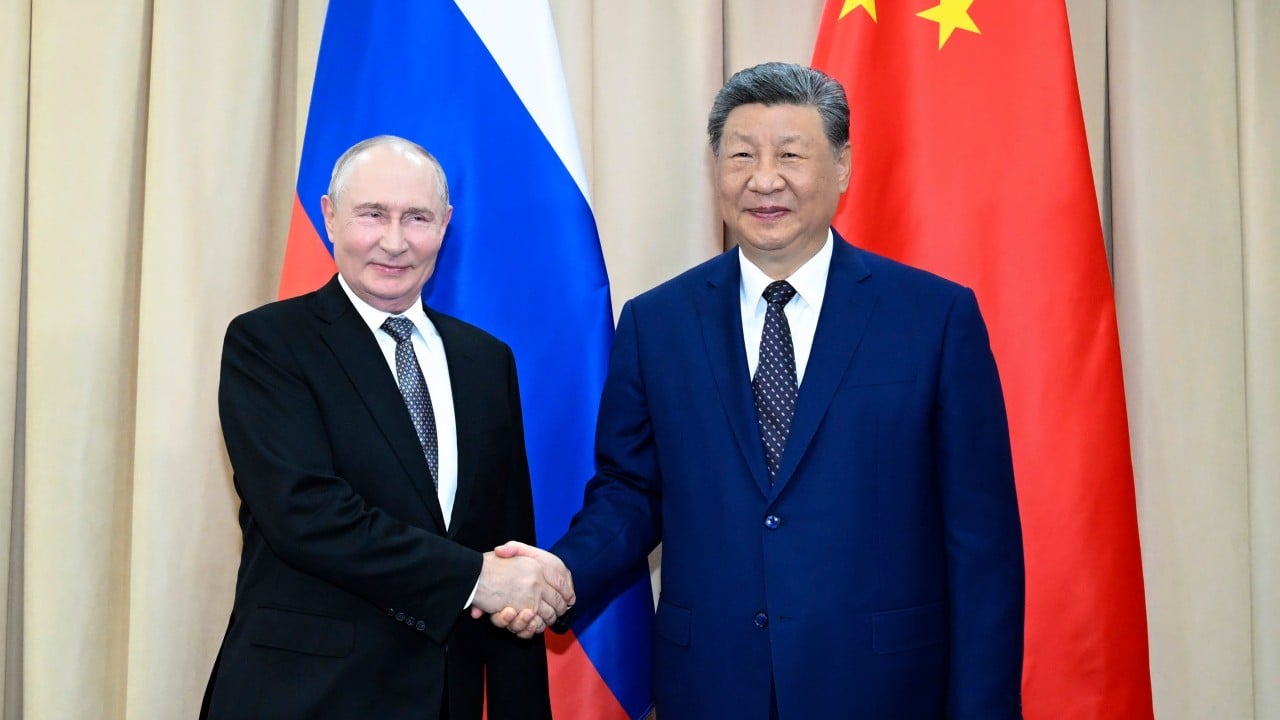
When Xi Jinping and Vladimir Putin step before the cameras after a Shanghai Cooperation Organisation summit, the Western press corps often reaches for a familiar, tired script. They talk about geopolitical chess, axis of convenience, or uneasy marriages of necessity. They miss the human heartbeat beneath the protocol. They miss the espresso cups cooling on side tables while aides whisper about currency swaps, pipeline valves, and the slow, deliberate unspooling of a post-American financial order.
Imagine a customs agent standing at the Dostyk land port on the border of Kazakhstan and China. For years, his days were punctuated by the sluggish crawl of freight trains, the bureaucratic friction of different rail gauges, and a ledger heavy with delays. Today, that ledger is lighter, faster, digital. A container moves from Chongqing to Duisburg without ever touching a port controlled by Western maritime insurance or subject to a Western sanctions regime.
That agent does not care about the ideological speeches broadcast in Beijing or Moscow. He cares about the crane operators, the digital customs clearances, and the yuan-denominated invoices settling before his shift ends.
This is the ground-level reality of what happened at the summit.
When leaders vow to deepen strategic ties, they are not merely trading diplomatic pleasantries. They are constructing a parallel architecture. To understand why this matters, you have to look past the grandstanding and examine the plumbing of global power. For three centuries, the world ran on a single set of tracks. If you wanted to trade, finance, or insure your cargo, you played by rules written in New York, London, and Geneva. You paid the toll collector in dollars.
Now, two men who command the world's largest landmass are quietly building a turnpike that bypasses the tollbooth entirely.
Consider the sheer scale of the demographic and geographic weight represented at these tables. The Shanghai Cooperation Organisation began as a modest regional security dialogue in the late nineties, born out of border demarcation talks between China, Russia, and Central Asian republics. It was a sleepy affair. Diplomats drank tea, signed vague communiques about counter-terrorism, and went home.
Nobody went home this time.
Because the world changed around them, and they realized it before anyone else did.
When Western capitals weaponized the global financial system in the wake of the Ukraine conflict—freezing central bank reserves and cutting major economies off from the Swift messaging network—it sent a terrifying, unmistakable signal to every non-aligned capital on Earth. It said: Your sovereign wealth is only yours as long as we approve of your choices.
That moment was the catalyst. It accelerated a process that had been simmering for decades. Xi and Putin did not invent this fracture; they simply provided the architectural drawings for the shelter being built on the other side of it.
Let us be honest about the friction, though. To pretend this alliance is a frictionless brotherhood of mutual admiration is to misunderstand human nature and international relations alike. Beijing and Moscow share a long, complicated history of suspicion. Tsars and emperors eyed each other across frozen steppes with a mixture of ambition and dread. Soviet tanks and Chinese border guards once traded shots on the Ussuri River.
Today, the asymmetry of power has inverted. Russia, once the undisputed senior partner of the communist world, now finds itself in the junior position, leaning heavily on Chinese industrial might, consumer goods, and diplomatic cover to weather the storm of Western isolation.
Picture a quiet meeting behind closed doors at the summit. No press. Just translators and tea. Putin needs economic oxygen—markets for his oil, components for his factories, a lifeline for his currency. Xi needs secure energy corridors that cannot be choked off by the United States Navy in the Malacca Strait, along with a reliable partner to help reshape global governance.
They look at each other across the table. There is no warmth here. There is only a cold, hard arithmetic of survival. They know they need each other to break the unipolar lock held by Washington. And that shared necessity is a glue stronger than affection.
We must also talk about the quiet bystanders in this room: the Central Asian nations. Kazakhstan, Uzbekistan, Kyrgyzstan, Tajikistan. For decades, they were treated as peripheral actors, pawns in the "Great Game" between distant empires.
Today, they are sitting at the head of the table.
Talk to a young entrepreneur in Almaty, and you will hear a different tone entirely. She does not dream of Silicon Valley or Wall Street as the sole arbiters of success. She is looking east toward Urumqi and Beijing, and west toward Moscow and Istanbul. She sees a crossroads opening up. She sees capital moving from alternative sources. She also feels the tension of walking a tightrope between a giant northern neighbor whose security umbrella is heavy and an eastern neighbor whose economic gravity is absolute.
When Xi and Putin sign agreements on energy pipelines and cross-border transport corridors, it is her future they are reshaping. The infrastructure projects discussed at the summit—roads, rails, fiber-optic cables slicing through mountain passes—are physical manifestations of a new gravity.
What does this mean for the rest of the world?
It means the era of a single, universal rulebook is drawing to a close. We are stumbling into a fractured landscape where different regions operate on different operating systems. Just as software developers write code for competing platforms that cannot talk to one another, we are now watching the emergence of parallel financial networks, parallel supply chains, and parallel security pacts.
The danger of this moment is not simply that the West is losing its monopoly on power. The deeper danger is that we are losing our common language. When nations stop using the same financial ledgers, the same courts of arbitration, and the same diplomatic forums, misunderstandings compound into miscalculations. And miscalculations, in the history of great power shifts, rarely end in quiet compromises.
The summit in Shanghai's namesake organization ended with handshakes, photo ops, and dense communiques filled with bureaucratic jargon about multilateralism and security indivisibility.
Do not let the dull language fool you.
Out on the steppes, the steel is being laid. The valves are being turned. The ledgers are being balanced in new currencies.
The mapmakers are hard at work, and the lines they are drawing will define the world our children inherit.