Ink does not bleed the way flesh does, but on a map, the tear is just as permanent.
Consider the geography of a morning that broke three years ago, a morning that seems both an age away and an open wound stinging in the salt air. To understand what has happened to Palestine since October 7, 2021—excuse me, October 7, 2023—you cannot begin with resolutions passed in distant capitals or spreadsheets of rubble and loss. You have to begin with a road that used to take twenty minutes to drive and now takes six hours, if it exists at all.
Take Tariq. He is not a real man walking the dust today, but a composite of a thousand men whose steering wheels have grown slick with sweat and fear. Before the autumn of twenty-twenty-three, Tariq drove a truck loaded with olives and citrus from orchards near Tulkarm down toward the markets of Jerusalem. The asphalt was familiar. He knew every pothole, every checkpoint’s shifting mood, every stretch where the olive groves pressed so close against the shoulder that the branches would scratch his side-view mirrors.
Today, Tariq’s truck sits silent on blocks in a yard because the asphalt has been swallowed by earth mounds, concrete blocks, and iron gates.
This is what war does to a map. It does not simply redraw borders with smooth, colored pencils. It shards them. It turns contiguous valleys into archipelagos of isolation.
The Anatomy of the Iron Wall
The physical fragmentation of the West Bank and Gaza is not a metaphor; it is a brutal exercise in engineering. Since that single day three years ago, the architecture of control has hardened from something porous and bureaucratic into something absolute and mechanical.
Let us look at the numbers, though numbers are notoriously bad at carrying the weight of a ruined afternoon. Before the escalation, hundreds of thousands of workers crossed daily from the West Bank into Israel or between disparate cantons for labor, for medicine, for weddings. Afterward, the permeability vanished. The closures dropped like portcullises in a medieval fortress.
Imagine trying to visit your sister thirty miles away, a journey that once required a functioning car and a radio playing Fairouz. Now, it requires permits that are ghosts in an online portal, denied with a polite automated notification. It requires winding through dirt tracks carved by desperate locals around newly minted military earthworks, risking a tire blowout or worse.
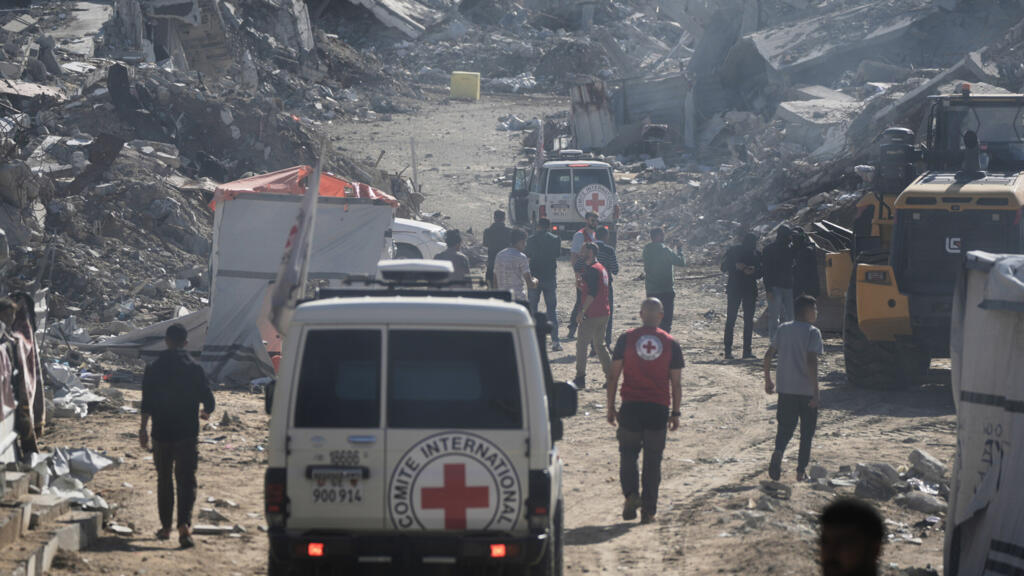
Communities have been squeezed into tighter and tighter circles, like air escaping a punctured lung. In the West Bank, settler violence and military incursions have surged to historic highs, carving out buffer zones that push shepherds off ancestral hillsides. In Gaza, the map has been subjected to a catastrophic erasure, where historic neighborhoods have been compressed into temporary tents that flutter helplessly against winter gales.
The old names of villages—neighborhoods like Huwara, Jenin, Khan Younis—are no longer just places on a cartographer’s parchment. They are verbs. They mean waiting. They mean holding your breath when headlights sweep across your bedroom wall at two in the morning.
The Cost of the Invisible Line
We talk about geopolitics as if the players are chess pieces moving across a pristine board. But the board itself is warping under the heat.
When borders close, economies suffocate. Small businesses in Bethlehem that relied on the tide of pilgrims and tourists found themselves staring at empty doorways for months, then years. The daily wage earner who relied on construction work in Tel Aviv found himself sitting on a curb in Ramallah, watching his savings evaporate into the price of a bag of flour.
Prices skyrocketed. Supply chains did not just hitch; they broke entirely. When fuel cannot move freely, electricity becomes a luxury of the fortunate few hours a day. When water distribution pipes are cracked or controlled, washing a child's hands becomes an act of careful calculation.
This is the invisible stakes of the map's redrawing. It is not just about who flies a flag over a hill. It is about whether a mother can get her diabetic father through a checkpoint before his insulin spoils. It is about whether a child growing up in a refugee camp knows what the sea looks like, or only knows the sound of drones humming through a gray sky like angry bees.
Living in the Aftermath
Human resilience is a phrase often used by people who are comfortable. It suggests an elastic band that can stretch infinitely without snapping. But rubber degrades under constant tension. It dries out. It cracks.
After three years of this intensified reality, a quiet exhaustion has settled over the streets. The protests happen, the diplomatic communiques are issued in Geneva and New York, the news anchors pivot to the next crisis in the global rotation. But on the ground, life has settled into a grim, unyielding rhythm of endurance.
People still plant seeds in rocky soil, even when they know the harvest might be trampled. They still bake bread in small, dim kitchens while the power flickers. They still teach their children history, though the history they are living is written in concrete barriers and curfews.
The map of Palestine today is not a blueprint for a future state; it is a patchwork of scars. Every checkpoint is a stitch. Every severed road is a nerve ending left exposed to the air.
Yet, beneath the concrete and the barbed wire, the underlying human desire for connection, for dignity, for a simple drive down an open road without a gun pointed at your windshield, refuses to be bulldozed.
The sun sets over the hills of the Jordan Valley, casting long, bruised shadows across the valley floor. A single headlight cuts through the dusk on a forbidden dirt track, bouncing blindly toward home.


