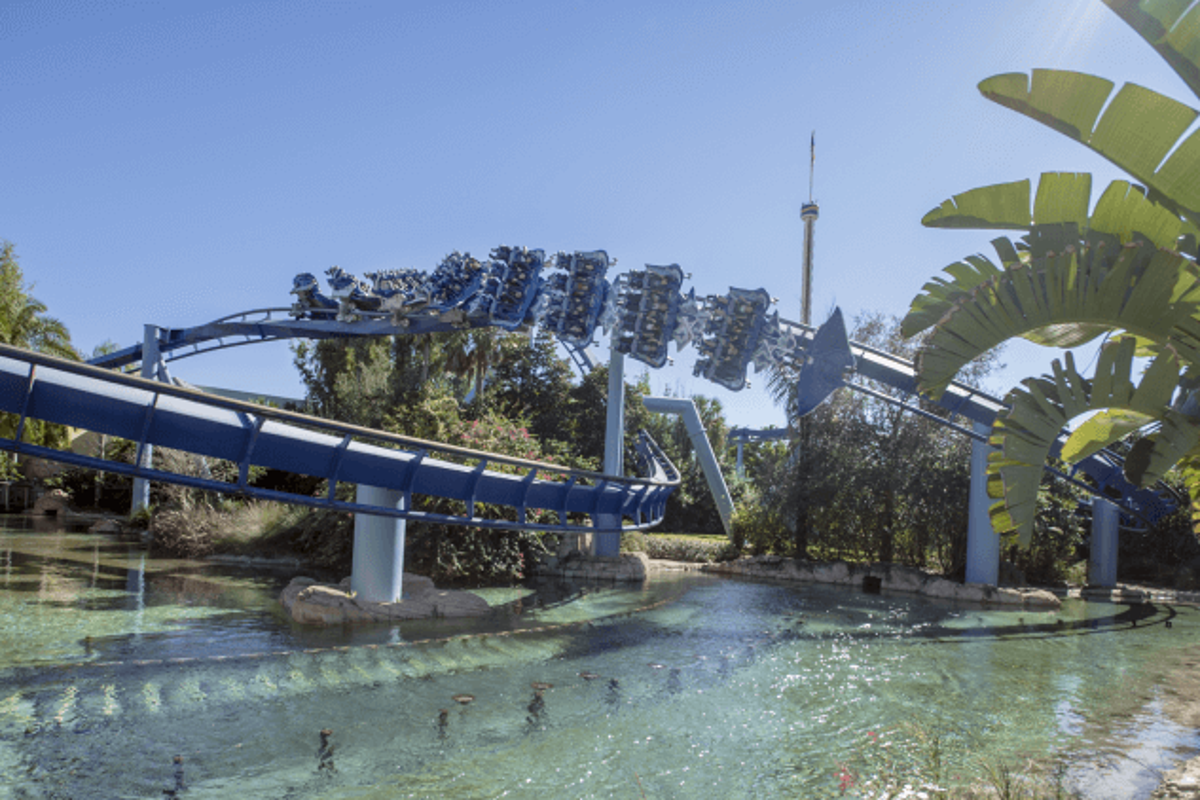
Six people are in the hospital after a mechanical failure on SeaWorld Orlando’s Manta roller coaster. It's the kind of news that makes every parent’s heart skip a beat and every thrill-seeker rethink their summer plans. When you're strapped into a flying coaster, suspended face-down to mimic the glide of a giant ray, you're trusting millions of dollars of engineering with your life. On this particular afternoon, that trust took a massive hit.
Emergency crews swarmed the attraction after the ride stopped unexpectedly, leaving passengers stranded in a precarious position before the eventual evacuation. While theme parks often talk about their "rigorous safety protocols," six hospitalizations tell a different story. It wasn't just a simple sensor trip or a standard "stop and restart" scenario. This was a physical failure that required medical intervention.
The Reality of Flying Coaster Mechanics
Manta isn't your typical sit-down coaster. It’s a Bolliger & Mabillard (B&M) masterpiece that uses a unique "pretzel loop" and a four-abreast seating arrangement where riders are tilted forward into a prone position. When a ride like this malfunctions, the physical toll on the human body is significantly higher than on a traditional ride.
Think about the physics for a second. In a prone position, your weight is distributed against the harness differently. If the ride stops abruptly or if there’s a mechanical jar, your neck and lower back take the brunt of that energy. Reports indicate that the six individuals taken to the hospital were suffering from varying degrees of back and neck pain. That’s not a coincidence. It’s a direct result of the ride's design meeting an unplanned mechanical event.
I've spent years tracking amusement park safety data. B&M is generally considered the "Mercedes-Benz" of the industry. Their rides are smooth. They're over-engineered. But even the best machinery wears down under the brutal Florida sun and the relentless cycle of thousands of riders per day. Maintenance isn't just a checklist. It's a constant battle against friction and fatigue.
What Officials Aren't Telling You Yet
Orange County Fire Rescue was quick to respond, but the details from SeaWorld have been predictably sparse. They’ll tell you the ride is "closed for inspection." They’ll tell you "safety is our top priority." That’s the corporate script. What they won't lead with is exactly which component failed.
Was it a drive tire failure? A chain lift malfunction? Or something more concerning like a cracked weld or a failure in the braking fin assembly?
When six people go to the hospital, it usually suggests a "hard stop." Modern coasters have blocks—segments of track where only one train can be at a time. If a sensor detects an issue, the computer slams the brakes in the previous block. If you’re in the middle of a high-G maneuver and those magnetic brakes bite hard, you're going to feel it. It’s like being in a minor car accident while hanging from a backpack.
The investigation will likely focus on the communication between the ride's PLC (Programmable Logic Controller) and the mechanical braking system. If the system over-corrected, it could have caused the injuries reported.
Theme Park Safety is a Patchwork of Rules
Most people think there’s a massive federal agency overseeing every bolt and nut at SeaWorld. There isn't. In Florida, large parks like SeaWorld, Disney, and Universal are largely "self-regulated." They have their own inspectors and their own internal safety boards. While they report major incidents to the state, they don't face the same day-to-day oversight that a small traveling carnival might.
This sounds terrifying, but the parks argue they have more to lose than anyone. A single death can tank stock prices and keep families away for years. However, "self-regulated" also means the public often gets a sanitized version of what actually happened. We rely on the transparency of a corporation that's trying to protect its brand.
I’ve seen this play out before. A ride closes, a few parts get swapped, and it reopens a week later with a "new and improved" safety briefing. But for the six people currently dealing with medical bills, that's not enough. We need to see the actual inspection logs.
How to Protect Yourself on High Intensity Rides
You can't control the mechanics of a coaster. You can't see a hairline fracture in a steel support from the queue line. But you can control how you ride. Most injuries on coasters that don't involve a full derailment are "positional."
- Keep your head back. On a ride like Manta, keep your head pressed against the rest or tucked as the ride instructions dictate. Looking sideways during a high-speed turn is an easy way to end up with a strained neck.
- Don't fight the harness. If the ride stops, stay calm. Tensing up your muscles to a "fight or flight" degree actually makes you more prone to soft tissue tears if the ride jolts again.
- Listen to the "clacking." If a ride sounds different than it did the last time you rode it—lots of metal-on-metal grinding or unusual vibrations—don't just shrug it off. Tell a ride op. They might ignore you, but you've done your part.
The Immediate Impact on SeaWorld Operations
Expect Manta to stay dark for a while. The Florida Department of Agriculture and Consumer Services (FDACS) will likely step in to oversee the restart, even with the self-regulation loopholes. This incident happens at a bad time for SeaWorld, as they've been trying to pivot their brand more toward high-thrill attractions and away from the controversy of animal performances.
If the "Thrill Capital" of Orlando can't keep its flagship flyers running safely, the strategy falls apart. The Manta incident is a reminder that these machines are monsters of kinetic energy. When that energy isn't managed perfectly, the human body pays the price.
Check the Florida ride incident reports online before your next trip. They're public record. You can see which rides have a history of "fainting," "back pain," or "mechanical stops." Knowledge is the only real safety bar you have.
If you're heading to the parks this week, skip the high-intensity flyers until the full report on Manta's mechanical failure is released. There’s no reason to be the test pilot for a ride that just sent a half-dozen people to the ER. Stick to the rides with proven track records until the state inspectors sign off on the repairs.