Brussels smells like rain and expensive wool. Inside the Berlaymont building, the air is filtered, climate-controlled, and thick with the kind of silence that only exists when nobody wants to be the first to speak. On the mahogany tables, maps of Europe are spread out like surgical diagrams. Blue lines represent the veins of the continent—the pipelines.
For months, the talk was of a "total severance." A clean break. The European Union was going to stop the flow of Russian oil once and for all, cauterizing the wound of energy dependency to stop the bleeding of a war chest. But today, the ink stayed in the pens. The proposal to permanently ban Russian oil imports has been delayed. Again.
It is easy to look at a headline and see a failure of nerve. It is much harder to look at a thermostat in a flat in Sofia or a factory floor in Dusseldorf and see the terrifying math of survival.
Consider a man named Marek. He is a hypothetical composite, but his reality is repeated ten thousand times across the eastern edges of the EU. Marek runs a small glass-blowing facility. To keep his furnaces at the necessary $1500°C$, he needs a constant, unwavering supply of energy. If the temperature drops, the glass doesn't just cool; it solidifies into a jagged, multi-million-euro brick that ruins his equipment forever. To Marek, a "proposal for a permanent ban" isn't a moral victory. It is a death warrant for his grandfather’s business.
The diplomats in Brussels know about Marek. They also know about the voters who will decide their fate in the next election cycles. Politics is often described as the art of the possible, but in the halls of the European Commission, it has become the art of the tolerable.
The delay isn't a change of heart. It is a collision with gravity.
The Pipeline Paradox
To understand why the EU is dragging its feet, you have to understand the geography of addiction. Western Europe—France, Spain, Portugal—can look at the Atlantic and see tankers. They have the ports, the regasification plants, and the infrastructure to pivot. They can afford to be brave because their geography allows it.
But travel East.
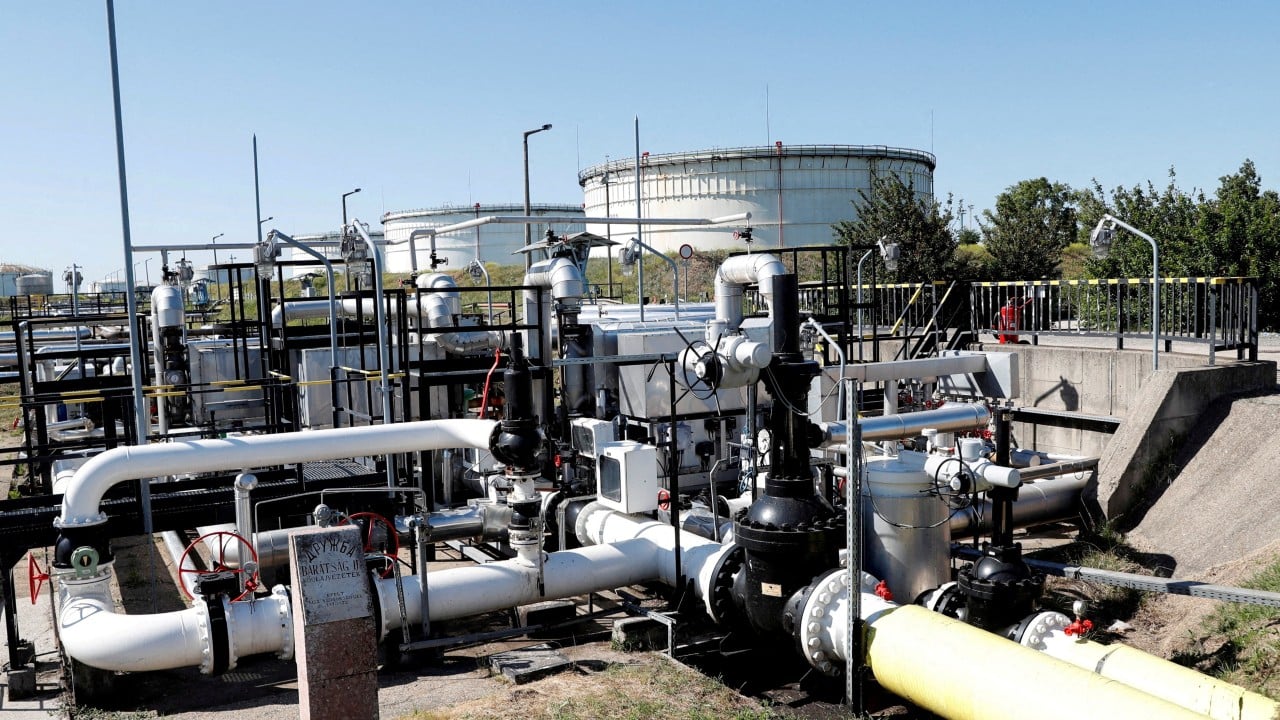
Landlocked nations like Hungary, Slovakia, and the Czech Republic are physically tethered to the Russian bear by the Druzhba pipeline. The name "Druzhba" translates to "Friendship," a cold irony that hasn't aged well. These countries don't have coasts. They cannot simply "order" oil from Texas or Qatar and have it show up at their door. They are hooked to a specific straw, and that straw leads to one place.
If the EU forces a total ban today, these economies don't just slow down. They stop. We are talking about double-digit inflation, blackouts, and the kind of civil unrest that makes the foundations of the European project tremble. Viktor Orbán knows this. He uses this reality as a shield, but even his harshest critics in the North admit, behind closed doors, that he isn't entirely wrong about the immediate consequences.
The facts are stubborn. Russia remains one of the world's largest exporters of crude and refined products. While the US and the UK—both energy-independent by comparison—can shout from the sidelines, the EU is trying to perform a heart transplant while the patient is still running a marathon.
The Invisible Stakes
There is a quiet, rhythmic thumping in the background of every meeting in Brussels. It is the sound of the global oil market.
When the EU even whispers about a ban, the price per barrel jumps. This creates a perverse incentive. If the ban is announced but takes six months to implement, the price spikes, and Russia actually makes more money in the interim than they did before the sanctions. It is a strategic nightmare. To hurt the Russian economy, the EU has to move fast, but to save its own, it has to move slow.
So, they wait.
They call it "technical consultations." They talk about "refining the mechanisms of price caps." In reality, they are waiting for the wind to change. They are waiting for more renewable infrastructure to come online. They are waiting for the US to pump more. They are waiting for a miracle that doesn't involve their citizens freezing in the dark.
But the wait has a human cost that isn't measured in Euros.
In Ukraine, the delay is seen as a betrayal. Every day that the tankers sail and the pipelines hum is another day of funding for the missiles that fall on Kyiv. This is the moral vertigo of the modern world. We want to be good, but we need to be warm. We want to be just, but we need to be mobile.
The EU is caught in a trap of its own making, thirty years in the construction. For decades, the mantra was "Wandel durch Handel"—change through trade. The idea was that if we bought enough gas and oil from Russia, they would be too invested in our prosperity to ever risk a war. We thought we were buying peace. It turns out we were just buying a very long, very expensive leash.
The Ghost of 1973
History doesn't repeat, but it certainly rhymes in the same haunting key. Older diplomats remember the 1973 oil crisis. They remember the car-free Sundays, the darkened shop windows, and the sudden, jarring realization that the "First World" was a fragile illusion built on cheap, foreign carbon.
Today’s delay is an attempt to prevent a 1973-style collapse. If the EU bans Russian oil permanently without a seamless transition, the political center will not hold. The far-right and far-left, currently simmering on the edges of the continent, would feast on the desperation of a cold winter.
This isn't just about oil. It’s about the survival of the liberal democratic order. If the price of standing up for Ukraine is the total economic ruin of the European working class, the politicians fear the voters will eventually choose the heat over the heroics.
It is a cynical calculation. It is also a pragmatic one.
The Shadow Market
Even as the ban is debated, a shadow world has emerged. There are stories of "ghost fleets"—tankers with their transponders turned off, transferring oil in the middle of the ocean. Russian crude is being blended with other oils in international waters, rebranded, and sold back to the very countries that claim to be boycotting it.
The delay in the permanent ban is, in some ways, a recognition of this futility. If you ban it legally but can't enforce it physically, you only succeed in making the middleman rich and the moral high ground more expensive.
We are living through the slow, agonizing death of an era. The age of globalized energy, where we didn't ask where the power came from as long as the lights stayed on, is over. But the new era hasn't been born yet. We are in the "interregnum," a term Antonio Gramsci used to describe a time when the old is dying and the new cannot be born; in this abnormal twilight, a great variety of morbid symptoms appear.
A delayed proposal is a morbid symptom.
The Cost of Hesitation
What happens to a union when it cannot agree on its most fundamental security threat?
The cracks are showing. Poland and the Baltic states are furious. They would rather burn furniture for heat than give another cent to Moscow. They see the delay not as pragmatism, but as cowardice. On the other side, Germany and Italy—the industrial engines—tread carefully. They know that if their steel mills and chemical plants go silent, the rest of Europe goes silent with them.
The tension is palpable. It is the sound of a marriage held together only by a shared mortgage. They stay because the cost of leaving is too high, but the resentment is building in the floorboards.
Behind the statistics of "barrels per day" and "percentage of GDP" lies the truth of our collective dependency. We are all Marek, the glass-blower, in one way or another. We are all tethered to a system that we know is broken, but we lack the courage to break it entirely because we aren't sure we can survive the fall.
The rain continues to fall in Brussels. The diplomats leave the Berlaymont, stepping into their black cars—cars powered by internal combustion engines, fueled by a global market that doesn't care about flags or frontiers. They will return next week. They will return next month. They will talk about "strategic autonomy" and "green transitions."
But for now, the pipelines remain open.
The oil continues to pulse through the earth, a dark, heavy reminder that while we can change our laws overnight, we cannot change our needs. The delay is not a period; it is a comma in a long, painful sentence that Europe is still learning how to finish. The winter is coming, and though it may be a year away, the chill has already entered the room.
The lights stay on. For now. But the shadows on the wall are growing longer, and they look remarkably like a bear.