Time does not heal all wounds. Sometimes, it merely hardens them into monuments.
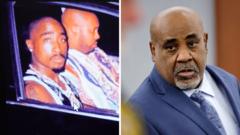
Nearly thirty years after a September night in the Nevada desert tore hip-hop history apart, a courtroom in Las Vegas finally opened its doors to the ghosts of 1996. The air inside was heavy with anticipation, carrying the weight of decades-old grief, broken promises, and an unsolved mystery that shaped global culture. Duane "Keffe D" Davis sat at the defense table in a crisp blue suit, scanning the faces in the gallery. Among them sat members of Tupac Shakur’s family, people who had carried an unyielding torch through a generation of silence.
Justice left the station a long time ago for many who loved the iconic artist. Yet here it was, wheezing back down the tracks, propelled by an unexpected fuel source: the defendant’s own words.
Chief Deputy District Attorney Binu Palal stood before the jury and pinned the timeline to a specific, fateful coordinates of human rage. September 7, 1996. The Mike Tyson boxing match at the MGM Grand. The chaotic casino brawl where Tupac’s entourage confronted Davis’s nephew, Orlando "Baby Lane" Anderson. Prosecutors did not claim that Davis pulled the trigger of the Glock that flashed from a white Cadillac into the passenger side of a BMW carrying Suge Knight and Shakur.
Instead, they argued something more calculated. They argued orchestration.
"Let's be clear, Duane Davis did not pull the trigger. But he did plan the shooting in retaliation of the beating of his nephew," Palal told the jury, driving the point home with a chilling kicker: "Remarkably, you will learn that from Duane Davis himself."
Consider what happens next in this labyrinth of accountability. For decades, the murder of a cultural icon remained an open wound because the code of the streets choked out police cooperation. Witnesses vanished. Evidence grew cold. Detectives chased shadows. But human beings possess a strange, contradictory compulsion to eventually claim their parts in great tragedies. Sometimes, the ego demands authorship over infamy.
In 2008, under a confidential police agreement, Davis spoke to law enforcement about the night. That information stayed locked away. But a decade later, the temptation of a memoir and media interviews proved too great. Davis published Compton Street Legend, broadcasting his role as the shot-caller who acquired the weapon and organized the drive-by.
Prosecutors maintain that if he had stayed quiet, he likely never would have faced a courtroom. The book became a mirror reflecting a crime back onto its architect.
The defense faced the daunting task of dismantling an empire of self-incrimination. Defense attorney Michael Sanft stepped up to frame the narrative through the lens of fiction, exaggeration, and commercial hustle. He argued that Davis co-authored the book simply to make money, tossing sensationalized tales into the marketplace to boost sales rather than record historical fact. How does a jury separate street bravado from cold reality? How do you weigh the words of a man who later claimed in local television interviews that he wasn't even present on that Las Vegas strip when the bullets flew, contrasted against the detailed itineraries printed in his own chapters?
This is the psychological core of the trial. It is a battle between the myth a man creates for profit and the physical footprint he left behind in a city built on illusions.
Outside the courthouse, fans in custom t-shirts played classic anthems on their phones, refusing to let the decades dilute the raw pulse of his catalog. Inside, witnesses like former police officers and civilian drivers recalled the sirens, the blood, and the eerie quiet of a code that dictated silence—the brutal reality that snitches get stitches.
The trial will stretch across weeks, dragging thirty years of dust into the harsh fluorescent light of judicial scrutiny. Whether the state can legally anchor a conviction to a aging man's boastful memoirs remains to be seen. But the silence has finally broken.
The white Cadillac is long gone. The desert air has cooled. Yet the echoes of September 1996 refuse to sleep, demanding an answer that has taken a lifetime to arrive.