The air inside the nursery smelled of warm milk, antiseptic, and the distinct, fragile scent of newborns who had barely spent a week under the sky. Outside, the night was heavy, wrapped in the quiet stillness that usually settles over a hospital when visiting hours dissolve and the world goes to sleep. Inside, fourteen tiny lives rested in plastic bassinets, breathing shallowly, their chests rising and falling in rhythmic unison. They were strangers to grief. They knew nothing of locked doors, or rusted hinges, or the bureaucratic inertia that turns a place of healing into an inescapable room.
Then came the smoke.
It started quietly, as these things often do. A spark in the wiring, a sudden surge, an electrical breath that found something dry and hungry. Within minutes, the corridor was no longer just a hallway; it was a chimney.
And the door was locked.
The Anatomy of a Trap
To understand what happened next is to understand a terrifying modern truth: safety protocols are often written on paper, but lived out in iron. In many healthcare facilities across the region, doors are locked at night not for patient security against intruders, but to manage staff movement, restrict entry, or simply out of a blind adherence to administrative routine. When the emergency struck, that deadbolt became a sentence.
Consider what happens next in your mind. A nurse smells the acrid tang of burning plastic. She looks up. The hallway is gray with a thick, choking fog. Panic, cold and sharp, cuts through her fatigue. She runs to the ward's main exit, hand outstretched, ready to push through to safety, to clear the room, to pull the tiny beds away from danger.
Her fingers hit metal. It doesn't yield.
In a hypothetical reconstruction based on witness testimonies from that devastating night in Pakistan, seconds stretched like hours. The key was missing. Or the guard was absent. Or the lock was rusted shut from months of neglect. Whatever the exact mechanical failure, the result was absolute. Fourteen babies, weighing barely a few pounds each, trapped behind a barrier meant to keep people out, but which ultimately kept salvation out too.
We talk about hospital fires as tragic accidents. We use words like "incident" and "malfunction" to soften the edges of horror. But an accident implies something entirely unforeseen, something carved out of pure bad luck. What happened in that hospital was not bad luck. It was the predictable intersection of neglect, structural failure, and a locked door.
The Weight of Silence
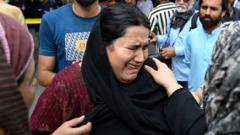
When the smoke finally cleared and the flames were beaten back by exhausted firefighters, the silence that replaced the chaos was heavier than the smoke. Fourteen mothers, many still recovering from the physical toll of childbirth, faced a reality that defied comprehension.
They had brought their children to the hospital to give them a fighting chance. In a region where infant mortality is a constant, looming shadow, the neonatal ward is supposed to be a fortress of science and care. It is where modern medicine stands shoulder-to-shoulder with human fragility, holding back the dark.
When that fortress locks its doors from the inside, the betrayal is absolute.
I have walked hospital corridors late at night. I know the hum of the incubators. I know the sterile, reassuring brightness of the overhead lights that never dim. There is a profound vulnerability in handing your child over to a system you hope is smarter, stronger, and more prepared than you are. You sign the papers. You trust the staff. You look at the heavy metal doors and assume they are there to protect the fragile life beating inside.
You never think to ask: If the worst happens, can I get in? Can they get out?
That is the hidden cost of institutional complacency. It lives in the spaces between maintenance checks. It festers in the budget lines where safety equipment is slashed or ignored. It grows in the dark when a night guard locks a deadbolt to make his rounds easier, trading ultimate safety for immediate convenience.
Beyond the Flames
The news reports will fade. The initial wave of outrage will wash over social media, sparking demands for investigations, suspensions, and temporary committees. Politicians will step before microphones, their faces etched with practiced sorrow, promising sweeping reforms that will quietly stall out the moment the cameras turn away.
This is the cycle of preventable tragedy. We mourn the victims, we curse the flame, but we leave the door locked.
Real reform requires more than grief. It requires an unsparing look at how we value the most vulnerable among us. A hospital that locks its infants behind impassable barriers during a fire hazard is suffering from a failure of imagination. It cannot picture the emergency until the smoke is already burning the lungs of the innocent.
The fourteen babies who perished in that ward never had a voice to cry out against the deadbolt. They relied entirely on a system that failed them at the exact moment they needed it most.
The smoke has long since drifted away into the night sky, leaving behind cold metal, charred walls, and a quiet that no amount of investigation can ever fill. But the heavy, silent weight of that locked door remains, hanging in the air, waiting for the world to notice that it is still shut.