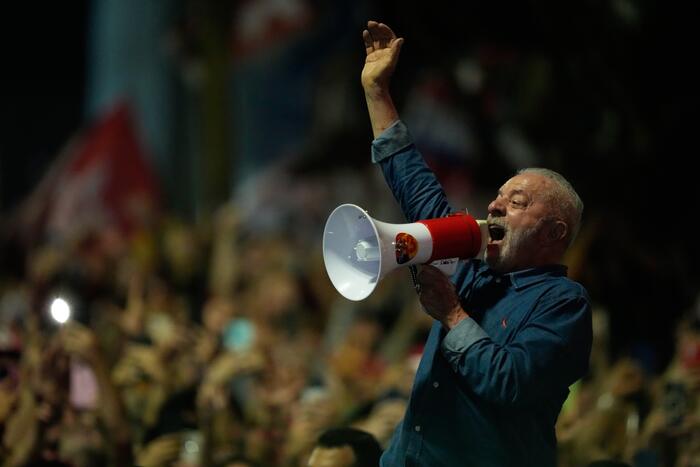
Political analysts love a neat ideological scorecard. According to mainstream coverage of Luiz Inácio Lula da Silva’s victory in Brazil, the election represents a decisive rejection of a regional shift to the right and a direct blow to Donald Trump’s influence in Latin America. That framing is clean, dramatic, and fundamentally incomplete.
Treating Brazilian politics as a simple tug-of-war between global populism and progressive socialism ignores the structural realities driving South America's largest economy. Voters in Brasília, São Paulo, and the agricultural heartland did not cast ballots to send a geopolitical message to Washington. They voted on inflation, fiscal discipline, institutional stability, and domestic economic survival.
To understand what actually happened in Brazil—and what it means for U.S.-Brazil relations—you have to strip away the partisan theater and look at the underlying mechanics of trade, commodity markets, and legislative power.
The Myth of the Ideological Pendulum
Mainstream commentary often depicts Latin American politics as a giant pendulum swinging between left-wing spending and right-wing austerity. In this telling, recent right-leaning victories in countries like Argentina and Ecuador established a regional trend that Lula single-handedly defied.
Political scientists and regional economists view this differently. According to analysts at organizations like the Americas Society/Council of the Americas (AS/COA) and the Wilson Center’s Brazil Institute, recent elections across Latin America have not been ideological endorsements. They have been anti-incumbent referendums.
Over the past decade, voters across the region have consistently punished whoever happened to be in office during periods of stagnant growth, high inflation, and post-pandemic supply shocks. When a center-left government presided over economic pain, voters turned right. When a right-wing administration failed to deliver immediate prosperity, voters turned left.
Calling Lula’s win a rejection of a "right-wing wave" mistakes anti-incumbency frustration for ideological loyalty. In Brazil, the race was remarkably tight, decided by razor-thin margins in a deeply polarized electorate. A swing of less than two percent of the vote would have inverted the entire narrative. That is not a mandate for a sweeping ideological project; it is the result of a divided country negotiating immediate economic anxieties.
Why Washington’s "Lost Ally" Framing Falls Flat
The second pillar of the conventional narrative is that Lula’s victory denies Donald Trump a powerful ideological partner in the Western Hemisphere. While Trump and former Brazilian President Jair Bolsonaro shared rhetoric, style, and mutual political support, the idea that a right-wing government in Brasília automatically translates into a compliant ally for Washington misunderstands Brazilian foreign policy.
Brazil is not a client state. For decades, under governments of every political stripe, Brazil’s foreign ministry—Itamaraty—has pursued a doctrine of strategic autonomy and multi-alignment.
- Trade Reality: China, not the United States, is Brazil’s largest trading partner by a wide margin. Brazilian agribusiness—traditionally a conservative political stronghold—depends heavily on Chinese demand for soybeans, beef, and iron ore. Even during the height of Bolsonaro’s alignment with Washington, Brasília refused to join U.S.-led efforts to exclude Chinese telecommunications firms like Huawei from its 5G network, citing cost and domestic agricultural trade concerns.
- Tariff Friction: During the first Trump administration, ideological affinity did not protect Brazil from economic nationalism. The White House imposed steel and aluminum tariffs on Brazilian exports and threatened further trade penalties over currency valuations.
- BRICS and Global South Diplomacy: Brazil’s participation in the BRICS bloc and its push for reform in global governance institutions predate Lula’s return and transcend party lines. Both left- and right-leaning administrations in Brasília seek to maximize leverage between Washington and Beijing rather than choosing one over the other.
Conversely, history shows that Lula and U.S. presidents from both parties often find pragmatic common ground when domestic interests align. During his earlier terms, Lula maintained functional, productive working relationships with George W. Bush on biofuels, trade negotiations, and regional stability, despite sharp disagreements over the Iraq War and free trade agreements.
The Real Power Broker in Brasília Isn't the President
If you want to know where Brazil is actually headed, stop looking exclusively at the presidential palace and start looking at Congress.
The conventional narrative treats the Brazilian presidency as an all-powerful executive office capable of single-handedly steering the nation left or right. In reality, Brazil operates under what political scientists call "coalitional presidentialism." To pass legislation, approve budgets, or avoid impeachment, any president must negotiate with a massive, fragmented block of centrist and center-right parties known collectively as the Centrão.
These lawmakers are not driven by global culture wars or ideological manifestos. They are driven by local patronage, municipal budget allocations, and regulatory stability for domestic industries.
Even with Lula in the presidency, the Brazilian Congress retains a distinctly conservative and fiscally cautious tilt. Major legislative initiatives—from tax reform to environmental regulations and fiscal spending caps—require constant concessions to center-right lawmakers. As economic analysts at institutions like Insper and Fundação Getulio Vargas (FGV) frequently point out, Brazil's institutional checks and balances prevent abrupt ideological sharp turns in either direction.
Addressing the Questions Analysts Actually Ask
When investors, policy watchers, and everyday observers try to make sense of Brazil’s political landscape, they often ask the wrong questions because they rely on U.S.-centric political labels.
Does a left-wing president in Brazil mean anti-business policies?
Not necessarily, and often the opposite in practice. While Lula’s rhetoric emphasizes social spending, poverty reduction, and state-led development, his administration has repeatedly relied on market-friendly technocrats—such as Finance Minister Fernando Haddad—to pass structural tax reforms and maintain fiscal frameworks designed to reassure bond markets and the Central Bank. In Brazil, left-leaning administrations frequently govern from the economic center once faced with the realities of currency volatility and sovereign debt ratings.
Will Brazil actively work against U.S. interests in Latin America?
Brazil’s primary interest in South America is regional stability and trade integration, not ideological confrontation with Washington. While Lula has criticized U.S. sanctions on countries like Venezuela and sought diplomatic dialogue rather than isolation, Brazil has also pushed back against regional instability that threatens its own borders and trade corridors. Brasília views itself as a regional mediator and sovereign power, meaning its policies will sometimes frustrate Washington and sometimes stabilize crises that the U.S. cannot easily manage alone.
Is Latin America moving left or right?
Neither. The region is moving toward pragmatism and volatility. Voters in countries ranging from Chile and Colombia to Argentina and Brazil are demanding better public services, lower crime, and stable prices. Parties that fail to deliver measurable improvements within a single electoral cycle are routinely voted out, regardless of whether they campaign as free-market reformers or social democrats.
How to Read Geopolitics Without the Pundit Filter
If you are evaluating political risk, analyzing international markets, or simply trying to understand global news without getting swept up in partisan spin, stop tracking campaign speeches and start tracking structural incentives.
- Follow the Trade Flows, Not the Handshakes: Diplomatic photo ops make headlines, but customs data dictates policy. Look at where a country’s exports go and where its foreign direct investment originates. Those numbers reveal who actually holds leverage.
- Watch the Legislature and the Central Bank: In mature democracies with strong institutions, executive rhetoric is routinely tempered by legislative coalitions and independent monetary authorities. The gap between what a president promises on the campaign trail and what the central bank or congress allows is where real policy lives.
- Separate Domestic Theater from Foreign Policy: Leaders frequently use international figures—whether Trump, Lula, or leaders in Beijing—as rhetorical foils to rally their domestic base. Actual diplomatic decisions are almost always governed by narrow national self-interest.
The Limits of Structural Analysis
Focusing purely on institutional constraints and trade data does have a blind spot: it can underestimate the power of political unpredictability. Leadership style still matters. Rhetorical clashes between heads of state can freeze bilateral cooperation on specific issues like climate financing, intelligence sharing, or regulatory harmonization, even when underlying trade continues uninterrupted. Furthermore, external shocks—such as sudden commodity price crashes or global interest rate spikes—can shatter carefully balanced legislative coalitions overnight.
The Bottom Line on Brazil’s Trajectory
Reducing Brazil’s election to a simple tally of "left versus right" or "Lula versus Trump" turns a complex, multi-polar economy into a cable news talking point. Brazil did not choose a side in an American political rivalry. It navigated its own domestic pressures within a system designed to force compromise. Anyone betting on a sharp ideological crusade—either in Brasília or across South America—is reading the headlines instead of the balance sheet.