The tarmac in New Zealand looks exactly like the tarmac in Hong Kong. It is the same dark gray, the same coarse texture beneath the tires. When you pick up your rental car at Auckland or Christchurch airport, the steering wheel is on the right side. You sit in the driver’s seat, adjust the mirrors, and everything feels instantly, comforting familiar.
That familiarity is a lie. It is a psychological trap that costs lives.
Every year, thousands of travelers from high-density cities like Hong Kong land in countries with vast, open geographies. They seek the postcard. They want the rolling green hills of the Waikato, the jagged peaks of the Southern Alps, and the absolute freedom of the open road. But they bring with them driving habits forged in the neon-lit, hyper-regulated, bumper-to-bumper concrete of Mong Kok or Central.
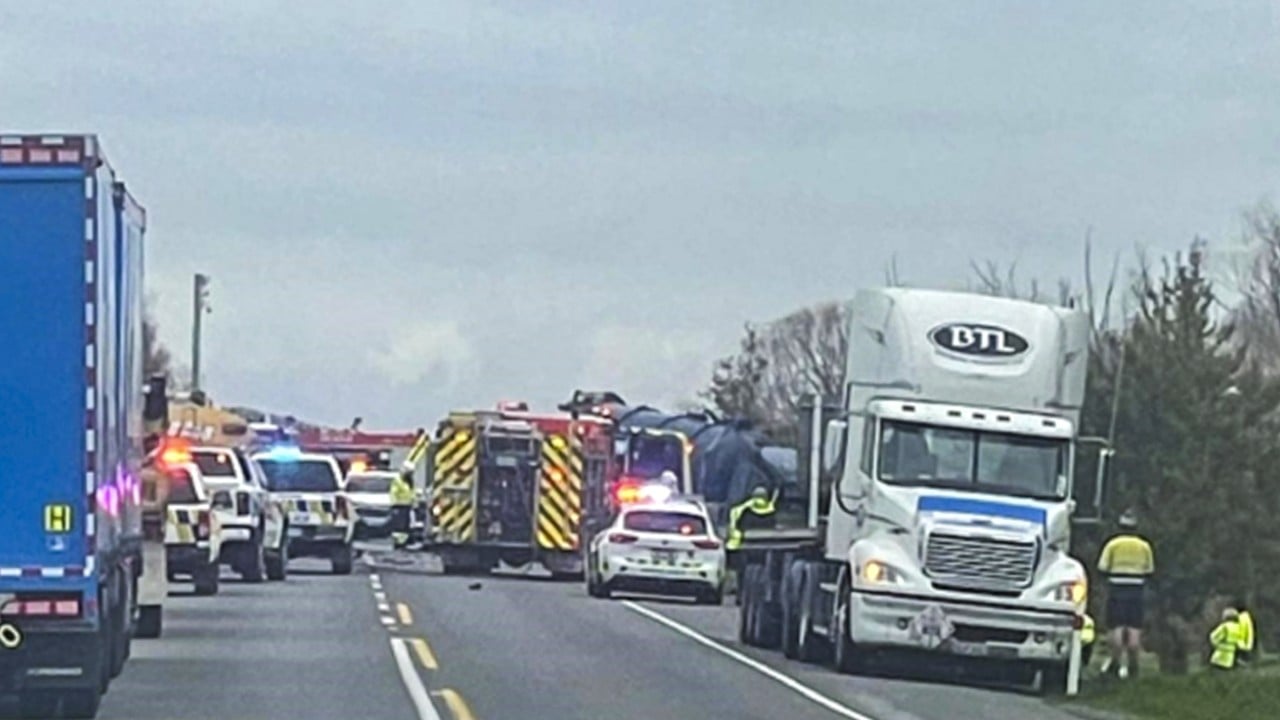
When you mix urban muscle memory with rural isolation, the results can be catastrophic. A sudden turn. A momentary lapse in concentration. A head-on collision on a deserted highway where help is hours away. The transition from a dream vacation to a international tragedy happens in less than half a second.
To understand why this happens, we have to look past the official police reports and look at the invisible friction between a driver and an unfamiliar landscape.
The Illusion of Space
In Hong Kong, driving is an exercise in hyper-vigilance within tight constraints. You are constantly monitoring double-decker buses, erratic taxis, and pedestrians stepping off curbs. Your speed is naturally limited by congestion. The road tells you exactly what to do at every single meter through bright paint and overhead signs.
New Zealand roads tell you nothing.
Once you leave the main arterial highways near the major cities, the infrastructure thins out. The lanes narrow. The central dividers disappear, replaced by a simple yellow or white painted line—or sometimes, no line at all.
Consider a hypothetical driver named Kevin. He is a thirty-five-year-old professional from Kowloon. He is a good driver. He has clean record, fast reflexes, and a decade of experience navigating the tightest parking garages in Tsim Sha Tsui. He lands in Queenstown, rents a mid-sized SUV, and heads toward Milford Sound.
For the first hour, Kevin feels an intoxicating sense of liberation. There are no cars in front of him. There are no speed cameras every few hundred meters. The scenery is breathtaking.
But Kevin’s brain is quietly operating under an enormous cognitive load. He is trying to process the scale of the landscape while maintaining control of a vehicle that is heavier than his compact car back home. More importantly, his brain is relying on twenty years of deeply ingrained visual cues that do not exist here.
In Hong Kong, if you drift slightly, there is a curb, a barrier, or another vehicle to snap your attention back to the center. On a rural New Zealand road, drifting means your left tires hit the gravel shoulder.
Gravel behaves like ice when you are traveling at eighty kilometers per hour.
When Kevin’s left tires hit that loose stones, the car pulls violently to the left. His instinct—the urban reflex—is to yank the steering wheel hard in the opposite direction to correct the course. This overcorrection swings the heavy SUV across the center line, directly into the path of an oncoming logging truck.
This is not a rare scenario. It is one of the most common mechanics of foreign driver accidents documented by road safety experts in Oceania. The danger isn’t a lack of skill. The danger is the automatic response to an unfamiliar crisis.
The Hidden Mathematics of the Journey
Time and distance mean different things depending on where you are on the planet.
A hundred kilometers on the map in Hong Kong is an impossibility; the entire territory isn’t that wide. A hundred kilometers on a highway in Europe or North America might take you less than an hour on a straight, multi-lane interstate.
In New Zealand, a hundred kilometers can take two to three hours.
The geography is beautiful because it is volatile. The roads follow the contours of the land, meaning they twist around gorges, climb over steep mountain passes, and cross narrow, single-lane bridges.
Many travelers plan their itineraries using digital maps that estimate travel times based on optimal conditions. They schedule a morning hike in one town, a lunch reservation two hundred kilometers away, and an evening tour in a third location. This creates an invisible ticking clock.
When tourists realize they are falling behind schedule, anxiety sets in. They press the accelerator. But these roads do not tolerate haste. A curve marked with a recommended speed sign of thirty kilometers per hour means exactly that. It is not a suggestion. It is a physical limit dictated by the camber of the road and the drop-off on the other side.
The fatigue compounds the error. Jet lag is a well-understood phenomenon, but the specific fatigue of rural driving is different. It is a slow, hypnotic exhaustion caused by staring at endless asphalt, navigating hundreds of repetitive turns, and fighting the glare of a sun that sits low on the horizon in the southern hemisphere.
Your eyes play tricks on you. The shadows of the trees look like obstacles. The road seems to stretch on forever, and then, suddenly, a sharp bend appears out of nowhere.
The Unspoken Rules of the Local Road
Every driving culture has a collective agreement among its participants—a set of unwritten rules that everyone understands.
In Hong Kong, the agreement is about negotiation in tight spaces. You nudge your way into a lane, you use your horn to alert others, you read the aggressive body language of the vehicles around you.
In rural communities, the agreement is entirely different. It is built around courtesy and the recognition that the road is a workplace for locals.
Local drivers—farmers in flatbed trucks, commercial transport drivers, residents commuting between small towns—know these roads intimately. They know exactly how fast they can safely take every corner. They will inevitably catch up to a tourist who is driving slowly to take in the views.
This creates a high-pressure situation. The tourist sees a large vehicle looming in their rearview mirror. They feel panicked. Instead of pulling over, they speed up, trying to stay ahead of the local driver, pushing themselves far past their comfort level.
The solution to this tension is simple, yet many foreign drivers fail to use it out of embarrassment or ignorance. New Zealand roads are dotted with "passing bays" or slow-vehicle bays. These are small strips of asphalt on the left side designed specifically for slower traffic to pull over and let others pass.
Using a passing bay is not an admission of defeat. It is an act of survival. It removes the pressure from behind you, allowing you to resume your journey at a pace that keeps you alive.
Preparing the Mind Before the Key Turns
Safety cannot be solved by a brochure handed over at a rental desk. By the time you are signing the contract and declining the extra insurance, your mind is already at the first destination. You are thinking about the coffee, the mountains, the Instagram feed.
True preparation requires an intentional recalibration of your relationship with the vehicle.
Before you leave the airport precinct, you need to consciously acknowledge that you are entering a high-risk environment. The statistical reality is clear: international visitors are disproportionately involved in serious crashes on specific tourist routes.
We must change how we think about the drive itself. The drive is not the prelude to the vacation. The drive is the vacation.
If you view the transit as a chore to be completed as quickly as possible, you will take risks. You will overtake on blind corners. You will ignore the fatigue creeping into your shoulders. If you view the road as an unpredictable, living entity that requires your full respect, your behavior changes.
There are practical steps that save lives, none of which require advanced mechanical knowledge:
- Give yourself a buffer day. Do not collect a rental car immediately after a long-haul flight. Spend the first twenty-four hours walking, sleeping, and letting your internal clock adjust to the local time zone.
- Double the estimated travel time. If the map says a journey takes two hours, budget four. This removes the psychological pressure to speed when you encounter a slow-moving tractor or a flock of sheep crossing the road.
- Assign a co-pilot. The driver’s eyes belong exclusively on the road. The passenger is responsible for navigation, changing the radio station, and watching for oncoming hazards or slow-vehicle signs.
- Understand the single-lane bridge protocol. These are common throughout the South Island. One direction has priority, indicated by a sign with a large black arrow. The other direction must yield, indicated by a small red arrow. Confusing this simple graphic layout is a leading cause of head-on collisions.
The Long Road Home
The sun sets quickly in the southern hemisphere. When the light goes, it takes the reference points with it. There are no streetlights on the highway between Tekapo and Wanaka. There is only the beam of your headlights slicing through a darkness so profound it feels absolute.
In that darkness, the road demands everything from you. It asks you to forget the city habits that have kept you safe for years and adopt a new, deliberate humility.
We travel to experience the unfamiliar, to shake ourselves out of the routines of our daily lives. But the very things that make a destination spectacular—its wildness, its isolation, its raw, unmapped scale—are the things that make it dangerous.
The most important piece of equipment in the vehicle isn't the GPS, the four-wheel-drive system, or the safety airbags. It is the quiet voice in the driver’s mind that says: Slow down. There is no rush. The destination will still be there tomorrow.
The tarmac ahead is waiting. It looks just like the road you know. But it belongs to a different world, and it plays by a entirely different set of rules.