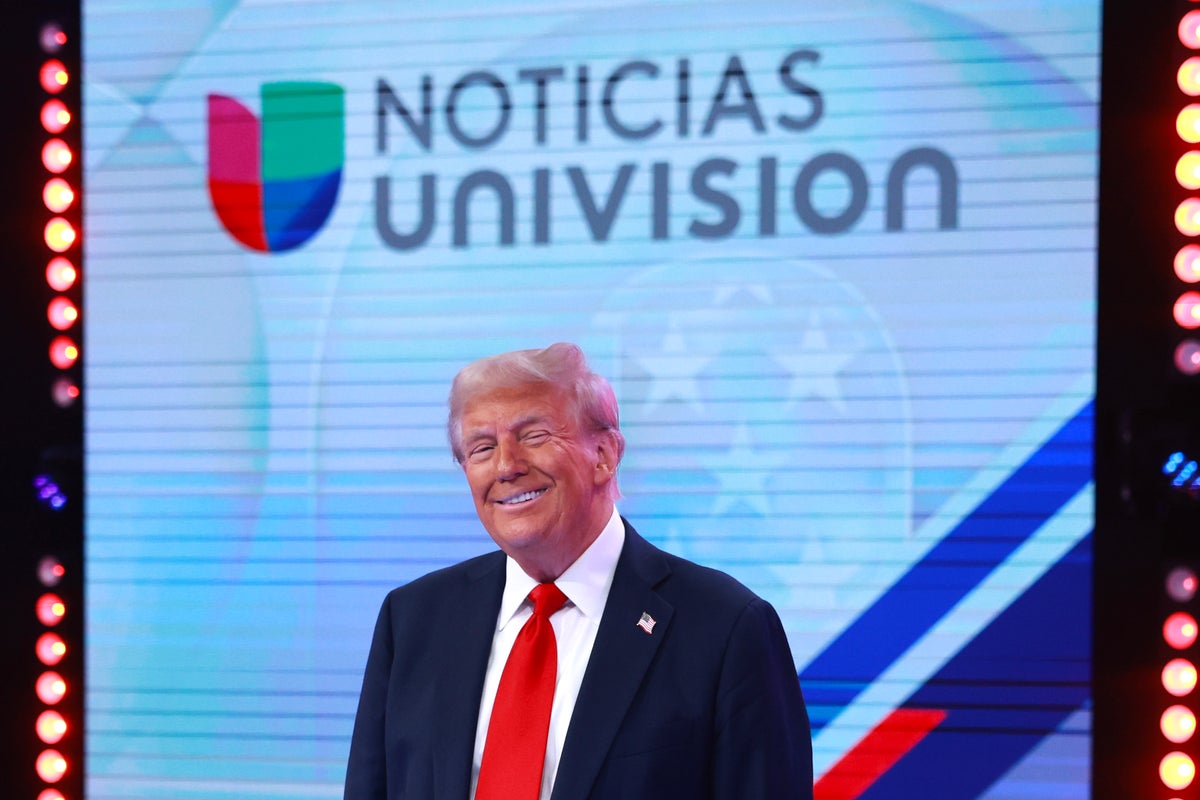
The political bet was straightforward. In 2024, a historic 43% of Latino voters backed Donald Trump. They weren't voting for a border wall; they were voting for cheaper groceries, lower interest rates, and the economic nostalgia of his first term. Many assumed the hardline immigration talk was just campaign theater or aimed strictly at recent border crossers.
They were wrong.
Over a year into Trump’s second term, reality has hit hard. Sweeping enforcement by Immigration and Customs Enforcement (ICE) has moved far beyond the southern border. Arrests are happening at workplaces, grocery stores, and near schools in major metropolitan hubs. For the millions of Latinos living in mixed-status households, the theoretical policy of mass deportation has turned into a daily crisis of survival.
Data shows the political fallout is happening faster than expected.
The Numbers Behind The Buyer Remorse
A clear shift is showing up in the data. According to polling from the Pew Research Center, Trump’s job approval among Latino voters who backed him in 2024 plummeted from 93% at the start of his term to 66%. While a majority of his base still holds on, that 27 point drop represents a massive political shift in an electorate that Republicans spent years trying to court. For comparison, Trump's approval among non-Latino voters dropped far less dramatically during the same period.
The issue isn't abstract. An AP-NORC poll revealed that more than half of all Latino adults in the country now report knowing someone personally impacted by these aggressive enforcement actions.
Political scientists often discuss the "immigrant resentment scale"—the idea that established, U.S.-born Latino citizens sometimes separate themselves from new arrivals to avoid negative stereotypes. During the campaign, this psychological distance allowed many voters to dismiss Trump's xenophobic rhetoric. They assumed "the worst of the worst" meant violent criminals.
But ICE data from the UCLA Center for Neighborhood Knowledge shows a completely different operation on the ground. During the first 100 days of the administration, daily Latino arrests doubled compared to the previous year. More importantly, the focus shifted from individuals incarcerated at federal or state levels to community settings. Officers are picking up people with clean records, deep roots, and American children.
The Reality of Workplace And School Sweeps
The strategy orchestrated by administration officials set aggressive targets, aiming for thousands of arrests per day. To hit those numbers, enforcement had to go into the heart of communities.
The disruption to daily life is measurable. A comprehensive study by UnidosUS highlighted how the crackdown has dismantled the sense of personal security for legal residents and citizens alike. In their polling, 43% of Latino respondents expressed fear that immigration authorities would mistakenly arrest them despite holding U.S. citizenship.
The collateral damage extends straight into local economies and education systems. The UnidosUS data shows:
- 35% of respondents reported that their employers have lost critical staff to raids or sudden disappearances.
- 32% stated that children are actively missing school because parents are terrified of ICE presence near educational facilities.
- 60% of Latino voters explicitly oppose enforcement actions happening on or near school grounds.
When local construction sites empty out overnight and classrooms see empty desks, the economic stability that voters wanted disappears. High prices are bad enough; losing a spouse, an employee, or a neighbor to a sudden raid destroys the economic security Trump promised to protect.
Why Swing States Are Feeling The Friction First
This isn't just a California or Texas story. The real political damage is concentrated in the swing counties that decide presidential elections and congressional majorities.
Take Maricopa County, Arizona. It is the largest battleground county in the country, encompassing Phoenix and its massive suburban sprawl. A third of Maricopa's population is Latino, and a quarter of those residents are immigrants. Arizona has a long, painful history with enforcement overreach, dating back to the high-profile, discriminatory raids conducted by former Sheriff Joe Arpaio. The current community memory of that era has made the current ICE push feel like a dangerous step backward.
The administration’s tactics have also pushed legal boundaries, creating friction with local governments and constitutional norms. The use of IRS tax data to track down undocumented individuals is opposed by 57% of Hispanic voters. Meanwhile, the administration's stated goal of ending birthright citizenship faces rejection from 62% of the Latino electorate.
By targeting the legal status of children born on American soil, the administration has shifted the debate from border security to a fundamental assault on the structure of the American family.
The Long Term Political Breakdown
Republicans spent a decade building a coalition of working-class Latino voters by focusing on entrepreneurship, faith, and traditional family values. The current enforcement strategy directly undermines every piece of that foundation. It disrupts small businesses, instills fear in church communities, and separates parents from children.
The assumption that economic concerns would always override immigration worries was a miscalculation. For a voter living in a mixed-status family, an ICE van parked at the end of the street matters infinitely more than a slight dip in inflation.
For the conservative movement, the danger isn't necessarily a massive wave of Latinos rushing back to the Democratic Party. The bigger threat is widespread disillusionment. When voters feel lied to by one side and ignored by the other, they often choose to stay home. In razor-thin swing states, a drop-off in turnout is just as lethal to a political party as a direct flip.
Organizations on the ground are already pivoting their strategies. Advocacy groups are shifting resources away from standard voter registration and toward rapid-response legal clinics, "know your rights" campaigns, and emergency family planning. The immediate focus has become survival, asset protection, and keeping families together. Political organizers are preparing to use this localized anger to drive historic turnout in the upcoming midterm elections, turning the fear of federal overreach into a direct tool for political accountability at the ballot box.


