The dust of two decades settles slowly over the concrete barriers of Baghdad. Outside the wire, the night belongs once more to the city’s own pulse—the hum of generators, the low roar of traffic on the Al-Rashid highway, and the quiet uncertainty of a people left to write their own ending.
For the last American service members locking the heavy steel gates, the departure is a final period at the end of a very long, very bloody sentence. For the millions who call Mesopotamia home, it is a blank page. And the pen is shaking.
Quiet. That is what lingers most in the memory of those who served in the closing chapters of Operation Inherent Resolve. The deafening roar of armored vehicles idling in the predawn chill gives way to an eerie silence. The logistics hubs at Ain al-Asad and Erbil, once swollen with thousands of contractors, analysts, and infantrymen, echo with footsteps on empty gravel.
Consider the scale of the exit. This was not a sudden midnight flight from a rooftop, ala Saigon. This was a methodical, agonizingly slow packing of bags spanning years. By late 2024 and into subsequent months, the US-led coalition formally concluded its military mission in Iraq. Combat troops packed their rucksacks. The heavy iron was loaded onto flatbeds. The keys were handed over.
Yet, the departure of foreign boots does not mean the absence of foreign gravity.
To understand what happens now, you have to look past the official press releases and gaze into the eyes of a twenty-four-year-old Iraqi civil engineer standing on a bridge overlooking the Tigris. Let us call him Omar. Omar was four years old when the invasion of 2003 shattered the world his parents knew. He grew up through the sectarian bloodletting of the mid-2000s, cowered behind blackout curtains during the dark summer of 2014 when ISIS swept across a third of the country, and came of age amid the tear gas of the Tishreen protests in 2019, where young Iraqis demanded an end to corruption and foreign interference alike.
Omar does not care about geopolitical chess pieces. He cares about whether the water coming out of his tap will make his sister sick. He cares about whether the militia checkpoint down his street will demand a bribe today. He cares about whether his university degree will buy him a future or a ticket out of the country.
When the last foreign combat brigade pulls out, Omar feels a sudden, vertiginous drop in his stomach. It is the feeling of a tightrope walker looking down to see the safety net has been quietly folded up and packed away.
The coalition's exit was brokered through months of delicate diplomatic tangoes between Washington and Baghdad. Prime Minister Mohammed Shia al-Sudani found himself walking a diplomatic tightrope of his own. Domestically, he had to appease powerful pro-Iranian factions and armed groups within the Popular Mobilization Forces (PMF) who screamed for an immediate, total expulsion of all American presence. Internationally, he had to reassure Western partners that Iraq would not slip entirely into Tehran’s orbit, and that the embers of ISIS—still smoldering in the desolate caves of the Hamrin Mountains—would not reignite.
So, the compromise was struck. The combat mission ended. The advisory phase began. A residual number of trainers and logisticians remain stationed under bilateral security agreements, a thin brown line of continuity designed to keep Iraqi security forces flying and maintaining their F-16s and Abrams tanks.
But transition is not transformation.
The real architecture of modern Iraq is not made of concrete walls or treaty clauses. It is made of oil, patronage, and guns.
Decades of war have left deep scars across the societal landscape. The state budget is a bloated monster, sucking in oil revenues and spitting out public sector salaries to millions of citizens, keeping the peace through state-sponsored welfare while private enterprise starves under the weight of red tape and systemic corruption. When the Americans were there, they acted as an invisible scaffolding, propping up a fragile political equilibrium. Now that the scaffolding is gone, the building must stand on its own masonry.
Will it?
History whispers warnings. In 2011, the Obama administration pulled the last US troops out of Iraq, fulfilling a political promise. Within three years, the vacuum left behind was violently consumed by the Islamic State, forcing American forces to return under the banner of a new coalition to prevent a genocide. The ghosts of Mosul’s devastation still haunt the ruined stone of the Old City. No one wants a sequel to 2014.
Yet, Iraq in 2026 is not Iraq in 2011.
The Iraqi Security Forces—the Counter-Terrorism Service, the Federal Police, the regular army divisions—have evolved. They are battle-tested. They bled to take back Ramadi, Fallujah, and Mosul. They learned how to coordinate logistics, air support, and ground maneuvers the hard way. They are no longer the hollowed-out force that shattered at the first whisper of an ISIS black banner. They own their victories now. And, more importantly, they own their failures.
Step outside the green zones and the fortified diplomatic compounds, and you find a vibrant, exhausted, fiercely proud civil society. Young entrepreneurs in Baghdad are opening tech incubators in crumbling Ottoman-era buildings. Musicians in Basra are writing blues about the burning gas flares that poison their night skies. Women are organizing grassroots environmental campaigns to save the shrinking marshes of the south.
They are tired of being a proxy war. They are tired of being a headline about explosions and elections. They want to be a normal country.
And that is the core tension of the post-withdrawal era. Iraq is trapped between the gravity of its neighborhood and the aspirations of its youth. To the east, Iran maintains deep economic, religious, and political tentacles through allied political parties and armed militias. To the west and north, regional powers eye the Tigris-Euphrates basin for leverage. Washington, while scaling down its military footprint, has signaled it will maintain diplomatic and economic engagement, shifting from a security-first posture to a partnership built on trade, energy independence, and climate resilience.
Can an economy shackled by oil dependence break free? Can a political system built on sectarian power-sharing ever reform itself? Can a nation surrounded by volatile neighbors chart a neutral, sovereign course?
There are no easy answers. The trajectory will not be linear. There will be setbacks, political crises, and localized flare-ups. The security vacuum will be tested by remnants of extremist cells hoping to exploit any flicker of instability.
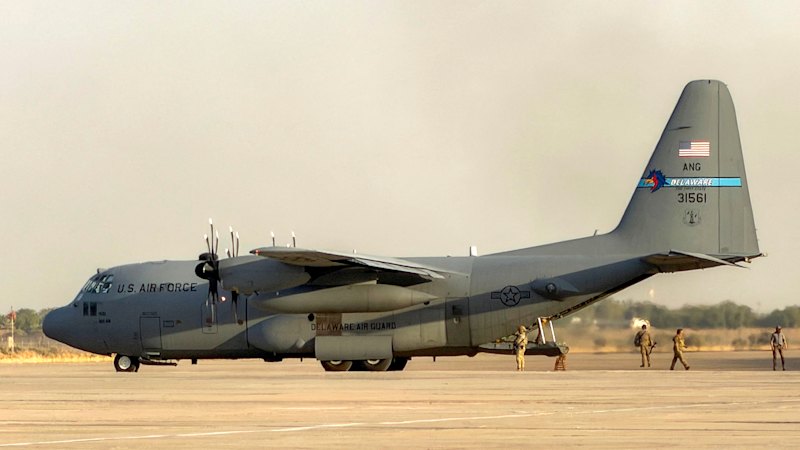
Yet, as the last transport aircraft lifts off into the vast, indifferent desert sky, leaving behind a streak of white vapor against the blazing sun, a profound psychological shift occurs. The training wheels are off.
For the first time in a generation, the story of Iraq is no longer being written in foreign capitals or command tents thousands of miles away. It is being written in the cafes of Karrada, in the classrooms of Basra, and in the quiet determination of people who have survived the worst the world could throw at them, and who refuse to surrender tomorrow.
The convoy is gone. The night belongs to Baghdad. What happens now is up to them.