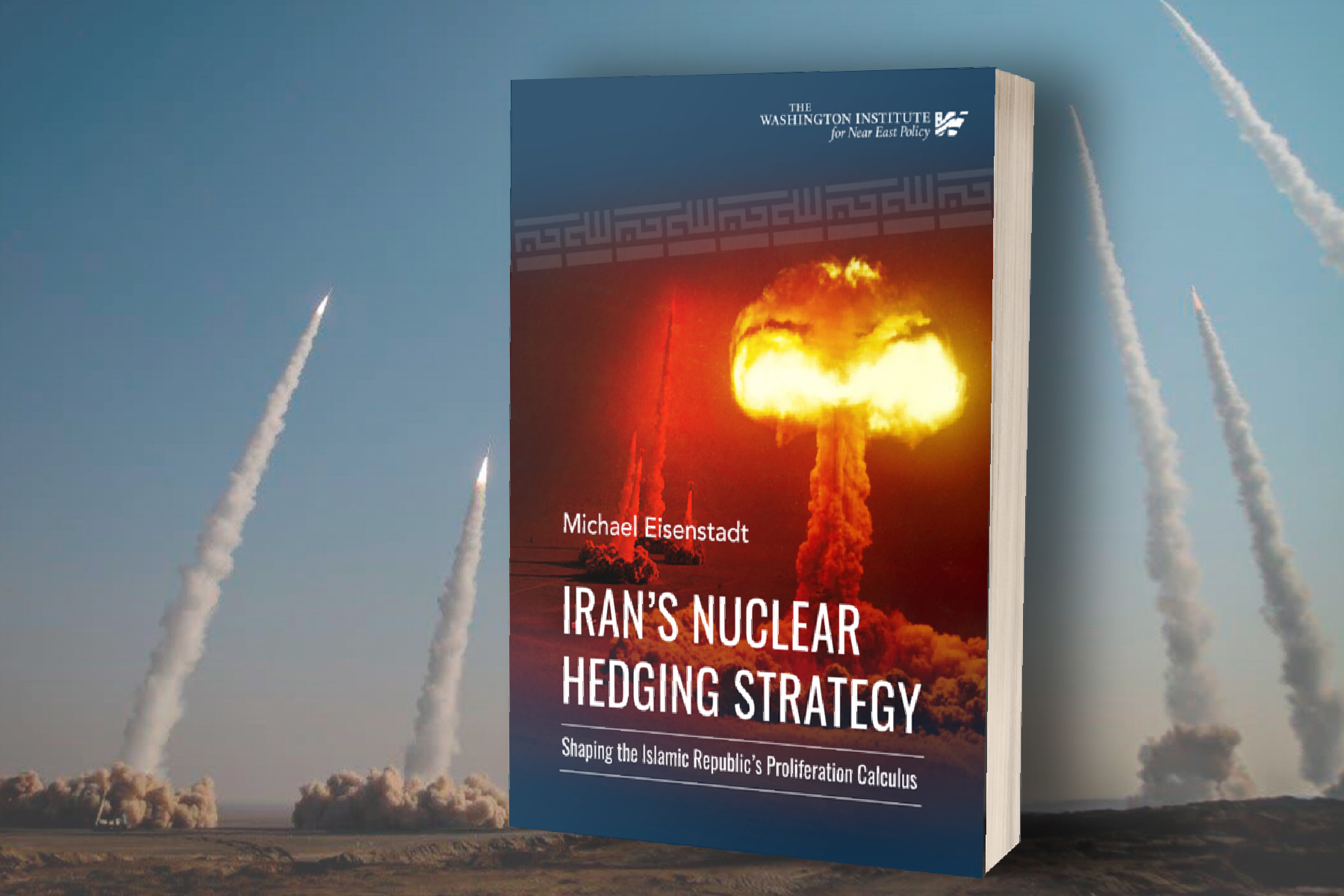
The headlines are screaming about escalation, world war, and a region on the brink. They see a barrage of missiles and they see power. They are wrong. What we witnessed following the death of Ali Larijani wasn’t a show of force; it was a loud, expensive admission of strategic bankruptcy.
When Iran launches a hundred-plus projectiles toward Israel, the mainstream media treats it like a grand chess move. It isn’t. It’s a desperate attempt to maintain a "resistance" brand that is rapidly losing its market share. If you’ve spent any time in the rooms where regional security is actually brokered—away from the sanitized briefings—you know that these displays are the geopolitical equivalent of a corporate rebrand during a bankruptcy filing.
The Larijani Void and the Myth of the Rational Actor
The death of Ali Larijani, a quintessential pillar of the "Pragmatic Conservative" wing, hasn't just removed a diplomat; it has decapitated the bridge to the West. Larijani understood the math of survival. He knew that a missile in a silo is a more effective negotiating tool than a missile in the air.
The "lazy consensus" suggests that Iran is acting out of a position of ideological fervor. That’s a fundamental misunderstanding of the Islamic Revolutionary Guard Corps (IRGC) business model. They aren’t looking for an apocalypse; they are looking for a budget increase. By launching a barrage that is largely intercepted by a multi-layered defense system, Tehran achieves a specific, cynical goal: it satisfies the domestic hardliners without actually inflicting the kind of damage that would trigger a regime-ending retaliatory strike.
This is "performative warfare." It is a high-stakes theatrical production where the cost of admission is measured in millions of dollars per interceptor, and the audience is a terrified global public that doesn't understand the physics of the theater.
The Mathematical Failure of "Saturation Attacks"
People ask: "Can't they just overwhelm the defense systems?"
It’s the wrong question. The real question is: "At what point does the cost of the offense exceed the political value of the failure?"
Let’s look at the hard numbers. If Iran launches a mix of Shahed drones, cruise missiles, and ballistic missiles, they are playing a volume game against an efficiency game. The drones are slow. They are essentially lawnmowers with wings. They serve one purpose: to force the IDF to deplete their Tamir interceptors.
$$C_{attack} = (n_{drones} \times p_{drone}) + (n_{ballistic} \times p_{ballistic})$$
Where $n$ is the number of units and $p$ is the price. The irony? Israel’s defensive cost is higher in pure cash, but their "strategic credit" increases with every successful interception. Every time a "barrage" fails to hit a single high-value target, the myth of Iranian conventional dominance dies a little more. I have seen military planners in the West privately scoff at these "swarms" because they aren't designed to win—they are designed to be seen.
The Proxy Problem: When Your Long Game Short-Circuits
The competitor article likely tells you that Iran is using its proxies to "squeeze" Israel. That was true in 2014. In 2026, the proxies are becoming liabilities.
Hezbollah and the Houthis are no longer just "arms" of the IRGC; they are stakeholders with their own domestic collapses to worry about. When Tehran orders a strike to avenge a figure like Larijani—who, let’s be honest, the IRGC hardliners didn't even like—the "Axis of Resistance" begins to fray.
- Fact: Proxies require constant funding.
- Fact: Sanctions have turned the Iranian rial into wallpaper.
- Fact: A missile barrage is a one-time capital expenditure that yields zero return on investment.
If you are an investor or a regional observer, you shouldn't be looking at the explosions. You should be looking at the shipping manifests. The real power in West Asia isn't who can blow up a desert empty lot; it's who controls the flow of energy and data. Iran is currently failing at both.
The Intelligence Gap Nobody Wants to Admit
The most uncomfortable truth about the Larijani era ending is how deeply the Iranian security apparatus has been compromised. You don’t lose high-level officials and scientists with this kind of regularity unless your internal security is a sieve.
Launching missiles is a way to distract the Iranian public from the fact that their "impenetrable" bunkers are apparently glass houses. It is a loud noise meant to drown out the sound of a crumbling intelligence network. When the "consensus" media talks about "escalation," they are helping Tehran hide its embarrassment.
Stop asking if this leads to World War III. It doesn’t. World wars require two sides with roughly equal industrial and technological capabilities. This is a lopsided technological slaughter where one side is using 1980s Soviet-era doctrine against 2020s AI-integrated defense grids.
The Brutal Reality of "Deterrence"
Deterrence only works if the other side believes you are willing to lose everything. The leadership in Tehran has far too many luxury villas and Swiss bank accounts to be "martyrs." They are a kleptocracy wrapped in a prayer shawl.
The missile barrage following Larijani’s death was a desperate attempt to reset the "Balance of Terror." It failed. Israel didn't blink, the Gulf states stayed quiet (while secretly sharing radar data), and the US kept its carrier groups at a comfortable distance.
If you want to understand what’s actually happening, ignore the infrared footage of falling debris. Look at the currency markets. Look at the brain drain in Tehran. Look at the fact that the "mighty" IRGC had to telegraph their move days in advance to ensure they didn't accidentally start a war they know they would lose in forty-eight hours.
The "West Asia Conflict" isn't expanding. It’s being exposed. It is the slow, agonizing death of a 1979 revolutionary model that has run out of ideas, run out of money, and now, with Larijani gone, has run out of adults in the room.
Stop watching the sky. Start watching the floor—that’s where this regime is eventually headed.
Reach out if you want the data on the specific failure rates of the Fateh-110 series during the latest sortie; the numbers tell a story the IRGC definitely didn't put in their press release.