The seizure of a sanctioned oil tanker by U.S. forces in the Indian Ocean represents a shift from administrative financial penalties to kinetic enforcement of international trade law. While the global financial system traditionally relies on the SWIFT network and banking freezes to penalize rogue actors, the physical interdiction of energy assets targets the cargo’s liquidity at the point of transit. This operation is not a mere display of naval presence; it is a calculated disruption of the shadow fleet supply chain, designed to increase the risk premium of transporting sanctioned Iranian crude.
The Triad of Maritime Interdiction Operations
To understand the scale of such an operation, one must dissect the mission into three functional components: Intelligence synchronization, tactical boarding (VBSS), and legal-custodial transition.
- Intelligence Synchronization: Before a physical assets enters the boarding window, a multi-sensor mosaic must confirm the identity of the vessel. Sanctioned tankers frequently employ "dark shifts," where Automatic Identification Systems (AIS) are deactivated or spoofed. Analysts correlate satellite synthetic aperture radar (SAR) data with radio frequency (RF) emissions to maintain a persistent track.
- Tactical Boarding (Visit, Board, Search, and Seizure): The physical act of taking control of a multi-thousand-ton vessel involves high-risk helicopter-borne insertions or fast-boat approaches. The objective is "Positive Control"—the immediate neutralization of the bridge and engine room to prevent scuttling or environmental sabotage.
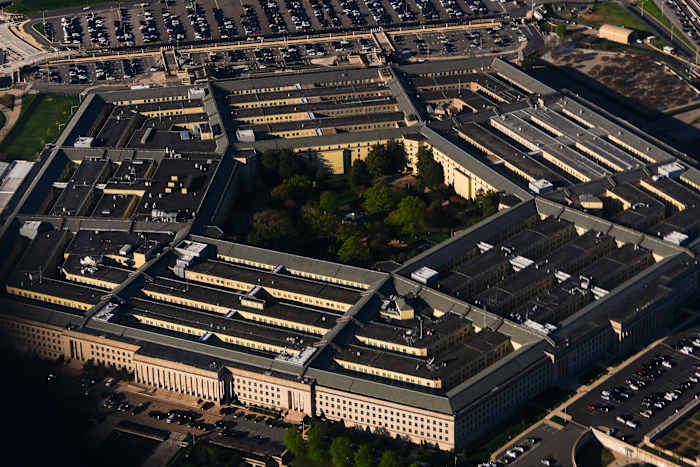
- Legal-Custodial Transition: Once the vessel is secured, the operation shifts from a military mission to a jurisdictional one. The Pentagon’s involvement necessitates a clear handoff to the Department of Justice or relevant maritime authorities, transforming the seized oil from an illicit commodity into a forfeited federal asset.
The Economics of the Shadow Fleet Risk Premium
The primary objective of interdicting a single tanker is to create a systemic "compliance chill" across the maritime industry. Every successful boarding by U.S. forces increases the operational costs for the shadow fleet through several mechanisms.
- Insurance Erasure: Once a vessel is physically boarded for sanctions violations, its P&I (Protection and Indemnity) insurance is effectively voided. This makes the vessel a pariah in regulated ports, forcing it to rely on inferior, unproven insurers or state-backed guarantees that offer little protection in the event of an oil spill.
- Demurrage and Delay Costs: Seizure removes the asset from the market indefinitely. For a Suezmax or VLCC (Very Large Crude Carrier), the loss of the hull and the cargo represents a nine-figure hit to the financing entity. This creates a bottleneck in the recycling of capital for future illicit shipments.
- Crew Volatility: Tactical boardings increase the personal risk to merchant mariners. High-quality crews will demand higher "war zone" premiums or refuse to staff vessels known to be on sanction watchlists, forcing shadow fleet operators to rely on less experienced personnel, which increases the probability of mechanical failure or navigational error.
Strategic Geopolitical Signaling
The Indian Ocean serves as a critical theater because it sits outside the immediate reach of Iranian coastal missile batteries while remaining a mandatory corridor for eastward-bound energy exports. By conducting the boarding in these waters, the Pentagon demonstrates a reach that exceeds the localized "Grey Zone" tactics often seen in the Persian Gulf.
The enforcement mechanism creates a direct cause-and-effect loop:
Sanction Designation $\rightarrow$ Physical Identification $\rightarrow$ Interdiction $\rightarrow$ Asset Forfeiture.
This sequence bypasses the "ghosting" tactics used to circumvent digital banking sanctions. When the crude oil is physically offloaded and sold at a U.S. auction, the proceeds are typically diverted to victims of state-sponsored terrorism. This effectively weaponizes the sanctioned entity’s own product against its long-term strategic interests.
Technical Barriers to Maritime Sanctions Evasion
The "Dark Fleet" utilizes several technical workarounds that this boarding specifically sought to neutralize. Understanding these tactics is essential for evaluating the success of the mission.
- AIS Spoofing: Vessels transmit fake coordinates to appear in "safe" waters while actually loading cargo in sanctioned terminals. Persistent overhead surveillance renders this tactic obsolete during the terminal phase of an interdiction.
- Ship-to-Ship (STS) Transfers: To obfuscate the origin of the oil, tankers will transfer cargo in the open ocean. Interdicting a vessel after an STS transfer proves that U.S. intelligence can maintain "chain of custody" over the commodity even when it changes hulls.
- Flag Hopping: Vessels frequently change their country of registration (flag state) to stay ahead of de-listing notices. U.S. forces often operate under bilateral agreements or "Shiprider" programs that allow for boarding regardless of the flag flying on the mast, provided there is reasonable suspicion of illicit activity.
Jurisdictional Friction and International Law
The Pentagon’s role in these seizures is often governed by the principle of "Universal Jurisdiction" or specific U.S. court orders related to terrorism financing. The primary friction point in these operations is the "Right of Visit" under the United Nations Convention on the Law of the Sea (UNCLOS). While the U.S. is not a formal signatory to UNCLOS, it recognizes most of its provisions as customary international law.
The legality of the seizure hinges on the vessel’s status as a "stateless" entity or one engaged in prohibited trade that violates UN Security Council resolutions or specific domestic laws that have extraterritorial reach. If the vessel is found to be operating with fraudulent documentation, it loses its sovereign protection, allowing U.S. forces to act as a global maritime police force.
Resource Allocation and Force Posture
Maintaining the capability to board large tankers in remote waters requires a specific force structure. This isn't a task for a standard destroyer crew alone; it requires specialized units such as Navy SEALs or Coast Guard Tactical Law Enforcement Teams (TACLETs).
The logistics chain for a seizure includes:
- Surveillance Aircraft: MQ-4C Triton or P-8A Poseidon assets provide the "over-the-horizon" eyes.
- Surface Combatants: A platform capable of launching both rotary-wing aircraft and small boats.
- Oil Recovery Infrastructure: Once a ship is seized, it must be sailed to a friendly port. This requires a "prize crew"—a specialized team of merchant mariners or Navy engineers capable of operating a foreign-built, potentially poorly maintained tanker.
The Strategic Playbook for Asset Seizure
The long-term play for U.S. maritime strategy is the normalization of the "Cargo-to-Cash" pipeline for sanctioned assets. By streamlining the legal process between the moment of boarding and the final sale of the oil, the U.S. reduces the holding costs of seized vessels, which can reach tens of thousands of dollars per day in port fees and security.
The move toward kinetic enforcement suggests that the era of "paper sanctions" is being supplemented by a "physical blockade" logic. Operators should expect an increase in maritime drone integration for persistent tracking of the shadow fleet, coupled with more aggressive boarding postures in international chokepoints like the Bab el-Mandeb and the Strait of Malacca. The focus is no longer on simply identifying the violators, but on the systematic extraction of their assets from the global supply chain.
The immediate tactical requirement is the deployment of "Seizure-Ready" task forces that combine judicial officers with special operations teams, ensuring that the evidence collected during the initial boarding is sufficient for permanent asset forfeiture in a court of law. This fusion of military power and legal precision is the only way to effectively degrade the financial utility of the global shadow fleet.