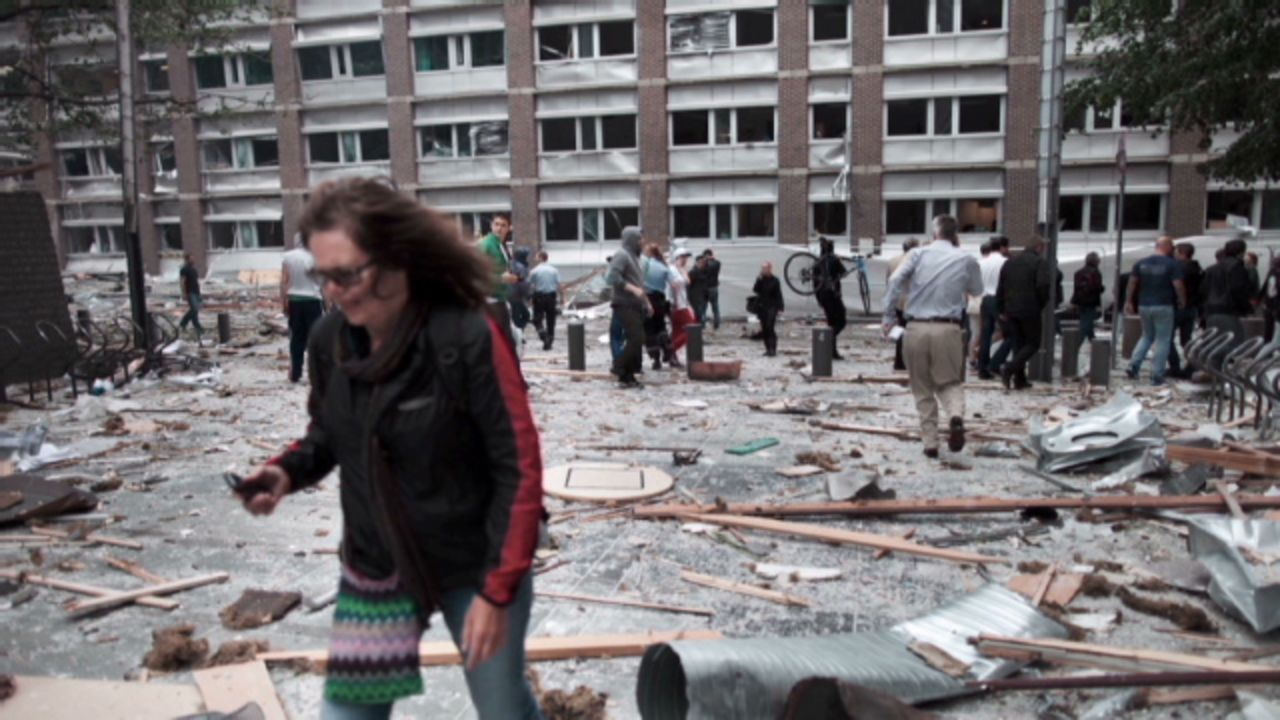
The strategic equilibrium in the Middle East has shifted from a doctrine of "strategic patience" to one of "active friction." While traditional reporting focuses on the visual output of conflict—smoke over Tehran or accusations of maritime interference—a structural analysis reveals a calculated recalibration of the regional cost function. This shift is defined by the erosion of plausible deniability and the transition of the Israel-Iran shadow war into a measurable, high-frequency kinetic exchange.
The Triad of Modern Regional Attrition
To understand the current volatility, one must decompose the conflict into three distinct operational layers. These layers function as a system where pressure in one area necessitates a compensatory response in another. For another look, see: this related article.
- The Aerial-Industrial Layer: Direct strikes on sovereign soil targeting military-industrial complexes.
- The Maritime-Logistics Layer: Interdiction of commercial and energy flows in the Persian Gulf and Red Sea.
- The Proxy-Buffer Layer: The use of non-state actors to absorb kinetic costs while maintaining a degree of separation for the patron state.
The Breakdown of Plausible Deniability
For decades, the operating principle of Middle Eastern conflict was the "Gray Zone." This allowed states to pursue interests through proxies without triggering a full-scale conventional war. However, the recent strikes on Tehran and the subsequent accusations regarding UAE and Bahrain indicate that the "Gray Zone" has collapsed. When Israel targets Iranian territory, it is a signal that the cost of proxy warfare has exceeded the cost of direct confrontation.
From a strategic consulting perspective, this is a transition from a variable cost model (supporting proxies) to a fixed cost model (maintaining high-alert air defenses and domestic resilience). Similar reporting regarding this has been provided by The Guardian.
Assessing the Israeli Strike Architecture
The presence of smoke over Tehran serves as a lagging indicator of a sophisticated suppression of enemy air defenses (SEAD) operation. To achieve visibility over the Iranian capital, an attacking force must solve a complex geographic and technical equation involving:
- Long-Range Persistence: The ability to transit over 1,500 kilometers of contested or neutral airspace.
- Electronic Warfare (EW) Dominance: Neutralizing the S-300 and indigenous Bavar-373 missile systems.
- Target Selection Logic: Shifting from personnel-based targets to high-value manufacturing nodes, specifically solid-fuel mixing facilities for ballistic missiles.
The strategic intent here is not total destruction—which is a logistical impossibility without a massive, sustained campaign—but rather the degradation of the "regen rate." If Iran cannot manufacture replacement components for its long-range arsenal, its ability to project power diminishes even if its current stockpiles remain significant.
The Maritime Choke Point as a Pressure Valve
Reports of Iranian-linked attacks in the vicinity of the UAE and Bahrain are rarely isolated incidents of aggression; they are tactical responses to pressure on the Iranian mainland. In the logic of asymmetric warfare, the sea represents the most vulnerable point for the global economy.
The Economics of the Strait of Hormuz
The Strait of Hormuz remains the world’s most critical oil transit chokepoint. Approximately 20% of the world's liquid petroleum passes through this narrow waterway. When Iran faces kinetic pressure at home, it leverages its proximity to these shipping lanes to raise the global "risk premium."
- Insurance Escalation: Every reported incident in UAE or Bahraini waters triggers an immediate spike in War Risk Insurance premiums for tankers.
- Logistical Diversion: Repeated threats force shipping companies to consider longer, more expensive routes, which feeds directly into global inflationary pressures.
- Political Leverage: By threatening the stability of the Abraham Accords signatories (UAE and Bahrain), Iran attempts to drive a wedge between Israel and its new regional partners.
The Feedback Loop of Deterrence
Deterrence is a psychological state achieved through the credible threat of disproportionate cost. The current escalation demonstrates a "failure of deterrence" on both sides.
Israel’s Calculation: The assumption was that decapitating proxy leadership (Hamas, Hezbollah) would force Iran to retreat. Instead, it triggered direct ballistic missile responses.
Iran’s Calculation: The assumption was that its "Ring of Fire" (the network of proxies surrounding Israel) would provide a sufficient shield against direct domestic strikes. The smoke over Tehran proves this shield is porous.
This creates a dangerous feedback loop. As each side realizes their previous deterrents have failed, they feel compelled to increase the scale of their next action to "restore" that deterrence.
Technical Constraints of Regional Defense
The efficacy of modern defense relies on the $P_k$ (Probability of Kill) of interceptor systems like the Iron Dome, David’s Sling, and Arrow-3, balanced against the sheer volume of incoming threats.
The primary bottleneck in this conflict is not technology, but interceptor inventory.
$$Cost_{Defensive} >> Cost_{Offensive}$$
An offensive drone may cost $30,000, while the interceptor required to destroy it costs $2,000,000. In a prolonged war of attrition, the side with the deeper industrial capacity for low-cost munitions holds the advantage, regardless of the sophistication of the opponent's defenses.
Strategic Realignment of the Gulf States
The UAE and Bahrain find themselves in a precarious "Neutrality Trap." While they have normalized relations with Israel, their geographic proximity to Iran makes them primary targets for retaliatory signaling.
The accusations of attacks in their waters serve as a reminder that their economic infrastructure—desalination plants, refineries, and ports—is within range of Iranian short-range ballistic missiles (SRBMs) and "suicide" drones. Consequently, we are seeing a dual-track strategy from these nations:
- Overt Defense Cooperation: Integrating into a regional air-defense architecture (often facilitated by the U.S.).
- Covert De-escalation: Maintaining back-channel diplomatic communications with Tehran to ensure that they are not viewed as a "launchpad" for Israeli operations.
The Intelligence Threshold
The precision of the strikes on Iranian soil suggests a high degree of "Human Intelligence" (HUMINT) or sophisticated "Signals Intelligence" (SIGINT) penetration. For smoke to be rising from specific facilities in a city as fortified as Tehran, the attacking force must have precise data on:
- Real-time movement of mobile air defense units.
- The structural vulnerabilities of hardened underground sites.
- The shift schedules of key technical personnel.
The psychological impact of this penetration is often more significant than the physical damage. It creates an internal environment of paranoia within the Iranian security apparatus, leading to purges and operational paralysis.
The Kinetic Outlook
The transition from shadow war to direct exchange is likely permanent. The previous "red lines" have been erased. We are now entering a phase of Managed Instability.
The immediate strategic priority for regional actors will be the hardening of critical infrastructure and the rapid expansion of domestic drone manufacturing. The conflict has moved beyond the era of large-scale troop movements; it is now a war of sensors, software, and autonomous systems.
The next logical step for the Israeli security cabinet is the systematic targeting of Iranian energy export nodes—the Kharg Island terminal—which would transition the conflict from a military exchange to an existential economic war. Conversely, the Iranian response will likely involve the activation of sleeper cells or cyber-attacks against Western financial infrastructure to broaden the theater of operations beyond the Levant. The conflict is no longer a regional dispute; it is a live-fire laboratory for the future of high-tech asymmetric warfare.