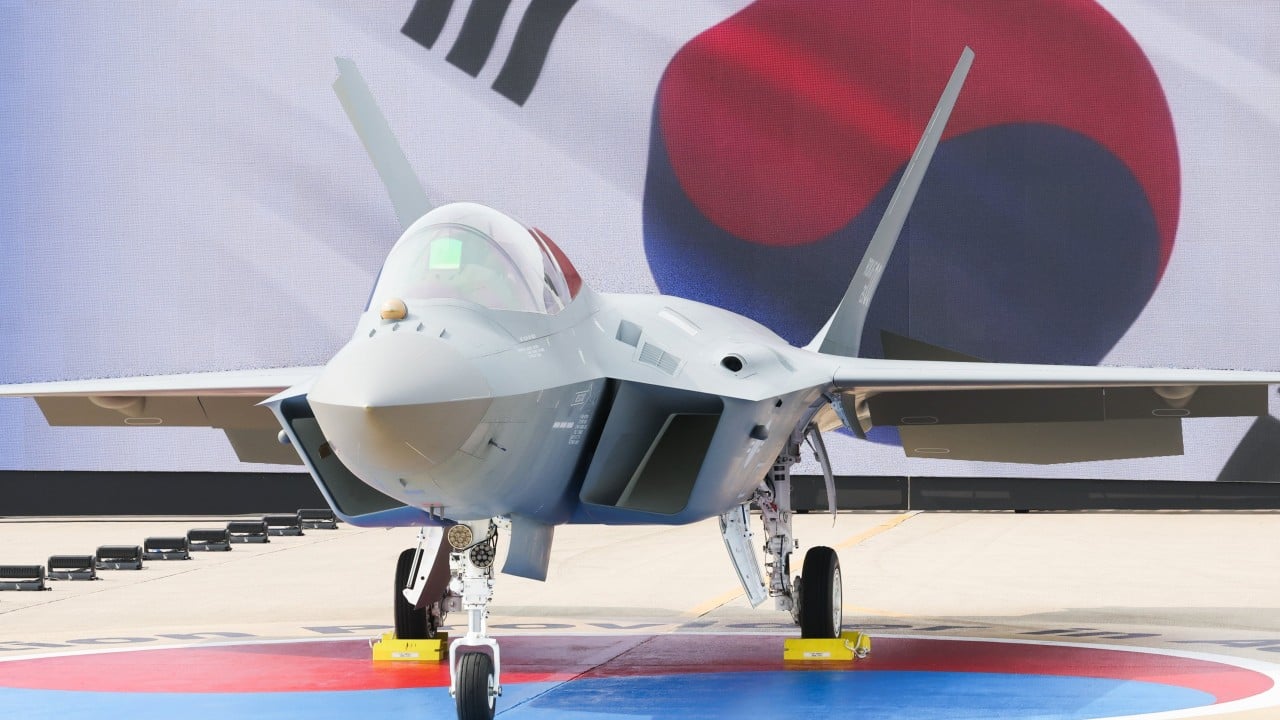
South Korea just did what most countries only dream of doing. They built a world-class fighter jet from scratch in about a decade. On March 25, 2026, the first mass-produced KF-21 Boramae rolled off the assembly line in Sacheon. It didn't just sit there; it moved under its own power, a literal flex of industrial muscle. While the US and Europe have spent decades bogged down in cost overruns and delays with their own programs, Seoul just kept the pace.
But the real question isn't whether the jet flies. It’s whether anyone else will buy it. Indonesia, the junior partner in this project, just committed to 16 units after years of shaky payments and drama. If you're looking for a reason why the global arms market is about to get a massive shakeup, look no further than this "Baby Raptor."
The smart middle ground between old tech and overpriced stealth
The KF-21 isn't trying to out-stealth the F-35. That’s a fool’s errand. Instead, it hits a sweet spot that doesn't really exist elsewhere in the market right now. Think of it as a 4.5-generation fighter with a 5th-generation "body". It looks like a stealth jet, it has the angled lines to deflect radar, but it carries its weapons on the outside—at least for now.
Why does this matter? Because most countries don't actually need—or can't afford—the insane maintenance costs of a true 5th-gen stealth fighter. The F-35 is a beast, but it’s a temperamental one that demands a fortune to keep in the air. The KF-21 offers a "near-stealth" alternative that is reportedly much cheaper to fly per hour. You get the modern AESA radar, the advanced sensors, and the Meteor long-range missiles, but without the headache of maintaining delicate radar-absorbent coatings that peel off if you look at them wrong.
- Speed: Mach 1.8 (around 2,140 km/h).
- Payload: 7,700 kg across 10 hardpoints.
- Engine: Twin General Electric F414-GE-400K engines.
- Radar: Domestically developed AESA system by Hanwha.
The Indonesia drama and the first export win
Let’s be honest, the partnership with Indonesia has been messy. For years, Jakarta was behind on its payments, leading to rumors they’d bail on the program entirely. At one point, they were even accused of trying to sneak out technical data. But money talks.
In late March 2026, as President Prabowo Subianto visited Seoul, the two nations finally smoothed things over. Indonesia is now set to take 16 jets—basically one full squadron. They’ve reduced their financial stake from 20% to about 7.5%, but they’re staying in the game. For South Korea, this is a massive relief. It proves the KF-21 isn't just a domestic vanity project; it’s a viable export product.
This first deal is the "proof of concept" for other potential buyers like the Philippines, Saudi Arabia, and the UAE. These countries are all looking to modernize their fleets without becoming 100% dependent on Washington’s restrictive export rules.
Why the KF-21 is a headache for Europe and Russia
The European defense industry should be nervous. For years, the Dassault Rafale and the Eurofighter Typhoon have owned the "high-end 4.5 generation" market. But those jets are getting old and expensive. Meanwhile, the Russian Su-35 is basically toxic on the international market right now due to supply chain collapses and sanctions.
South Korea is stepping into that void with a jet that is younger, has a clearer upgrade path, and comes from a country that is famously willing to share technology. Unlike the US, which guards its "black box" tech like a dragon, Seoul is open to let buyers build parts locally. That’s a huge selling point for any nation trying to build its own industrial base.
The upgrade path is where things get interesting
The KF-21 you see today isn't the final form. South Korea is playing the long game with an "incremental block" strategy.
- Block I: The current version. Focused on air-to-air missions. 40 units are being built for the ROKAF by 2028.
- Block II: Adds full air-to-ground and air-to-sea capabilities. Another 80 jets will follow by 2032.
- Block III: This is the big one. It aims for "true stealth" with internal weapons bays and potentially an indigenous engine to replace the American GE ones.
By doing it this way, they’ve avoided the "everything-at-once" failure trap that kills so many defense projects. They have a working jet today, not a "maybe" jet ten years from now.
What this means for the global balance of power
South Korea is currently on a tear to become one of the world's top four defense exporters. They've already sold K2 tanks and K9 howitzers to Poland in record-breaking deals. The KF-21 is the crown jewel of this strategy.
If you're an air force commander in a country that isn't on the "A-list" for the F-35, your options used to be limited to old F-16s or expensive European jets. Now, there’s a new player in town. The KF-21 Boramae is ready, it’s mass-produced, and it’s arguably the most practical fighter jet on the market for the next decade.
If you want to track the success of this program, watch the upcoming defense expos in the Middle East and Southeast Asia. The first 16 jets to Indonesia are just the start. The real test will be if a country like Poland or Saudi Arabia signs on the dotted line next.