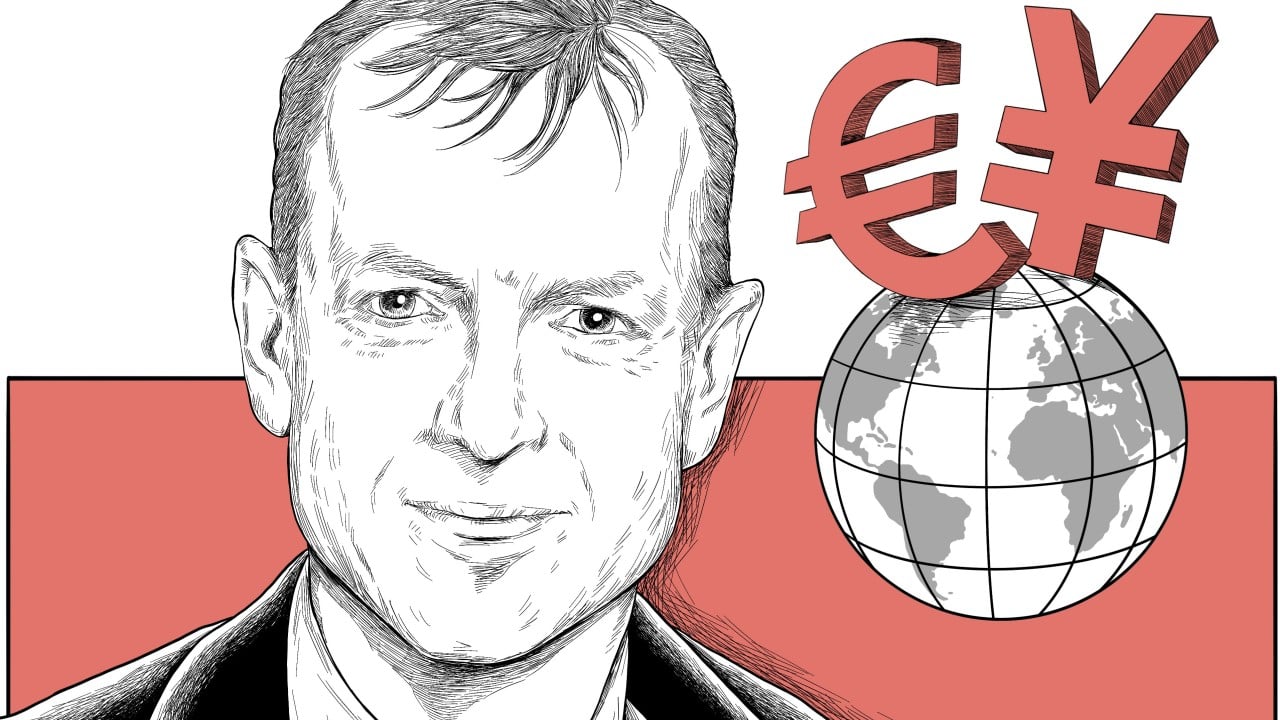
Thom Tillis is "prepared" to lift his block. This is the political equivalent of a weather vane claiming it finally decided which way the wind should blow. The recent drama surrounding Senator Tillis and his standoff over Kevin Warsh’s potential role at the Federal Reserve isn't a victory for "due process" or "economic vetting." It is a glaring symptom of a decayed system that pretends the Fed is a temple of pure math, insulated from the grubby hands of Capitol Hill.
The consensus view—the one you’ll read in every dry financial broadsheet—is that Tillis was acting as a responsible gatekeeper. They want you to believe he was holding out for assurances on bank capital requirements or regulatory "predictability."
That is a lie.
This wasn't about the Basel III endgame or technical liquidity ratios. This was about power dynamics and the optics of submission. By signaling he is ready to move forward, Tillis isn't showing leadership; he’s acknowledging that the political gravity of a new administration has become too heavy to fight.
The Fallacy of the Independent Fed
We need to stop pretending the Federal Reserve exists in a vacuum. The phrase "Fed Independence" is the most successful branding campaign in the history of global finance. It suggests a group of monastic scholars looking at charts to determine the "natural rate" of interest.
In reality, the Fed is a political creature born of a political act. Kevin Warsh knows this better than anyone. His critics point to his past hawkishness or his ties to Wall Street as "risks." They miss the point. The risk isn't that Warsh is too political; the risk is that we continue to use the Fed as a shield for Congress’s inability to manage a budget.
When Tillis grills a candidate like Warsh, he isn't looking for the best economist. He is looking for a partner in a shell game. If the Fed keeps rates low, Congress can keep spending. If the Fed raises rates, Congress has a convenient villain to blame for the ensuing recession.
Why Warsh is the Wrong Answer to the Wrong Question
The media is obsessed with whether Warsh is "loyal" to the White House or "loyal" to the institution. This is a false choice. The real question is whether anyone at the Fed has the courage to admit that their toolkit is broken.
For decades, the "lazy consensus" has been that the Fed can "fine-tune" the economy. They believe they can twist a dial marked $r^*$—the neutral rate of interest—and achieve a "soft landing."
The Neutral Rate is a Ghost
$r^*$ is not a measurable fact. It is a theoretical construct. If you ask five different governors where the neutral rate sits, you get five different guesses. Yet, the entire market hangs on these guesses as if they were carved in stone.
Warsh is often viewed as a "markets guy." The argument goes that his experience at Morgan Stanley and his previous stint on the Board of Governors make him uniquely qualified to "speak the language of the street."
I have seen this movie before. "Speaking the language of the street" usually means ensuring that the primary dealers don't lose their shirts when the bubble finally pops. We don't need a translator. We need a mechanic who is willing to tell the driver the engine is on fire.
The Bank Capital Smokescreen
Tillis's primary leverage point has been bank regulation. He has been a vocal critic of the "regulatory overreach" seen under current leadership. The counter-intuitive truth? The big banks want complex regulation.
High regulatory hurdles are the ultimate moat. They ensure that no mid-sized disruptor can ever afford the compliance costs necessary to compete. When Tillis talks about "lifting his block" in exchange for regulatory "sanity," he is effectively negotiating the terms of an oligopoly.
If we actually wanted a stable financial system, we wouldn't be arguing over whether a capital buffer should be 16% or 19%. We would be discussing why the Fed acts as a backstop for every bad bet made by a "systemically important" institution.
The Ghost of 2008 and the Warsh Record
Critics love to bring up 2008. They point to Warsh’s role during the crisis as evidence of his "pro-Wall Street" bias. Let’s be brutally honest: everyone involved in 2008 has blood on their hands. The idea that there is some "pure" candidate out there who predicted the subprime collapse and has a perfect record of intervention is a fantasy.
The obsession with Warsh's past record on inflation is equally misguided. In 2010, many hawks feared that Quantitative Easing (QE) would lead to immediate hyperinflation. It didn't. Does that mean the hawks were "wrong"?
Not necessarily. It means the transmission mechanism of monetary policy changed. The "inflation" didn't hit the grocery store immediately; it hit asset prices. It created the very wealth inequality that politicians now moan about on the campaign trail. By focusing on consumer price indices (CPI) while ignoring the massive inflation in housing and equities, the Fed has spent fifteen years gaslighting the American public.
The Real Cost of the "Tillis Hold"
What did this delay actually achieve? Nothing. It didn't change Warsh's philosophy. It didn't rewrite the Federal Reserve Act. It merely created a period of "uncertainty" that gave talking heads something to speculate about during the midday slot on CNBC.
The theater of the confirmation process is designed to make the public feel like there is oversight. There isn't. The moment a Senator like Tillis says he is "prepared" to move, it means the trade has already been made behind closed doors.
Stop Asking if Warsh is "Qualified"
The question isn't whether Kevin Warsh has the credentials. He has the resume. He has the connections. He has the suit.
The question is: Does he have the stomach to stop the "Fed Put"?
The "Fed Put" is the unspoken guarantee that if the stock market drops by more than 10%, the central bank will rush in with liquidity to save the day. This has created a generation of investors who don't know how to price risk. It has turned the "free market" into a subsidized casino.
If Warsh goes in and continues the policy of "transparency" (which is just a fancy word for telling the markets exactly what they want to hear so they don't get scared), then he is just another cog in the machine.
The Hard Truth About Interest Rates
The consensus says we need to get back to "normal" rates. But what is normal?
For a decade, "normal" was 0%. Now, 5% feels like a crisis to a world drowning in debt. The reality is that the U.S. government cannot afford high interest rates. With a national debt clearing $34 trillion, every 1% increase in the interest rate adds hundreds of billions to the annual deficit.
The Fed is trapped. If they keep rates high to fight inflation, they bankrupt the Treasury. If they lower rates to save the Treasury, they destroy the dollar.
Thom Tillis and his colleagues in the Senate don't want to talk about this. They want to talk about "personnel" and "leadership styles." They want to treat the Fed like a HR problem instead of a math problem.
Imagine a Scenario Where the Fed Does Nothing
Think about this: What if the Fed simply stopped trying to "manage" the economy?
Imagine a scenario where the interest rate was set by the supply and demand of loanable funds, rather than a committee of twelve people in Washington. The volatility would be gut-wrenching in the short term. The "too big to fail" banks would actually fail. The zombie companies kept alive by cheap credit would go bankrupt.
But on the other side of that pain, we would have an economy built on reality rather than stimulus.
Neither Tillis nor Warsh is interested in that scenario. They are both invested in the current paradigm. One wants to be the gatekeeper; the other wants the keys to the gate.
The Pivot is a Mirage
The financial media is desperate for a "pivot." They want to know when the "Warsh Fed" or the "Powell Fed" will finally give them the green light to start the next bull run.
This search for a "pivot" is a sign of a sick culture. It’s the behavior of an addict looking for the next fix. When we celebrate a Senator "lifting a block" on a nominee, we are celebrating the continuation of a system that prioritizes short-term stability over long-term solvency.
The "nuance" that the competitor's article missed is simple: This isn't a story about a Senator and a nominee. It’s a story about the terminal phase of an economic experiment that began in 1913 and is currently running out of options.
Stop Looking at the Man, Look at the Math
Don't be fooled by the "victory" of a cleared confirmation path. Kevin Warsh is a brilliant man, but brilliance cannot fix an insolvent system.
Tillis isn't "prepared" to lift the block because he's satisfied with the answers. He's lifting the block because the game must go on. The seats must be filled. The illusion of control must be maintained.
The next time you hear a politician talk about "protecting the independence of the Fed," remember that they are really talking about protecting their own ability to spend money they don't have, while a central banker takes the fall for the resulting mess.
The standoff is over. The charade continues.
Do not look for a "soft landing." There is no such thing when the pilots are busy arguing over who gets to hold the flight manual while the plane is out of fuel.