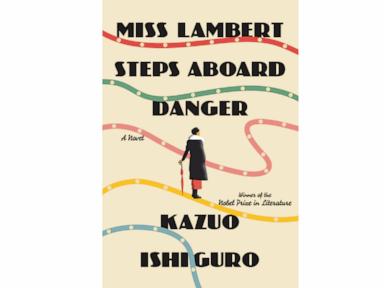
The literary establishment is already salivating over Kazuo Ishiguro’s upcoming venture into 1930s England. They see the familiar ingredients—spies, classical music, aristocratic tension, and sharp wit—and assume we are on the verge of another triumph of high art. The predictable critical consensus is already writing itself: a masterful, nuanced exploration of memory, duty, and British identity on the brink of collapse.
They are entirely wrong.
What the critics call "nuance," the publishing industry uses as a shield for creative stagnation. I have spent two decades analyzing literary trends, tracking how major houses position Nobel laureates, and watching brilliant authors get trapped by their own prestige. The collective obsession with Ishiguro’s period pieces overlooks a harsh reality: packaging existential dread in tweed and violin sonatas is no longer an artistic breakthrough. It is a highly calculated, risk-averse commercial formula.
By treating this upcoming release as an untouchable monument of pure art, the industry is masking a deeper crisis in contemporary fiction. We do not need another polite, melancholic autopsy of the British Empire.
The Nostalgia Trap of 1930s England
The choice of 1930s England is not a bold creative leap. It is the safest harbor in English literature. Writers retreat to this era because the historical stakes are pre-packaged. You do not have to work to create tension when the shadow of fascism and the collapse of the aristocracy are already doing the heavy lifting for you.
When an author sets a novel in this period, they are tapping into a deeply ingrained cultural shorthand. The reader immediately understands the subtext of every clinking teacup and hushed conversation in a country manor. Critics praise this as "atmospheric restraint," but often, it is just historical cosplay.
[The Historical Safe Haven]
Pre-War Anxiety + Aristocratic Decay + Polite Espionage = Instant Critical Acclaim
True artistic risk does not rely on a century-old backdrop to validate its emotional weight. When Ishiguro gave us Never Let Me Go, he built a haunting, unfamiliar world that forced readers to confront uncomfortable truths about ethics and mortality without a historical crutch. Retreating to the world of drawing rooms and espionage feels less like an evolution and more like a regression to a comfortable aesthetic.
Why Subversion is Not the Same as Innovation
The defense of this formulaic setting is always the same: But he will subvert the genre.
This is the ultimate lazy defense of established authors. We are told that because a Nobel laureate is writing a spy story or a historical romance, it transcends the genre. This creates a condescending double standard in the literary world. If a brilliant genre writer pens a taut, historically accurate thriller about 1930s espionage, it is dismissed as airport fiction. If an elite literary figure does it, it is hailed as a deconstruction of human frailty.
Let us look at the mechanics of this so-called subversion. Usually, it means taking a genre framework—like a detective story in When We Were Orphans—and intentionally withholding the resolution to make a point about the futility of human certainty.
The first time an author does this, it is brilliant. The fifth time, it becomes a predictable gimmick. When subversion becomes a repeatable template, it ceases to be subversive. It becomes the new status quo, designed to reassure elite readers of their own sophistication while delivering the exact intellectual comfort food they expected.
The Complicity of the Prestige Publishing Machine
Publishing houses are businesses, even when they deal in high art. The positioning of a book by a Nobel Prize winner is a masterclass in risk mitigation. Major publishers cannot afford a massive misfire from their flagship authors, so they encourage them to stay within the boundaries of what the literary establishment deems "serious."
Consider the economics of prestige fiction. A publisher uses the predictable, steady sales of established giants to fund smaller, riskier debuts. But this creates a paradox. The very authors who have the financial security to completely blow up the rules of fiction are the ones most heavily incentivized to keep writing variations of the same book. They are trapped by the expectations of the Booker Prize shortlists and the New York Times review section.
I have watched brilliant writers succumb to the gravity of their own reputation. They stop experimenting with form, language, and raw, unfiltered perspectives because the machinery around them demands a specific flavor of quiet brilliance. The result is a literary landscape that feels incredibly polished, undeniably well-written, and utterly sterile.
Dismantling the "People Also Ask" About Literary Greatness
When discussions about authors of this caliber arise, the questions are always framed around a flawed premise.
Does a historical setting make a novel more universal?
The prevailing assumption is that setting a story in a moment of great historical gravity automatically elevates its themes. This is a fallacy. Universality is achieved through the raw psychological truth of the characters, not the prestige of their wardrobe. A story about a modern gig-economy worker struggling with isolation can be infinitely more profound than a duke brooding over a changing world in 1935. Using history as a shortcut for depth is an aesthetic crutch.
Should we judge genre fiction and literary fiction by different standards?
The division between genre and literary fiction is an artificial hierarchy designed to maintain cultural gatekeeping. Great writing is great writing. When literary fiction borrows the clothing of genre fiction—whether it is sci-fi, fantasy, or historical espionage—it should be judged by how effectively it executes those elements, not given a free pass simply because the author has a prestigious pedigree.
The Cost of Intellectual Comfort Food
There is a distinct downside to rejecting the comfortable consensus around these types of novels. When you demand that elite authors stop repeating themselves, you occasionally get messy, chaotic failures. You get books that experiment wildly with structure, language, or tone and completely miss the mark.
But failure is the price of genuine artistic progress.
The current literary ecosystem prefers a flawless, four-star book that hits every expected emotional note over a chaotic, ambitious three-star book that tries to reinvent how we tell stories. By celebrating these safe, elegant historical dramas, we are signaling to the industry that we prefer intellectual comfort food over genuine disruption.
Stop looking at the upcoming release through the lens of reverence. Stop letting the pre-release hype dictate how you perceive its value. If we want a literary culture that actually matters, we have to stop treating the safe repetitions of aging masters as the pinnacle of human expression.
Demand more than wit, spies, and classical music. Demand something that actually threatens the status quo.



.png)