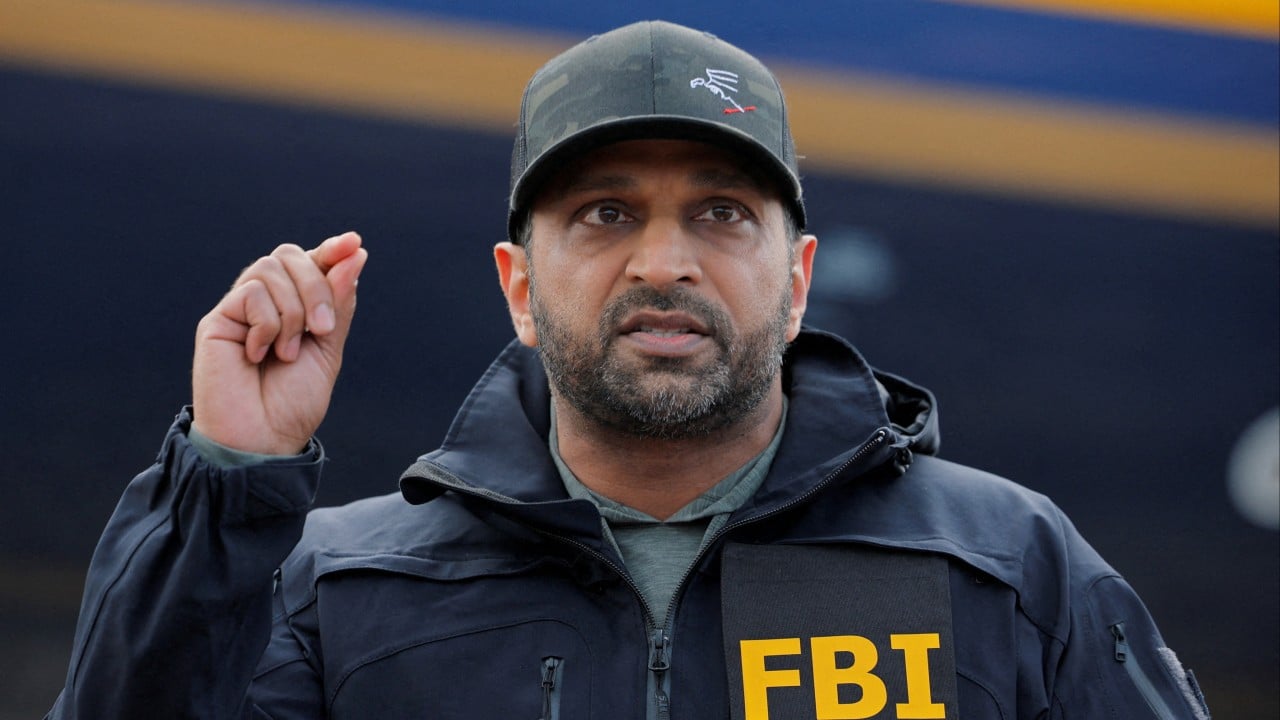
Kash Patel, the former Trump administration official and firebrand conservative figure, has filed a massive $250 million defamation lawsuit against The Atlantic, targeting a profile that alleged his lifestyle and professional conduct were marred by excessive alcohol consumption. The lawsuit claims the magazine and its writer, Jeffrey Goldberg, engaged in a coordinated character assassination campaign to derail Patel’s political trajectory. By demanding a quarter of a billion dollars, Patel is not just seeking a correction; he is attempting to establish a financial deterrent against legacy media outlets that rely on anonymous sourcing to dismantle the reputations of public figures.
This isn’t a standard legal spat over a typo or a misattributed quote. It is a high-stakes collision between the expansive protections of the First Amendment and the growing "lawfare" movement within American politics. At the center of the storm is a December 2023 article titled "Trump’s Next Government," which painted a grim picture of what a second Trump term might look like, using Patel as a primary archetype of the "loyalist" faction.
The Anatomy Of The Allegation
The crux of Patel’s complaint rests on the specific claim that he is a "heavy drinker" or "excessive drinker." In the world of high-level government clearances and national security roles—positions Patel has held and likely aims for again—such an allegation is more than a personal insult. It is a professional death sentence. Habitual intoxication is one of the primary reasons the federal government denies or revokes security clearances, as it suggests a vulnerability to blackmail or a lack of judgment.
Patel’s legal team argues that The Atlantic published these claims with "actual malice," the legal standard established in New York Times Co. v. Sullivan. To win, Patel must prove that the publication knew the information was false or acted with reckless disregard for the truth.
The defense will likely lean on the "public figure" doctrine. Because Patel is a high-profile operative who frequently appears in the media and has served in the Department of Defense and the National Security Council, the bar for proving defamation is incredibly high. The Atlantic is expected to stand by its reporting, citing the deep vetting process and the multiple sources typically required for a cover story of that magnitude.
Why The Number Matters
A $250 million price tag is a signal. It matches the original amount sought by Nick Sandmann in his suit against The Washington Post, a case that eventually ended in an undisclosed settlement. By choosing such an astronomical figure, Patel’s counsel is signaling to the judiciary and the public that they view the damage as existential.
The math behind these damages usually involves a combination of:
- Compensatory Damages: Lost income from speaking engagements, book deals, or potential consulting contracts.
- Reputational Harm: The cost of "rehabilitating" a name that has been dragged through the mud.
- Punitive Damages: A penalty intended to punish the defendant and discourage others from similar conduct.
In the current media environment, these lawsuits serve a dual purpose. They are legal tools, yes, but they are also potent fundraising and branding mechanisms. For Patel, the lawsuit reinforces his image as a fighter who refuses to be intimidated by the "Deep State" or the "Fake News Media." For his supporters, the $250 million is a righteous valuation of the harm done to a patriot. For his detractors, it is a frivolous attempt to chill free speech through the threat of bankruptcy-inducing litigation.
The Ghost Of Anonymous Sources
One of the most contentious aspects of the profile was its reliance on unnamed former colleagues and officials. This is the Achilles’ heel of modern investigative journalism. While anonymous sources are essential for whistleblowing, they are also easily criticized as tools for personal vendettas.
Patel’s lawsuit specifically targets the lack of corroborating evidence for the drinking allegations. If the case proceeds to discovery, Patel’s lawyers will likely demand the identities of these sources or at least the notes and recordings of the interviews. This sets up a classic First Amendment showdown. Journalists have a "shield" in many jurisdictions that allows them to protect sources, but that shield is not absolute, especially when the source’s testimony is the primary evidence for a defamatory claim.
If a judge allows the case to move forward, The Atlantic could be forced to choose between revealing its sources or losing a default judgment. It is a nightmare scenario for any editorial board. It forces a choice between the integrity of their promise to sources and the financial stability of the institution.
The Strategy Of Reputation As Weaponry
In the upper echelons of D.C. power, reputation is the only currency that actually clears. You can have the money, and you can have the title, but if the consensus in the room is that you are unreliable, your power is an illusion.
The "drinking" narrative is a specific type of attack. It’s an old-school D.C. tactic designed to make a person seem "unserious" or "unstable." It’s the same type of whisper campaign used against figures like Ulysses S. Grant or John Tower. By bringing this into the public record via a lawsuit, Patel is forcing the conversation into a venue where "whispers" don't count for much. In a courtroom, you need logs, receipts, and witnesses willing to testify under oath.
The Standard Of Actual Malice
To understand why this case is so difficult for Patel to win, one has to look at the mechanics of $Sullivan$.
- Falsity: The statement must be factually wrong.
- Identification: It must be clearly about the plaintiff.
- Harm: It must cause actual damage.
- Malice: The publisher must have acted with "evil intent" or total negligence toward the truth.
Proving that Jeffrey Goldberg or The Atlantic’s fact-checkers actively wanted to lie about Patel’s drinking habits is an immense hurdle. Simple sloppiness isn't enough. Even a "biased" outlook isn't enough. The law protects the right of a magazine to be wrong, as long as they weren't intentionally or recklessly wrong.
Media Accountability Or Corporate Intimidation
The broader industry is watching this case with a mix of anxiety and cynicism. On one hand, there is a legitimate concern that legacy media has become too comfortable using "unnamed officials" to push partisan narratives without consequence. If Patel can prove the drinking claims were fabricated or based on a single, biased source with an axe to grind, it would be a landmark victory for media accountability.
On the other hand, the rise of the "mega-suit" threatens the very existence of smaller investigative outlets. If every negative profile results in a $250 million legal battle, editors will become increasingly risk-averse. They will shy away from difficult stories about powerful people because the legal fees alone—win or lose—could shutter the business.
This is the "Gawker Effect." After Peter Thiel funded Hulk Hogan’s lawsuit against Gawker Media, the industry realized that a wealthy, motivated adversary could use the legal system to dismantle a publication regardless of the merits of a specific story. Patel is tapping into this same energy. He is not just suing a magazine; he is attacking a business model.
The Discovery Phase Trap
If the case moves to discovery, both sides have a lot to lose. The Atlantic will have to turn over internal emails, Slack messages, and draft versions of the story. These documents often reveal the "sausage-making" of journalism in ways that can look ugly to a jury, even if they don't meet the legal definition of malice. Editors venting about a subject, jokes made in private, or notes about "taking down" a political figure can be devastating when read aloud in a courtroom.
But Patel faces a similar risk. Discovery is a two-way street. The Atlantic’s lawyers will gain access to Patel’s personal life, his financial records, and his own communications. If they find even a shred of evidence that supports their original claims—credit card receipts from bars, witnesses who can verify his behavior, or medical records—the lawsuit backfires spectacularly. By suing for defamation over his lifestyle, Patel has effectively put his entire personal history into the public record.
Beyond The Courtroom
Regardless of the legal outcome, the battle is already being won in the court of public opinion. For Patel’s base, the mere act of filing the suit is proof of his innocence. It is a "signal of strength." In their eyes, you don't sue for $250 million if you have something to hide.
For the media establishment, the lawsuit is a symptom of a broken political culture where the truth is secondary to the narrative. They see it as an attempt to use the courts to silence legitimate criticism of a man who held—and may again hold—immense power over the American military and intelligence apparatus.
The litigation will likely drag on for years. It will involve thousands of pages of motions, depositions from the elite of the D.C. press corps, and potentially a trial that would be the media event of the decade.
The real casualty here isn't just a bank account or a reputation; it is the shared reality of the American public. When every piece of reporting is treated as a legal opening and every lawsuit is viewed as a political stunt, the space for objective truth shrinks. We are left with a system where the "truth" is whatever survives the longest in court.
Demand for accountability is high, but the price of entry has never been more expensive. If you’re going to take a shot at a kingpin of the political world, you better not miss. And if you’re the kingpin, you better be prepared for the world to see every receipt you’ve ever signed. This isn't just about a magazine article anymore. It's about who gets to write the history of the present, and how much they have to pay for the privilege.
The legal system is now the final editor. It is a cold, expensive, and unforgiving place to find out if your sources were telling the truth.