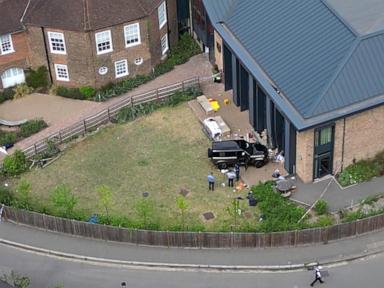
A peaceful end-of-term tea party on a school lawn shouldn't turn into a crime scene. But for the families at The Study Preparatory School in Wimbledon, that nightmare became reality. After months of waiting for answers, the legal system is finally moving. A driver has been charged over the death of two girls, Nuria Sajjad and Selena Lau, both just eight years old.
The tragedy happened on July 6, 2023. It was a sunny morning. Parents and children were celebrating the start of summer. Then, a Land Rover Defender crashed through a fence and into the crowd. The impact was devastating. Aside from the two young lives lost, several other children and adults were seriously injured. People want to know why this happened and if anyone will be held responsible. Now, we have a name and a charge.
The Charges Facing the Driver
The Metropolitan Police confirmed that Claire Knights, a 47-year-old woman from Wimbledon, faces two counts of causing death by dangerous driving. She also faces several counts of causing serious injury by dangerous driving. This isn't just a "tragic accident" in the eyes of the law anymore. It's a criminal case.
When someone is charged with dangerous driving, it means the prosecution believes their driving fell far below what would be expected of a competent and careful driver. It also implies that it would be obvious to a competent driver that driving in that way would be dangerous. This is a high bar to meet in court.
I've watched how these cases unfold. Usually, the defense looks at medical records or mechanical failures. Early reports suggested the driver might have suffered a medical episode at the wheel. However, the Crown Prosecution Service (CPS) doesn't bring charges like this unless they believe there's a realistic prospect of conviction based on the evidence.
Remembering Nuria Sajjad and Selena Lau
We can't talk about legal proceedings without talking about the children. These weren't just names in a police report. Nuria Sajjad's family described her as a "generous" girl who was the "light of our lives." Selena Lau was called an "intelligent and cheeky" girl who was loved by everyone.
The community in Wimbledon has been reeling for nearly a year. Tributes, flowers, and stuffed animals lined the school gates for weeks after the crash. It’s hard to imagine the pain of a parent who drops their child off for a party and never sees them come home. The school itself, an independent prep school for girls, has had to navigate an impossible path of grieving while trying to keep a sense of normalcy for the remaining students.
Why the Investigation Took So Long
One of the biggest frustrations for the public and the families was the timeline. Why did it take nearly a year to bring charges?
The Met Police defended the delay, citing the "complexity" of the investigation. In cases involving high-powered vehicles and potential medical issues, experts have to analyze every single data point. They look at the car's "black box" data. They review CCTV from every angle. They interview dozens of witnesses.
Most importantly, they have to wait for comprehensive medical reports if the driver claims they weren't in control of their body at the time. Prosecutors have to be certain. If they rush and get it wrong, the case collapses. That would be a second tragedy for the families.
The Legal Process Moving Forward
Claire Knights is expected to appear in court soon. This is just the beginning of a long journey through the UK justice system. Here’s what usually happens next:
- First Appearance: The defendant appears at a Magistrates' Court where the charges are formally read.
- Plea Hearing: The case will likely be moved to a Crown Court. The defendant will enter a plea of guilty or not guilty.
- The Trial: If she pleads not guilty, a jury will hear the evidence. This could take weeks.
- Sentencing: If convicted, the sentences for causing death by dangerous driving are severe. The maximum penalty was recently increased to life imprisonment, though that’s reserved for the most extreme cases.
The court will have to decide if she was truly in control of that Land Rover. They'll look at whether there were any warning signs before the crash. Did she feel ill and keep driving? Or was this a sudden, unforeseeable event? These are the questions that will define the trial.
Road Safety and School Zones
This incident sparked a massive debate about road safety around schools. You see it everywhere. Large SUVs idling near narrow school gates. Parents rushing. It’s a chaotic environment.
While the Wimbledon case involves a specific set of circumstances, it highlights a broader issue. Many campaigners are calling for stricter "School Streets" initiatives across London. These would involve closing roads to through traffic during drop-off and pick-up times.
It’s about more than just traffic tickets. It’s about creating a physical environment where a car can't physically gain enough speed to crash through a reinforced fence. We need to stop treating school zones like through-roads.
Supporting the Victims
The survivors of the crash are still dealing with life-altering injuries. Physical scars might heal, but the psychological trauma of seeing a vehicle plow into a group of children is something that stays forever.
Support services have been working with the school and the families, but the road to recovery is long. If you want to help, local community funds often support the families of victims in these high-profile tragedies.
Keep an eye on the official court listings for the Wimbledon driver. Public interest in this case is high, and for good reason. We need to see how the law handles such a massive loss of innocence.
The next step is the court hearing. If you're following this, pay attention to the specific evidence regarding the vehicle's condition. That’s often where these cases are won or lost. For now, the charge brings a somber sense of progress. It’s not closure—that might never come—but it’s a step toward accountability.