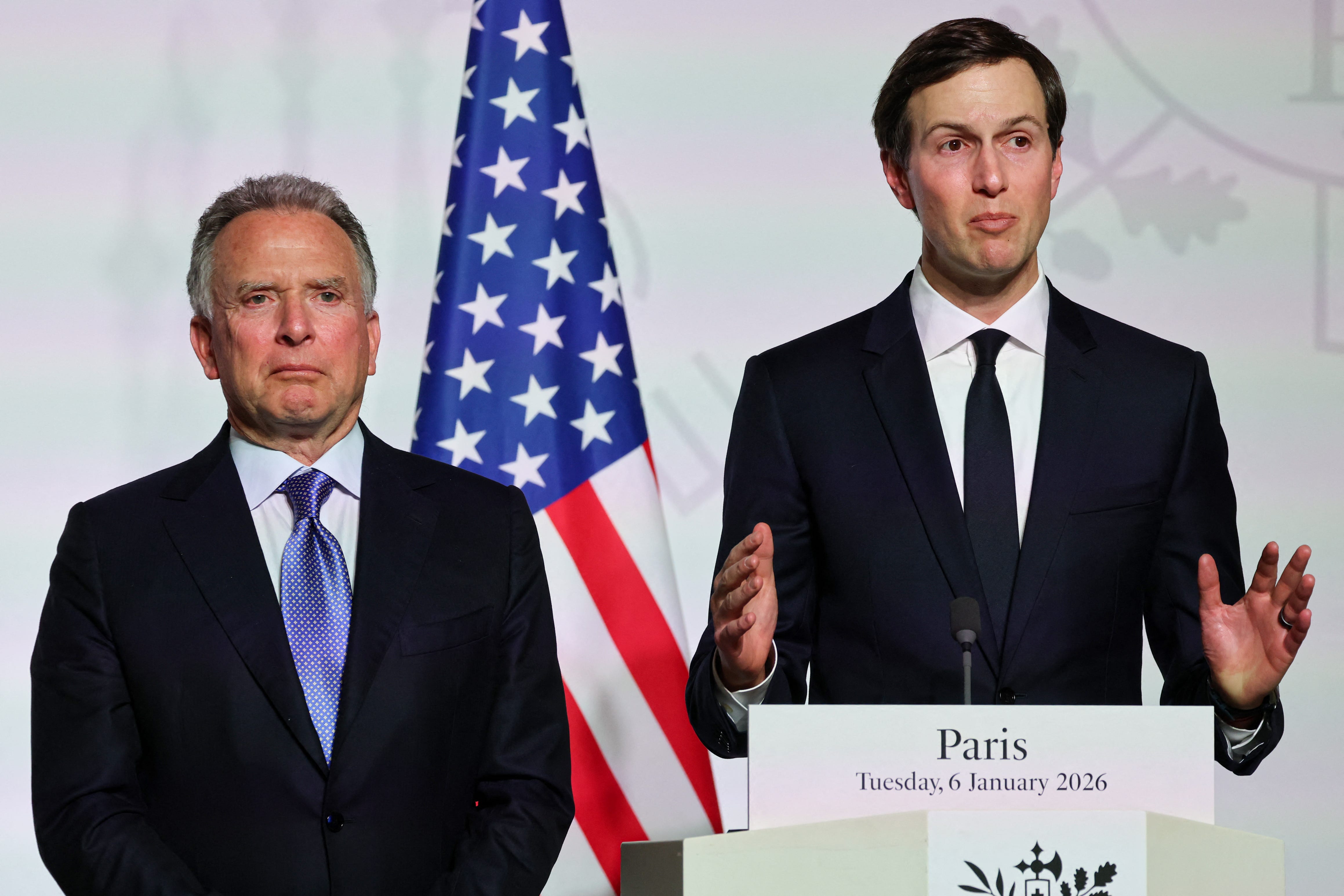
The foreign policy establishment clings to a comfortable fiction. Jared Kushner steps to a microphone, repeats the standard boilerplate that Iran cannot be allowed to cross the nuclear threshold, and the commentariat nods along like clockwork. Everyone loves a clean, moralistic line in the sand. It sounds tough. It plays well on cable news. It also completely ignores how nuclear deterrence actually functions in the real world.
Stop treating a nuclear Iran as an existential impossibility and start looking at it as an impending reality that Washington is entirely unprepared to manage. If you found value in this article, you should read: this related article.
For decades, the lazy consensus has held that a nuclear-armed Tehran represents an unmitigated catastrophe that would spark an immediate regional arms race and threaten global stability. I have spent years listening to diplomatic veterans hyperventilate over breakout times and uranium enrichment percentages while completely missing the structural realities of state survival. The threat is real, yes. The proposed solutions are pure fantasy.
Let us dismantle the core premise of the conventional doctrine: that deterrence fails automatically in the Middle East. For another perspective on this event, check out the recent update from Associated Press.
The Myth of the Irrational Actor
The entire foundation of the "no nuclear Iran" dogma rests on a fundamental misread of the regime's psychology. Washington analysts love to paint Tehran as a cabal of suicidal zealots waiting for the twelfth imam to spark an apocalyptic fire.
History tells a different story.
Look at every major crisis involving the Islamic Republic since 1979. When pushed to the brink, the leadership blusters, finances proxies, and fights through intermediaries, but they consistently pull back from direct, regime-ending conventional wars with superior powers. They care deeply about self-preservation. A clerical oligarchy with sprawling economic conglomerates and billions in hidden assets does not commit national suicide just to make a theological point.
MAD works. It worked with a paranoid, totalitarian Soviet Union. It worked with a volatile Maoist China. It even works with an erratic North Korea. To pretend that the laws of nuclear deterrence magically suspend themselves the moment enrichment centrifuges spin in Natanz is not serious analysis. It is historical illiteracy wrapped in flag-waving rhetoric.
What Containment Actually Looks Like
When you point out that containment is the only viable path forward once a threshold is crossed, the critics panic. They scream that containment is appeasement. They argue that accepting a nuclear Iran means handing the keys to the Middle East to the Revolutionary Guard.
This is a false binary designed to protect failed policymakers from accountability.
Containment does not mean rolling over. It means building an ironclad wall of deterrence, conventional overwhelming force, and regional integration that makes the cost of a first strike mathematically prohibitive for Tehran.
Imagine a scenario where Washington stops chasing the unicorn of total denuclearization through economic sanctions that only hurt ordinary citizens and instead focuses entirely on regional defense architectures.
The Abraham Accords laid the groundwork for this, but current leaders treat normalization as a political trophy rather than a strategic missile shield. A formal security umbrella extending from Tel Aviv to Riyadh, backed by explicit American guarantees, completely neutralizes the offensive utility of an Iranian warhead. If the bomb cannot be used for blackmail without triggering total annihilation, it becomes an expensive, radioactive paperweight.
The Economic Fallacy of Maximum Pressure
Let us talk about the data. For years, the reigning strategy has been maximum economic strangulation. The theory goes that if you squeeze the Iranian economy hard enough, the population will rise up, overthrow the mullahs, and gift Washington a pro-Western democracy on a silver platter.
I have seen sanctions-obsessed think tanks burn through millions of dollars of funding publishing models that consistently fail to predict reality.
Sanctions do not cause democratic revolutions. They consolidate authoritarian control. When a population is fighting for basic survival, their primary energy goes toward securing food and medicine, not organizing underground resistance movements against a heavily armed internal security apparatus. Worse, isolation drives Tehran directly into the economic orbit of Beijing and Moscow, securing long-term trade deals that render Western financial pressure increasingly toothless.
Continuing to double down on a policy that has failed for forty years is the definition of insanity. We need to stop pretending that another round of SWIFT exclusions is going to dismantle a century-old ideological apparatus.
The Real Cost of the Status Quo
Kushner and his peers want you to believe that the choice is simple: stop them now or face the end of civilization. That framing is a crutch for leaders who refuse to do the hard work of long-term strategic management.
The real danger is not that Iran gets a weapon. The real danger is that Washington sleepwalks into a massive, elective war because our leaders lacked the intellectual courage to plan for a multipolar nuclear Middle East. Preventive military strikes will not destroy the program; they will merely scatter it underground, validate every paranoid narrative the regime uses to justify its existence, and plunge the global economy into an oil shock from which it may never recover.
It is time to drop the moral posturing. Accept that containment is messy, expensive, and deeply unsatisfying. It requires cold-blooded calculation rather than soaring rhetoric.
The next time a politician stands at a podium and declares that failure is not an option, ask them what their concrete plan is for the day after the bomb is built.
They will not have one. Because they are still living in a fantasy world where wishing makes it so.
Stop listening to the architects of past failures. Prepare for the world as it is, not as you wish it were.