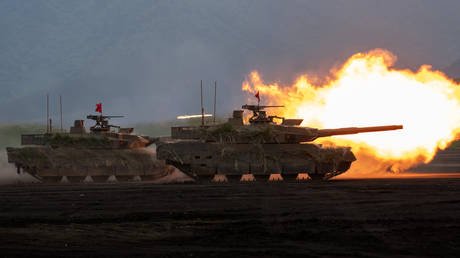
Tokyo isn't just dipping its toes into military spending anymore. It's diving headfirst into a deep, dark pool of regional tension. For decades, the world knew Japan as the nation that swore off war. Article 9 of their constitution was a sacred vow. It basically said "never again." But look at the map today. Look at the missiles flying over the Sea of Japan or the ships circling the Senkaku Islands. The reality on the ground has changed, and Tokyo finally stopped pretending it hasn't.
Japan is making a major shift from its pacifism policy because it has to. If you're sitting in the Prime Minister’s office in Nagatacho, you aren't looking at a peaceful neighborhood. You're looking at a nuclear-armed North Korea that doesn't care about international law. You're looking at a China that is rapidly modernizing its military and eyeing Taiwan with increasing hunger. You're looking at Russia, a neighbor that proved it’s willing to redraw borders by force. Japan's old "shield only" strategy was great for the 1990s. In 2026, it’s a liability.
The change isn't just a tweak to the budget. It's a complete rethink of what it means to be a global power. Japan is currently on track to have the third-largest defense budget in the world. Think about that for a second. A country that legally isn't supposed to have a military is about to outspend almost everyone else. It’s a massive turning point.
The End of the Post-War Taboo
For seventy years, the Japanese public was fiercely protective of their pacifist identity. I remember talking to older residents in Hiroshima and Nagasaki; for them, the military was a ghost they never wanted to see again. But the mood has soured. The Japanese people are pragmatic. When missiles fall into your Exclusive Economic Zone (EEZ), the "peace at any price" argument loses its charm.
The government's National Security Strategy (NSS) spells it out clearly. They’ve moved from "basic defense" to "active deterrence." This isn't just semantics. Under the old rules, Japan could only swing back if it was hit first. Now, they're talking about "counterstrike capabilities." This means they want the tech to hit enemy bases before an attack even starts. If you see your neighbor loading a shotgun and pointing it at your door, Japan wants the right to take the shot first.
This shift feels sudden to many, but it's been building for years. Former Prime Minister Shinzo Abe started the engine, and Fumio Kishida floored the gas. They’ve realized that relying 100% on the U.S. "nuclear umbrella" is risky. With American politics feeling more unpredictable by the day, Tokyo wants its own insurance policy. They're still best friends with Washington, sure, but they’re also buying their own locks for the doors.
Why the Counterstrike Capability Changes Everything
The most controversial part of this new era is the "Counterstrike Capability." For a long time, this was the line Japan wouldn't cross. Having missiles that can reach another country’s soil was considered "offensive" weaponry. Article 9 supposedly bans that. But the legal wizards in Tokyo have reinterpreted the law. They argue that if you have no way to stop a second wave of missiles, you're just a sitting duck. Self-defense, they say, requires a long-range punch.
Japan is putting its money where its mouth is. They're buying hundreds of U.S.-made Tomahawk cruise missiles. At the same time, they're upgrading their own Type 12 surface-to-ship missiles to reach much further—over 1,000 kilometers. This puts parts of China and North Korea within range. It’s a huge psychological shift for a nation that hasn't fired a shot in anger since 1945.
Critics say this makes Japan a target. They worry it’ll trigger an arms race in East Asia. My take? The arms race is already here. China’s military budget has been growing at double-digit rates for years. North Korea launches missiles like they’re practicing for a parade. Japan isn't starting the fire; they're just finally installing a sprinkler system.
Breaking the 1 Percent Ceiling
There used to be an unwritten rule in Japanese politics. Defense spending should never exceed 1% of the Gross Domestic Product (GDP). It was a symbolic cap. It told the world Japan wasn't interested in being a military titan. That rule is officially dead.
The government is aiming for 2% of GDP. That sounds like a small jump, but in a multi-trillion dollar economy like Japan's, it's a flood of cash. We're talking about roughly $320 billion over five years. This money isn't just for shiny new toys. It’s for the boring stuff that actually wins wars: ammunition, spare parts, and better logistics. Japan’s Self-Defense Forces (SDF) have long struggled with "sustainability." They had great equipment but not enough bullets to last a week in a high-intensity fight. That’s changing.
They're also investing heavily in "new domains." That means space, cyber warfare, and electromagnetic interference. If a war breaks out today, it won't just be about tanks and planes. It’ll be about who can shut down the other side’s satellites and internet first. Japan knows they're behind in the digital trenches, and they're sprinting to catch up.
The Regional Reaction and the Taiwan Factor
You can't talk about Japan’s military shift without talking about Taiwan. Tokyo has finally admitted what everyone already knew: a conflict in the Taiwan Strait is a direct threat to Japan. The southernmost islands of Japan, like Yonaguni, are practically within shouting distance of Taiwan. If China moves on Taipei, Japan is sucked in whether they like it or not.
Beijing is, predictably, furious. They accuse Tokyo of returning to "militarism." They use history as a weapon, reminding everyone of what the Imperial Japanese Army did in the 1930s. It’s an effective propaganda tool, especially in places like South Korea, where historical scars still run deep. But even Seoul is starting to soften its stance. The threat from the North is so great that South Korea and Japan are actually starting to share intelligence again. It’s a "the enemy of my enemy is my friend" situation.
Australia, India, and the Philippines are also cheering Japan on. They want a "Free and Open Indo-Pacific," and they know the U.S. can't do it alone. Japan is becoming the anchor of a new security network that doesn't just rely on Uncle Sam. They're selling radar tech to Manila and practicing sub-hunting with the Indian Navy. This is a more assertive, confident Japan.
Practical Challenges and the Cost of War
It's not all smooth sailing for Tokyo. Money is a huge problem. Japan is already buried in debt, and the population is shrinking and aging. Who's going to pay for these missiles? And more importantly, who's going to fire them? The SDF is having a nightmare of a time with recruitment. Young Japanese people aren't exactly lining up to join the infantry when they can get a cozy job in tech or gaming.
Then there's the hardware. Japan is developing a next-generation fighter jet with the UK and Italy. It’s a massive project. But these things take decades. If a crisis hits in 2027 or 2028, Japan will still be relying on older platforms. They're playing catch-up in a race that’s moving at Mach 5.
Honestly, the biggest hurdle is still the mindset. The SDF still isn't technically a "military" under the law. Soldiers are "special civil servants." If a Japanese sailor shoots down a drone, the legal paperwork is a mountain of headaches. They need a legal framework that works in the heat of battle, not just in a courtroom.
What This Means For You
If you're an investor, keep an eye on Japanese defense contractors like Mitsubishi Heavy Industries or Kawasaki Heavy Industries. They’re about to see a historic windfall. If you’re a traveler, don’t worry—Japan is still the safest, most polite place on Earth. This shift is about high-level geopolitics, not the vibe on the streets of Shibuya.
But if you’re someone who cares about global stability, this is the biggest story in Asia. Japan is no longer the "quiet partner." They're becoming a lead actor. This might actually make the region safer by showing China and North Korea that there’s a high price to pay for aggression. Or, it might turn the heat up on a pressure cooker that’s already whistling.
The era of the "Peace Constitution" as a literal shield is over. Japan has realized that in a world of wolves, being a sheep—even a very polite sheep with a big friend—is a bad strategy. They're growing teeth.
Keep a close eye on the upcoming joint exercises in the East China Sea. Those will tell you more about Japan’s real readiness than any white paper. Watch the progress of the Global Combat Air Program (GCAP). If Japan can successfully build a sixth-gen fighter with Europe, they’ll prove they can lead technologically, not just follow. Finally, pay attention to the debates in the Diet regarding tax hikes for defense. That’s where the real battle for Japan’s future is being fought: in the wallets of its citizens.