Tokyo has officially dismantled the decades-old legal and moral scaffolding that once barred it from exporting lethal military hardware. This shift is not a sudden whim of the current administration. It is a calculated, desperate response to a crumbling security environment in East Asia and a domestic defense industry that was nearing total collapse. By loosening the Three Principles on Transfer of Defense Equipment and Technology, Japan is now cleared to export finished combat platforms—including fighter jets developed with foreign partners—to third countries.
For the better part of seventy years, Japan operated under a self-imposed exile from the global arms trade. This policy was born from the ashes of 1945, designed to signal a permanent departure from imperial ambition. But signals do not deter modern hypersonic missiles or aggressive maritime incursions. Tokyo has realized that a "shield-only" posture is no longer sustainable when its own industrial base is starving for scale.
The Industrial Decay Behind the Policy Shift
The move to export arms is often framed as a purely geopolitical maneuver. That is only half the story. The internal reality is much more grim. For years, Japan's premier defense contractors—Mitsubishi Heavy Industries, Kawasaki Heavy Industries, and IHI Corporation—have been operating in a gilded cage. They produced world-class technology for a single customer: the Japan Self-Defense Forces (JSDF).
When you only have one buyer, you cannot achieve economies of scale. This led to what insiders call the "Galapagos Effect." Japanese tanks and aircraft became incredibly sophisticated but prohibitively expensive because the development costs were amortized over a tiny production run. In some cases, a Japanese-made rifle cost eight times more than its equivalent on the global market.
The result was a quiet exodus. Over the last decade, more than 100 sub-tier suppliers dropped out of the defense business. These weren't just metal-stamping shops; they were specialized firms handling everything from proprietary sensors to high-grade seals for jet engines. Once these craftsmen leave the sector, their expertise vanishes. Tokyo realized that if it didn't allow these companies to find new markets, there would be no Japanese defense industry left to support the JSDF in a crisis.
Breaking the Global Combat Air Programme Bottleneck
The catalyst for the most recent and significant policy change was the Global Combat Air Programme (GCAP). This is a joint venture between Japan, the United Kingdom, and Italy to develop a sixth-generation stealth fighter.
Under previous rules, Japan could co-develop the plane but couldn't sell the finished product to anyone else. This created a massive friction point with London and Rome. Neither partner wanted to invest billions in a project where one of the main players was legally barred from helping export the jet to recoup costs. The British and Italians were blunt. They needed a partner that could act like a normal sovereign state in the defense market.
By allowing the export of the GCAP fighter to third countries—provided those nations have existing defense pacts with Japan and aren't currently at war—Tokyo has finally cleared the runway for its most ambitious aerospace project since the Second World War.
The China Factor and the End of Ambiguity
We cannot ignore the shadow cast by Beijing. The rapid modernization of the People's Liberation Army (PLA) has fundamentally altered the math for Japanese strategists. It is no longer enough to have a technologically superior force if that force is outnumbered ten-to-one and cannot be quickly resupplied by a dwindling domestic industry.
Japan is also watching the war in Ukraine with intense scrutiny. The conflict proved that modern warfare consumes materiel at a rate that would bankrupt or deplete a "boutique" defense industry in weeks. To be a reliable security partner in the Indo-Pacific, Japan needs to be a "hub." It needs to be able to provide parts, maintenance, and eventually platforms to regional allies like the Philippines, Vietnam, and Australia.
This isn't about profit. It's about interoperability. If Manila is flying Japanese-made surveillance aircraft or using Japanese radar systems, the two nations are linked in a way that goes far beyond a signed treaty. They share a logistical DNA.
Strict Safeguards or Paper Tigers
Critics argue that Japan is abandoning its "Peace Constitution" and that these exports will eventually find their way into the hands of regimes committing human rights abuses. The government has attempted to mitigate this by implementing a dual-layer vetting process. Every potential sale must pass a cabinet-level review, and exports are restricted to countries that are not currently engaged in active hostilities.
However, these definitions are notoriously slippery. What constitutes "active hostilities" in a world of gray-zone warfare? If a nation is using Japanese coastal surveillance tech to harass fishing boats in contested waters, has the line been crossed? Tokyo hasn't fully answered these questions.
There is also the "dual-use" dilemma. Much of Japan's most valuable military tech is actually civilian-adjacent: carbon fiber composites, high-end semiconductors, and battery technology. For years, Japan exported these under the guise of commercial trade. Now, the mask is off. By bringing these exports into a formal military framework, the government actually gains more oversight, even as it broadens the scope of what can be sold.
The Export Reality Check
Selling weapons is not like selling cars. Japan is entering a crowded, cutthroat market dominated by the United States, France, and increasingly, South Korea. Seoul has been particularly aggressive, positioning itself as the "K-Defense" supermarket of the world, selling tanks and howitzers to Poland and the Middle East at record speeds.
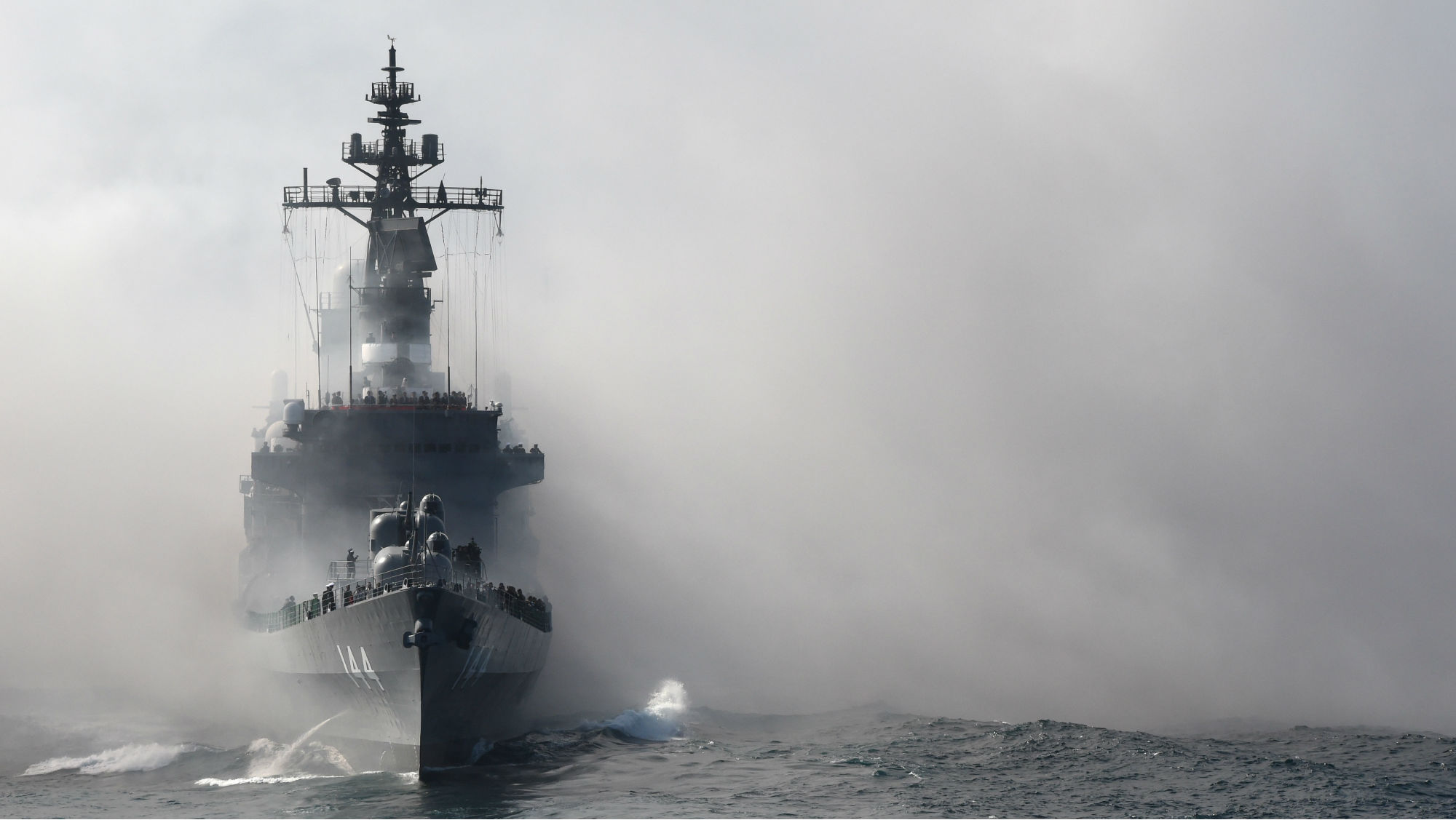
Japan starts at a disadvantage. Its products are expensive. Its sales teams have no experience in international arms bazaars. Most importantly, its hardware is largely untested in combat. While a Japanese destroyer is a marvel of engineering, a foreign buyer may prefer a French or American hull that has actually seen action.
To compete, Tokyo will likely focus on niche areas where it holds a clear lead:
- Submarine Technology: Japan’s Soryu and Taigei-class subs are arguably the best non-nuclear boats in the world.
- Search and Rescue: The US-2 amphibious aircraft is a unique platform that several nations, including India, have eyed for years.
- Radar and Sensing: Japan’s Gallium Nitride (GaN) semiconductor tech is essential for modern AESA radar systems.
The Psychological Barrier Remains
While the laws have changed, the corporate culture hasn't. Many Japanese boardrooms remain terrified of the "merchant of death" label. They remember the protests of the 1960s and 1970s. For a company like Sony or Panasonic, the reputational risk of being linked to a missile strike outweighs the potential revenue from a defense contract.
The government is trying to bridge this gap by taking a more active role in the sales process. This isn't just about letting companies sell; it's about the state acting as the primary broker. We are seeing the birth of a "Japan Inc." for the defense era.
The shift also reflects a generational change in the Japanese electorate. Younger Japanese citizens do not carry the same historical baggage as their grandparents. They see a nuclear-armed North Korea and an expansionist China, and they view a strong defense industry as a common-sense necessity rather than a slippery slope to militarism.
Regional Ramifications
The reaction across Asia has been predictably split. Australia and the United States have cheered the move, seeing a more capable Japan as a vital force multiplier. Conversely, Beijing has labeled the move a dangerous provocation that threatens the post-war order.
The real test will be the first major sale of a lethal platform. If Japan successfully exports a frigate or a missile system to a Southeast Asian nation, it will mark the definitive end of the post-1945 era. It signals that Japan is no longer content to be a protected state. It wants to be a protector.
The logistics of this transition are already in motion. Joint maintenance hubs are being discussed. Technology transfer agreements are being drafted. The legal floodgates are open.
Japan has realized that in the current century, pacifism is a luxury that requires a very sharp sword to maintain. The "self-imposed" restrictions were a product of a world that no longer exists. By entering the global arms market, Tokyo is finally acknowledging that its industrial survival and its national security are two sides of the same coin. The era of the "silent arsenal" is over, replaced by a Japan that is ready to build, sell, and if necessary, provide the tools of modern war to anyone it deems an ally.