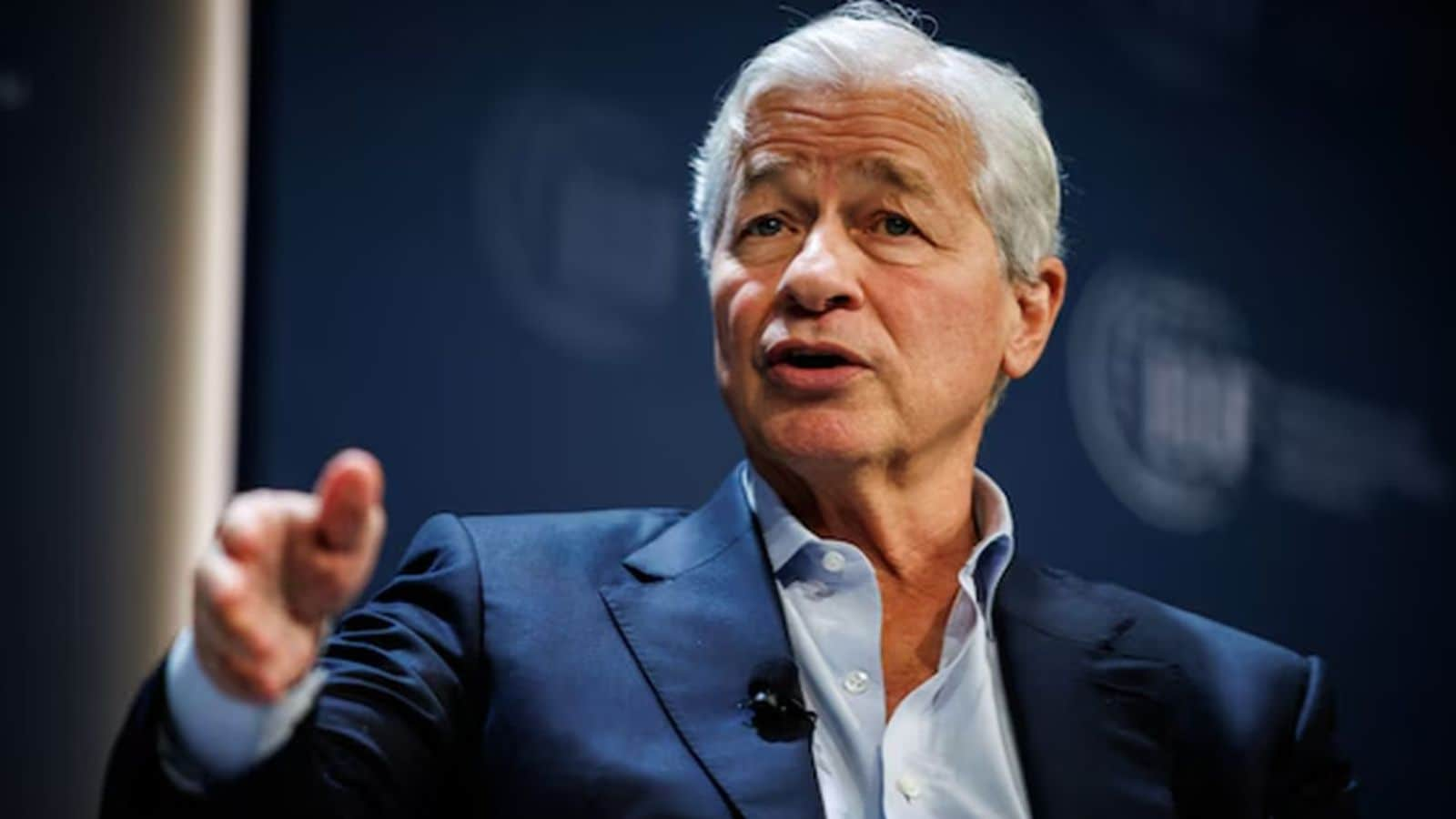
Foreign policy in Washington often sounds clean on paper. You draft a bill, slap a penalty on a foreign buyer, and assume economic pressure will crack a regime in Moscow. Reality refuses to cooperate. When the United States authorized the potential use of steep tariffs on countries purchasing Russian energy, Wall Street immediately started calculating the fallout. JPMorgan Chase CEO Jamie Dimon stepped into that debate with a blunt warning: do not punish India.
His argument wasn't based on political sympathy. It rested entirely on the brutal, unyielding mechanics of global energy markets. If you force major refiners to suddenly ditch millions of barrels of discounted crude, the shockwaves don't stop at the border. They hit the pump, rattle global supply chains, and create shortages where none should exist.
The Real Cost of Secondary Tariffs
When Congress cleared legislation granting the administration broad authority to impose up to 100 percent tariffs on nations buying Russian oil and gas, the goal was simple on the surface. Starve the Kremlin of war revenue. But India has been absorbing roughly two million barrels of Russian crude per day, positioning itself as a cornerstone of international energy flows.
If Washington actually pulls the trigger and penalizes Indian buyers, New Delhi won't simply stop running its refineries. Instead, Indian state and private refiners will pivot overnight to the Middle Eastern and Atlantic spot markets. That sudden scramble for alternative barrels introduces fierce competition into an already strained system. Prices spike. Refineries struggle to find the exact chemical grades they need.
Jamie Dimon pointed out the engineering reality that politicians frequently ignore. Refineries aren't universal blenders. They are built to process specific chemical weights and sulfur profiles of crude. Yanking out a massive supply stream forces technical adjustments that take time and money, translating directly into expensive fuel worldwide.
The Diesel Paradox and Global Fuel Networks
The narrative in Washington frames India's purchases as a simple loophole for Moscow. Look closer at the logistics, and you'll find a different picture. Global logistics bottlenecks in transit corridors like the Red Sea and the Persian Gulf choked off normal flows of traditional crude. Russian barrels filled that vacuum, keeping Asian refining complexes operating at scale.
More importantly, Indian facilities convert that feedstock into refined products like diesel and ship them outward to global buyers. Western economies need those refined products to keep logistics chains moving. Punishing the raw input feedstock doesn't just squeeze Moscow; it chokes off the finished diesel that transportation networks rely on every single day. It’s a closed loop where cutting off one valve drains the tanks of entirely unrelated nations.
Why Washington and New Delhi Must Talk
Dimon urged both governments to step back from punitive measures and focus on direct dialogue. The bilateral relationship between the United States and India is too important to fracture over a blunt-force trade weapon. India remains the world's largest democracy, a vital counterweight in Asia, and a massive growth market for global financial institutions like JPMorgan.
Stalled trade talks and recurring tariff threats create unnecessary friction. Businesses operating across borders crave predictability. When regulatory penalties shift based on geopolitical crosscurrents, capital investment slows down.
Washington has the discretionary power to grant waivers or handle enforcement with restraint. Sparing India from crippling tariffs isn't a free pass for Russia; it's a recognition of basic economic survival. If policymakers want to pressure Moscow, they should look at direct assistance and targeted measures that don't hold global fuel consumers hostage. Let the oil flow, keep the refineries running, and let diplomacy handle the rest.