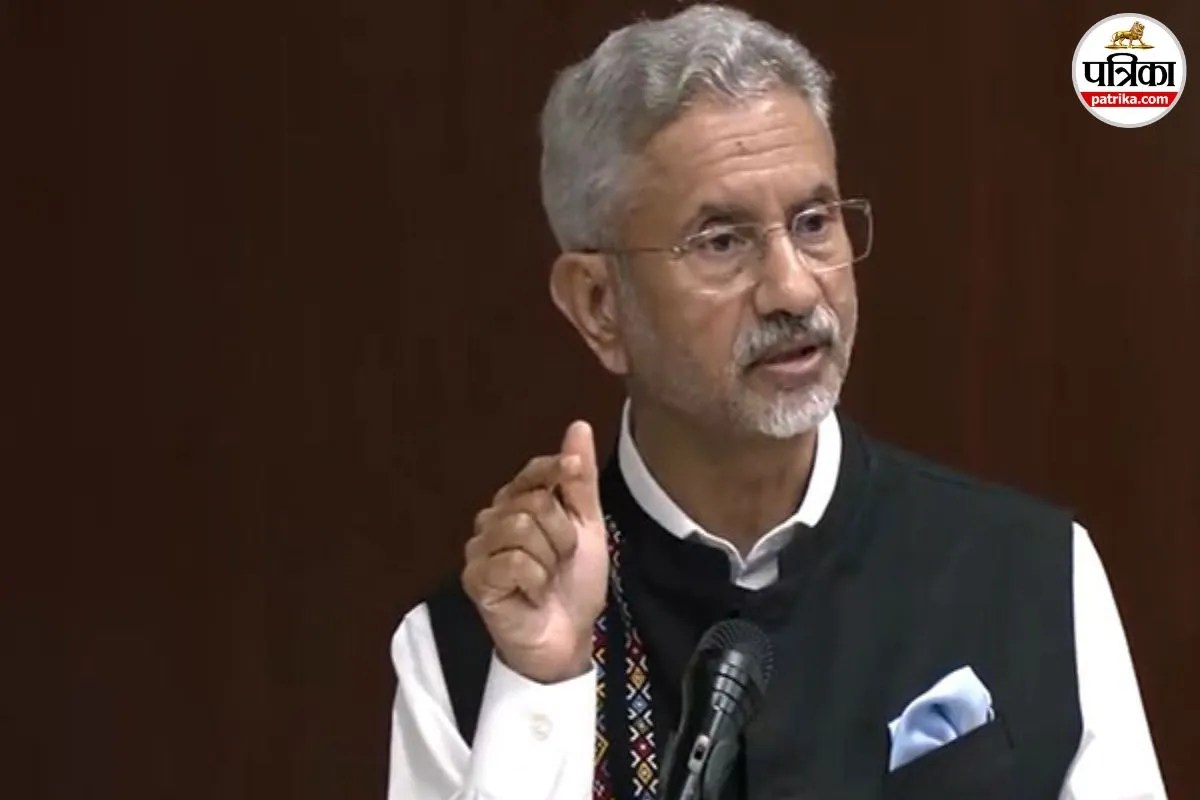
For decades, developing nations have sat firmly in the front row of global crises while being relegated to the back row of decision-making. External Affairs Minister S. Jaishankar didn't sugarcoat this reality during a high-level ministerial gathering of like-minded countries. Instead of offering diplomatic pleasantries, he laid out a sharp, actionable seven-point agenda designed to break systemic vulnerabilities spanning from vulnerable supply chains to artificial intelligence.
If you're wondering why this specific framework matters right now, look at how modern economic choke points operate. Nations across Asia, Africa, and Latin America are tired of being treated merely as consumer markets or resource depots. They want structural equity. Here is what that shift actually entails.
Economic Networks and Choke Points
The first pillar targets the weaponization of economic architecture. Jaishankar warned against systems where a handful of dominant nations control critical financial corridors, connectivity, and supply lines. When logistics depend on single points of failure, developing economies suffer the immediate shockwaves. True resilience means decentralization, ensuring that global trade routes and digital networks cannot be hijacked for localized political pressure.
Energy and Food Security as Non Negotiable Baselines
You can't talk about sustainable growth while basic survival commodities are used as geopolitical leverage. Energy security remains the bedrock of industrialization. Price volatility and artificial scarcity wreck domestic budgets in developing states.
Similarly, food security requires bulletproof supply channels. Grain and fertilizer availability shouldn't fluctuate wildly based on distant conflicts or protectionist trade bans. The framework demands reliable, insulated corridors for agricultural and energy trade so that everyday citizens don't pay the price for systemic trade wars.
Reclaiming the Right to Industrialize
Trade rules must actively foster local production capabilities rather than locking developing nations into perpetual raw-material export loops. Jaishankar made it clear that the right to industrialize cannot be quietly written out of international trade agreements. Countries need domestic manufacturing depth to survive future global shocks. Relying entirely on imported finished goods is a trap, and building regional industrial capacity is the only way out.
Securing Maritime Commons
Global trade moves on water. Disruptions in crucial maritime lanes like the Red Sea demonstrate how fragile ocean logistics can cripple commerce overnight. Ensuring safety for commercial shipping and protecting seafarers is an international imperative. International maritime law isn't optional, and keeping sea lanes open is vital for smaller trading nations whose economies depend entirely on export access.
Taming the AI Divide
Technology is supposed to bridge gaps, but advanced artificial intelligence risks creating an entirely new class of global inequality. If the Global South remains a consumer of proprietary foreign algorithms rather than a co-creator of digital tools, the technological gap will become insurmountable. Technology transfer, open infrastructure, and domestic adoption models must be prioritized before algorithmic bias dictates global economic winners and losers.
Fixing Multilateral Governance
The United Nations Security Council and major financial institutions were built for a post-1945 world that no longer exists. They lack structural legitimacy. Real reform means giving the Global South an active vote in executive decisions, moving away from closed-door consensus managed by legacy superpowers. Reform isn't just about adding a seat or two at the table; it's about altering how global rules are written.
Stop viewing international summits as mere talk shops. This seven-point blueprint gives developing nations a unified playbook to counter external shocks, build technological sovereignty, and demand actual accountability from global institutions.
EAM Jaishankar Highlighted 7 Global South Priorities: Energy, Food Security, AI, Trade & UN Reform
This short clip breaks down how External Affairs Minister S. Jaishankar outlined these key priorities for developing nations at the UN.