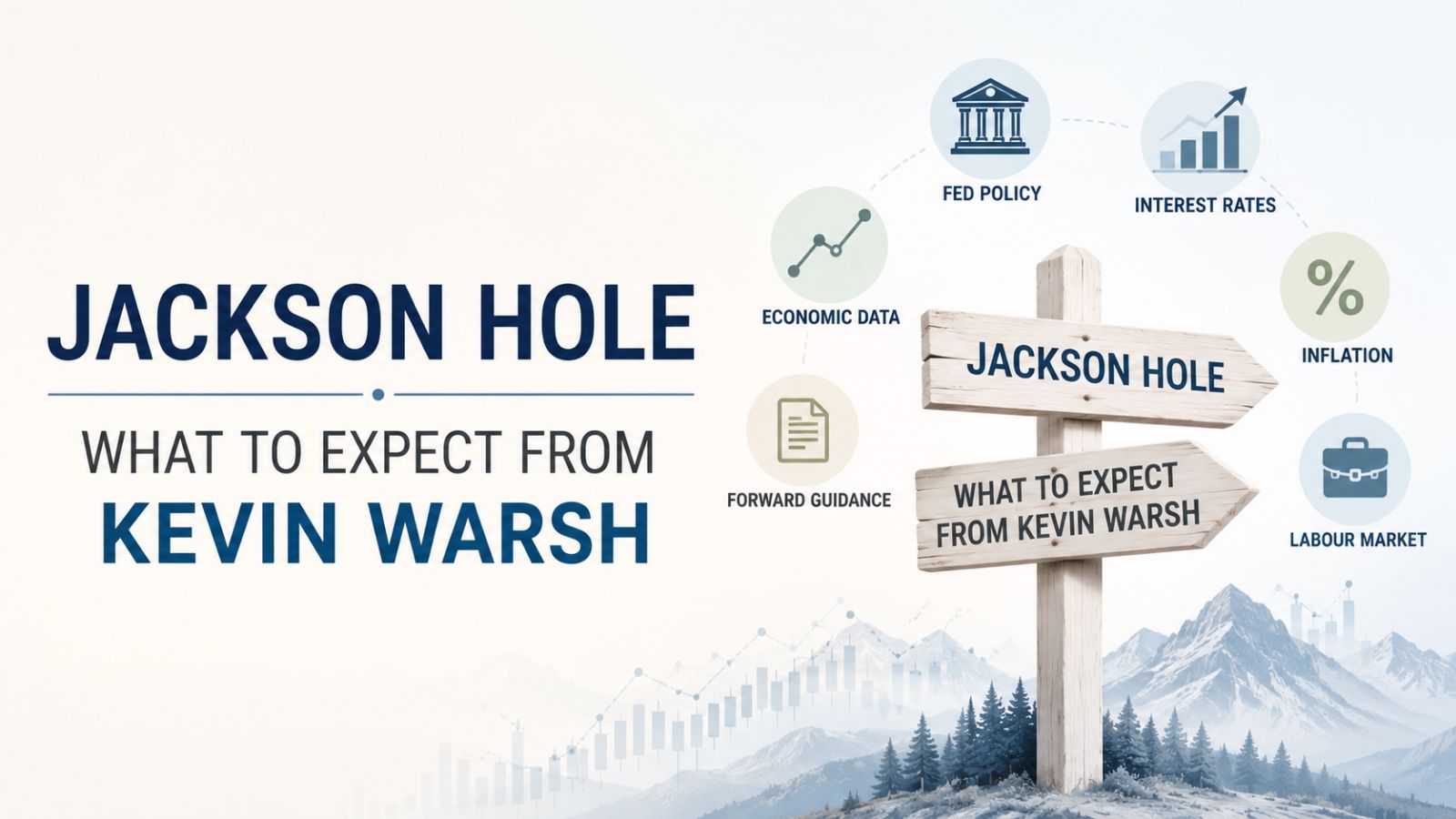
Every August, financial media outlets descend upon Wyoming like pilgrims seeking salvation. They parse every word of a central banker's keynote address at the Jackson Hole Economic Symposium as if it were ancient scripture. Analysts scream about dovish pivots and hawkish turns. Portfolios are rearranged over syntax choices. It is financial theater at its finest, and it is entirely worthless.
The lazy consensus treats Jackson Hole as a directional compass for monetary policy. The standard narrative claims that a single speech from a Federal Reserve official in the mountains sets the monetary path for the next six months. This view ignores basic institutional reality. The Federal Open Market Committee operates by consensus and committee votes, not by individual fiat delivered from a resort podium.
Fixating on these speeches misses the structural machinery driving inflation, debt servicing, and liquidity. Markets want a simple narrative. They want a single villain or a single savior to blame or praise. That is why the current obsession centers on Kevin Warsh and what his potential appointment or influence signals for the future of the central bank.
The speculation surrounding Warsh misses the target entirely. Commentators frame him as an inflation hawk who will ride in to dismantle the balance sheet and restore orthodox monetary discipline. Others paint him as a political chameleon ready to bend to administration demands for lower borrowing costs. Both camps misunderstand how the machinery of government actually functions.
The Myth of the Lone Maverick
I have spent two decades watching macroeconomic prognosticators lose fortunes by betting on individual personalities. When a new name enters the central banking conversation, commentators act as though the institution is a blank slate waiting for a strongman to rewrite its operating system.
It does not work that way. The institutional inertia of the Federal Reserve is immense. A chairperson or an influential adviser does not simply walk into the Eccles Building and flip a switch to alter interest rates or reverse quantitative easing. The structural constraints of the global financial system dictate policy far more than personal ideology.
Warsh is routinely characterized as a critic of excessive intervention. He argued against the aggressive asset purchases of the post-2008 era, warning of asset bubbles and inflation risks. Analysts point to these past critiques as proof that his ascension would mark a radical break from the status quo.
This view ignores Warsh's own record of pragmatism when exposed to real-time market panic. When liquidity dries up and credit markets seize, ideological purity evaporates. Every central banker discovers that their primary job description is preventing systemic collapse, not proving an economic theory correct. If a crisis hits, whoever holds the seat will authorize liquidity injections. They have no choice. The alternative is a total financial freeze.
Why Jackson Hole is a Smoke Screen
The symposium itself is a legacy artifact. It began as a modest gathering of agricultural economists in Kansas City before migrating to the mountains and morphing into a global media circus. Today, it functions primarily as a pressure release valve for market sentiment.
Central bankers use the venue to test trial balloons without making formal commitments. They drop vague hints about data dependence or neutral rates, and algorithmic traders spend the next forty-eight hours overanalyzing the cadence of their speech delivery.
Smart investors ignore the speeches entirely and watch the repo market, Treasury auctions, and bank reserve balances. Those indicators tell you where capital is actually flowing. Jackson Hole tells you nothing except how well a speechwriter crafted a metaphor about economic headwinds.
When you hear analysts hyperventilating over a shift in tone regarding the neutral rate of interest, recognize that they are guessing in the dark. The neutral rate is not a fixed coordinate on a map. It is a theoretical ghost that nobody can measure in real time. Pretending that a speech in Wyoming clarifies this unmeasurable metric is institutional gaslighting.
The Real Macro Driver Nobody Talks About
While Wall Street obsesses over personnel rumors and Jackson Hole soundbites, the actual structural crisis deepens completely ignored. The US government is running trillion-dollar deficits into an expanding economy, backed by a debt-to-GDP ratio that renders traditional monetary policy tools largely blunt.
When the Treasury must issue trillions in debt to fund ongoing obligations, the Federal Reserve's stance on interest rates matters much less than the sheer absorptive capacity of the bond market. If primary dealers demand higher term premiums to digest endless sovereign debt issuance, long-term yields will rise regardless of what the federal funds rate does.
Kevin Warsh knows this. Every serious economist knows this. Yet the public-facing debate remains fixated on whether the Fed will cut rates by twenty-five basis points next quarter. It is the economic equivalent of rearranging deck chairs while the hull takes on water.
Focusing on personalities gives commentators easy copy. It allows them to write simple profiles about hawks versus doves, internal power struggles, and political loyalties. It sells newsletters and drives clicks. But it leaves investors completely unprepared for the structural reality of fiscal dominance.
The Cost of Illusion
Relying on the standard financial media playbook carries a heavy price. Portfolios built around central bank personality predictions consistently underperform portfolios built on structural realities.
When you trade on the assumption that a specific individual will steer monetary policy in a radically different direction, you are betting against the entire weight of the US banking system, the Treasury Department, and global liquidity flows. That is a losing trade nine times out of ten.
The downside of this contrarian stance is that it requires patience and tolerance for noise. You will look foolish when markets rally or crash based on a headline about a speech or a rumored nomination. Short-term price action is driven by algorithms reacting to keywords, not by sober analysis of structural debt dynamics.
If you want to protect capital and find real opportunity, stop reading the transcripts from Wyoming. Stop trying to decode whether a central banker looked nervous or confident at a podium. Look at the balance sheet. Look at the fiscal trajectory. Look at the cost of capital in the real economy.
The next time financial networks clear their schedules for a keynote address from Jackson Hole, turn off the screen. Go outside. You will gain a clearer view of the macroeconomic landscape staring at a brick wall than you will listening to another central banker explain why nobody could have foreseen the latest crisis.