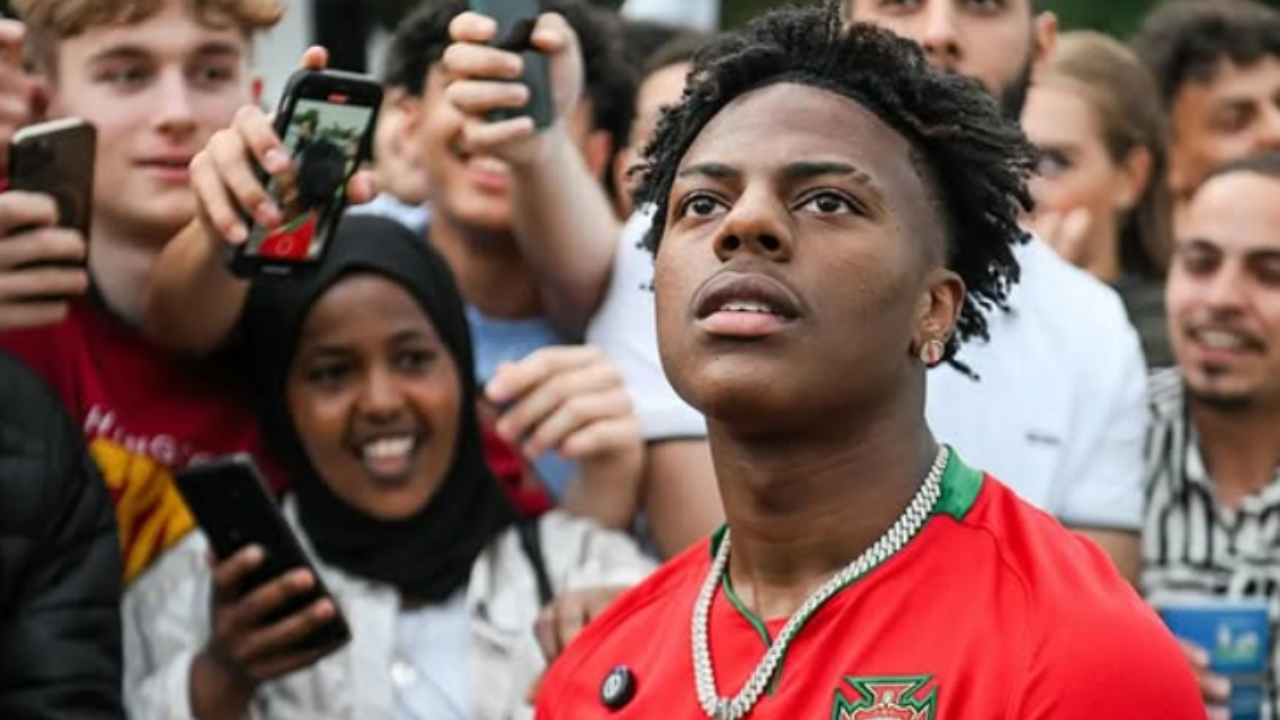
The internet is currently clutching its collective pearls over a low-resolution clip of Darren "IShowSpeed" Watkins Jr. landing a punch on a "fan" in Puerto Rico. The headlines are predictable. They smell of manufactured outrage and a desperate need for clicks from legacy media outlets that still don't understand how the attention economy functions in 2026.
They call it a "disturbing incident." They call it "unprofessional behavior." They are dead wrong.
What you witnessed wasn't a lapse in judgment. It was a rare moment of radical honesty in a digital ecosystem built on curated lies. If you think Speed "crossed a line," you aren't paying attention to where the line moved five years ago. We have entered the era of the Participant-Spectator, and in this era, the old rules of celebrity-fan interaction are not only dead—they are a liability.
The Death of the Parasocial Contract
For decades, the celebrity-fan relationship was governed by a strict, one-way contract. The star performs; the fan observes. The fan pays for access; the star provides a sanitized version of themselves. This was the era of the "meet and greet," where a security detail ensured the talent remained a marble statue while the plebeians were ushered through for a five-second photo op.
IShowSpeed didn't just break that contract; he set it on fire and broadcasted the ashes to millions.
Speed’s entire brand is built on Hyper-Authentic Volatility. His fans don't watch him because he’s a polished host. They watch him because he is a human firework. When a fan enters that orbit, they aren't looking for an autograph. They are looking to become part of the content. They want the reaction. They want the friction.
When that fan stepped into Speed’s space in Puerto Rico, they weren't a victim. They were an unpaid extra in a live-streamed reality show. By swinging, Speed gave the fan exactly what they wanted: relevance.
The Myth of the Innocent Fan
Let’s dismantle the "Lazy Consensus" that fans are fragile entities who must be protected at all costs.
In the modern streaming landscape, the "fan" has become an active antagonist. They doxx, they swat, they harass, and they physically invade personal space to trigger a "clip-able moment." I’ve spent a decade in the guts of talent management, watching creators burn out because they are expected to be punching bags—both literal and metaphorical—for the sake of their "public image."
We’ve seen this play out with everyone from Roman Sosnierz to the current crop of Kick streamers. The audience pushes the boundary until the boundary snaps. Then, the audience plays the victim.
By landing that punch, Speed re-established a biological boundary that the digital world has tried to erase. He reminded the crowd that behind the screen, there is still a person with a central nervous system and a fight-or-flight response.
Is it "right" in a legal sense? Probably not. But is it "correct" in the context of human psychology and the survival of the creator? Absolutely.
Violence as a Marketing Asset
The moralists will tell you this is a PR disaster. They clearly don't know how to read a balance sheet in the creator economy.
Let’s look at the metrics:
- Engagement: The clip has more reach than any scripted PR stunt could dream of.
- Brand Alignment: Speed’s brand is "Bark, don't bite—unless provoked." This incident validates the brand's unpredictability.
- Barrier to Entry: It sends a clear signal to the thousands of people who plan to mob him at his next stop: "Don't touch the merchandise."
Traditional PR firms would suggest an apology tour and a donation to an anti-violence charity. That would be a catastrophic mistake. It would signal weakness to a demographic that only respects dominance. Speed’s audience doesn't want a "holistic" apology. They want the chaos that made him famous in the first place.
If Speed apologizes, he loses. If he doubles down, he transcends.
The Physicality of IRL Streaming
IRL (In Real Life) streaming is the most dangerous job in entertainment right now. It is a high-wire act performed without a net, over a pit of people who want to see you fall.
When you are live for six hours, navigating foreign streets with a backpack full of $20,000 worth of gear and a literal mob trailing you, your adrenaline levels are spiked to $11$. You are in a state of hyper-vigilance.
Critics sitting in air-conditioned offices love to talk about "de-escalation." De-escalation is a luxury for people who aren't being swarmed by five hundred screaming teenagers in a Puerto Rican heatwave.
What we saw was the Physicalization of Content. The barrier between the digital world and the physical world has been eroding for years. We’ve seen streamers get stabbed, robbed, and assaulted. The moment Speed swung back was the moment the creator reclaimed the power dynamic.
Why You’re Asking the Wrong Questions
The "People Also Ask" sections are filled with nonsense:
- "Is IShowSpeed going to jail?"
- "Is Speed banned from Puerto Rico?"
- "Why did Speed hit that fan?"
These questions assume that this event happened in a vacuum. They assume there is a "reason" that fits into a neat, 20th-century box.
The real question you should be asking is: "Why are we surprised when the person we’ve spent years rewarding for being unhinged, acts unhinged?"
We have built a coliseum. We have filled it with lions. We have paid the lions to be as fierce as possible. And now, we are complaining because a drop of blood hit the front row.
The Cost of the "Clean" Creator
The industry is obsessed with "brand safety." They want creators who have the reach of IShowSpeed but the temperament of a Disney Channel extra.
It doesn't exist.
The very traits that make someone a global phenomenon on YouTube—the raw energy, the lack of a filter, the hair-trigger reactions—are the same traits that lead to a punch in Puerto Rico. You cannot have the light without the heat.
I have worked with "safe" creators. They are boring. They are stagnant. Their engagement dies the moment they start worrying about what a suburban mom in Ohio thinks of their behavior. Speed doesn't care. That is his superpower.
Stop Sanitizing the Human Animal
We are witnessing a massive cultural shift. We are moving away from the era of the "Role Model" and into the era of the "Avatar."
Speed is not a role model. He is an avatar for the repressed energy of a generation that feels trapped behind screens. When he screams, they feel heard. When he runs, they feel free. And when he hits back, they feel empowered.
Trying to "fix" Speed or demand he "do better" is a fundamental misunderstanding of his function in the culture. He isn't there to be better. He’s there to be more. More loud, more fast, more real.
The punch wasn't a mistake. It was the most honest piece of content produced this year. It was a visceral reminder that the digital world still has physical consequences.
If you’re offended, good. That means you’re still tuned in. And for someone like Speed, your offense is just as profitable as your applause.
The era of the untouchable, smiling celebrity is over. Welcome to the era of the contact sport.
Don't get too close to the screen. You might get hit.