The wind that blows across the Durand Line does not recognize the heavy steel fences, the concertina wire, or the men in uniform standing watch with rifles slung low. It carries only the scent of dust, the memories of a shared history, and the distinct, unsettling taste of uncertainty.
For the people who live in the borderlands of Khyber Pakhtunkhwa, the border is not a geopolitical abstraction. It is a scar. It is a line drawn by a British colonial officer in 1893—a man named Mortimer Durand who likely never stepped foot in the rugged, unforgiving valleys where families have lived for centuries. Today, that line has become the focal point of a shifting international theater, a stage where the United States has once again adjusted its stance, signaling that Pakistan possesses the right to defend itself against the Taliban forces operating from within Afghanistan.
To understand why this matters, you have to look past the bureaucratic language of state departments and international press conferences. You have to look at the ground.
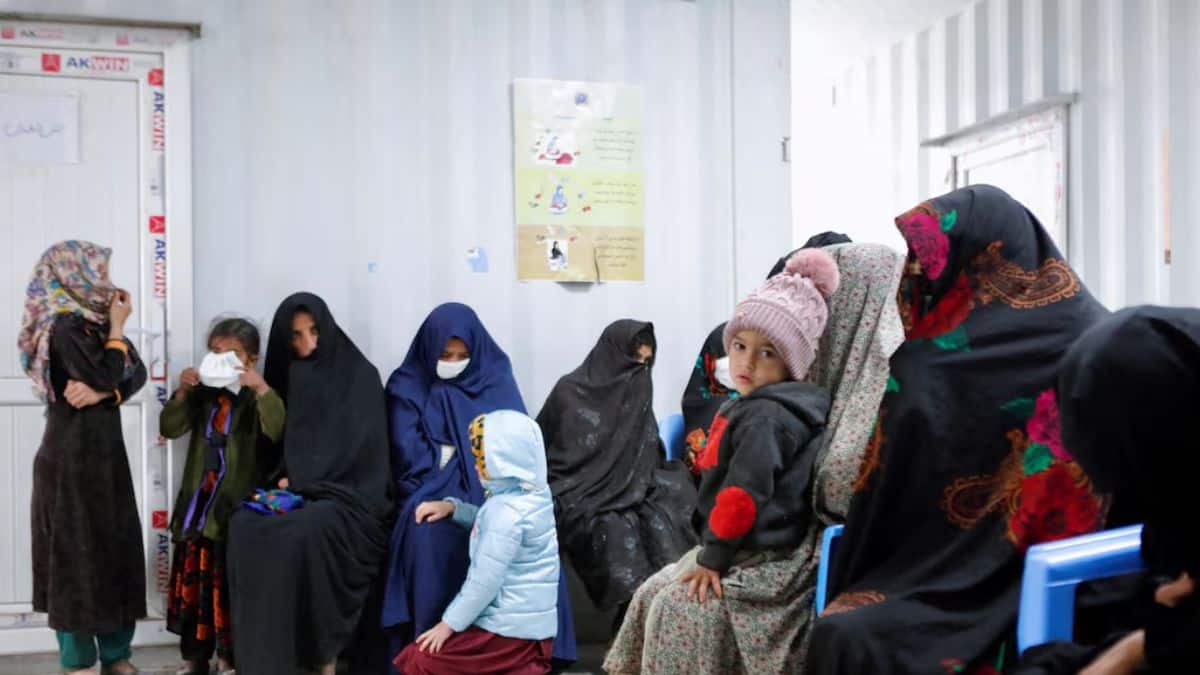
Consider a man like Malik. He is a shopkeeper in a village just miles from the border. His family’s story is the story of the region. His grandfather walked across these hills freely to trade grain. His father watched the world contract, as the Cold War turned these mountains into a chessboard. Now, Malik watches the horizon, not for rain or for trade, but for the tell-tale plume of smoke or the low rumble of a military drone.
When Malik hears that the United States has publicly backed Pakistan’s right to defend itself, he doesn’t feel relief. He feels a cold, sinking recognition. He knows that when superpowers speak in terms of the "right to defend," it is rarely a preamble to peace. It is an acknowledgement that the conflict is moving into a different, perhaps more violent, chapter.
The current tension is anchored in the resurgence of the Tehrik-e-Taliban Pakistan, or the TTP. For years, the TTP has sought to dismantle the Pakistani state, acting as an ideological cousin—and at times, an operational partner—to the Afghan Taliban who now rule in Kabul. When the Afghan Taliban surged to power in 2021, the TTP found a sanctuary, a base from which to launch raids into Pakistan.
The problem, as the Americans have finally acknowledged in their own understated, legalistic way, is that the Afghan Taliban has failed or refused to curb these groups. The border is porous, and the ideology is sticky. It flows back and forth like the wind.
The United States, having spent two decades in Afghanistan attempting to engineer a stability that dissolved the moment they left, is now in an awkward position. They cannot ignore the violence, yet they cannot return to the heavy-handed, boots-on-the-ground interventions of the past. So, they issue a statement. They confirm the right of a sovereign nation to protect its people. They essentially outsource the security dilemma, handing the baton back to Islamabad.
But the history of this region is littered with the broken promises of outside powers.
Think back to the 1980s. The region was a hub for the global fight against the Soviet Union. Money and weaponry flooded the mountains, and the tribal structure of the borderlands was transformed into a militarized economy. Young men were taught that the most honorable path was to pick up a gun. When the Soviets left, the weapons stayed. When the Americans arrived after September 11th, the same geography became the center of the "War on Terror."
Each time, the narrative was the same. A great power would come in, claim they were the ones to restore order, and then, eventually, fade away, leaving the locals to sort through the debris of the conflict.
The TTP today is a ghost of those past interventions. They are the heirs to the militancy that was once cultivated, ignored, and eventually opposed. To expect them to simply vanish because a Western power has sanctioned a military response is to ignore the reality of how these groups recruit and operate.
They do not hide in cities. They hide in the cracks of the state. They hide in the grievances of people like Malik, who see their neighbors and families killed in the crossfire of a game they did not choose to play. When a military strike occurs, it rarely hits only the militants. It hits the market. It hits the school. It radicalizes the survivor.
This is the cycle. The US statement, while legally sound and diplomatically expected, acts as a lubricant for this cycle. It validates the use of force, but it provides no vision for the underlying tragedy that fuels the violence. It is a sterile response to a bloody problem.
The irony is thick enough to choke on. The United States spent twenty years in Afghanistan trying to keep the Taliban out, often pressuring Pakistan to do more to stop militants from crossing into Afghanistan. Now, with the Taliban in power in Kabul, the US is pressuring the Taliban to stop militants from crossing into Pakistan. The direction of the threat has reversed, but the misery remains constant.
What happens next is not a mystery to the people living in these hills. It is a predictable, grinding slog. The Pakistani military will likely conduct operations. They will use the backing they have received to justify kinetic action against the TTP hideouts. The Afghan Taliban will protest, claiming their sovereignty is being violated—a hollow argument given that they harbor the very groups threatening their neighbors.
And in the middle, the people remain.
They are the ones who will be caught at checkpoints. They are the ones whose livelihoods will be interrupted by closures and curfews. They are the ones who, when the smoke clears, will have to rebuild, again, without the support of those who were so quick to offer a statement of "right to defense" from a capital thousands of miles away.
There is a profound disconnect between the language of statecraft and the reality of human suffering. A spokesperson at a podium, discussing the "right to defend," creates a reality that exists only on paper. On the ground, defense is a messy, subjective, and often brutal business. It is a series of decisions made in the heat of a moment, often by young soldiers who are as frightened and exhausted as the villagers they are tasked with protecting.
The US backing of this posture is a recognition of failure. It is an admission that the old strategies—the ones that dominated the headlines for twenty years—have effectively left the region in a state of permanent instability. It is a quiet resignation. They are no longer trying to solve the problem; they are merely managing the fallout.
To look at the border today is to look at the futility of trying to impose a rigid, modern identity on a land that has always defied it. The Durand Line was always a fantasy, a way for imperial powers to sleep better at night knowing they had "defined" a frontier. But frontiers cannot be defined by lines on a map. They are defined by the people who cross them, the goods that are traded, and the loyalties that transcend the reach of any government.
The TTP knows this. They thrive in the spaces where the government cannot reach. They use the identity of the tribes to protect themselves, making it nearly impossible for any state—Pakistan or otherwise—to strike them without causing collateral damage that inevitably turns more people against the state.
This is the trap. If you strike, you create enemies. If you don't, you allow the insurgency to metastasize.
The American statement does not solve this trap. It simply permits the state to enter it.
There is no elegant resolution to this. There is no neat, geopolitical fix that will suddenly bring peace to the valleys of Khyber Pakhtunkhwa. The tragedy is that we continue to pretend there is. We continue to treat these conflicts as puzzles to be solved by policy shifts and diplomatic signaling, rather than what they are: deeply human crises born of centuries of interference, instability, and the slow, grinding erosion of civil society.
As night falls over the border, the mountains turn to jagged, black silhouettes against a bruising purple sky. The distance between the high-stakes decisions in Washington and the reality of a shopkeeper locking his door in a dusty village is vast. But the consequences of those decisions will inevitably converge in the dark.
The trucks will continue to line up at the border, idling in the cold, their drivers waiting for the gates to open. They will wait for orders from men who are far away, arguing over the rights and the wrongs of a border that was never truly theirs to define. And when the gates do open, the wind will blow again, carrying the same dust, the same scent, and the same, weary sense of déjà vu.
The cycle continues, not because it is the only way, but because it is the path of least resistance for those in power. And until the people who actually live in the shadows of these mountains are the ones determining their own future, the lines on the map will remain, as they have always been, merely a cage for those left behind.
In the end, there is only the silence of the valley, the weight of the night, and the persistent, unanswered question of how much more blood must be shed to sustain a line that has never truly held. The sun will rise tomorrow, casting long shadows across the border, and the world will watch, waiting to see which side will strike first, never quite understanding that the blow, no matter who delivers it, lands on the same ground, on the same people, and in the same broken heart of the world.