The metal smells different when it has already touched the sky and survived the fire.
Stand close enough to a returned booster on a concrete pad, and you will smell the ghosts of ancient oceans—carbonized propellant, scorched titanium, and the sharp, metallic tang of absolute velocity. For a long time, only one company knew that smell intimately. Elon Musk’s SpaceX turned the fiery descent of multi-ton steel cylinders into a routine, almost mundane commute. They made the impossible look like a bus stop. Meanwhile, you can read other events here: The Man Who Sold the Dirt Beneath His Feet.
The rest of the world watched from the bleachers, clutching slide rules and shaking their heads. Throwing away multi-million-dollar rockets after ten minutes of glory was the original sin of space flight. It was an expensive, wasteful bonfire built by brilliant engineers who had accepted a tragic premise: what goes up must burn up, sinking forever into the dark, silent trenches of the Atlantic.
Then the ground shifted in the Gobi Desert. To explore the full picture, we recommend the detailed analysis by The Next Web.
The Weight of Gravity
Picture an engineer named Zhang. (This is a composite sketch of the quiet minds working late under fluorescent lights in Beijing and Shanghai, nursing cold cups of green tea as the digital screens flicker with telemetry data.) Zhang has spent fifteen years calculating trajectories that leave no room for error. He knows the exact moment a metal alloy groans under ninety Gs of atmospheric pressure.
For decades, China’s space program moved with terrifying, deliberate momentum. They launched, they cheered, they watched their spent first stages plummet into rural provinces, sometimes missing homes by mere miles. It was a brutal arithmetic of progress. To reach the stars, you had to litter the earth with expensive debris.
Gravity does not care about national pride. It demands a toll for every pound lifted past the Karman line.
When SpaceX proved that landing a rocket vertically using grid fins and retro-propulsion was not a sci-fi hallucination, the math changed for everyone. The monopoly on reusability became an existential threat to competitor space agencies worldwide. If you are building single-use rockets in a world where your rivals are catching them out of the air like boomerangs, you are not just losing money. You are playing a nineteenth-century game of maritime trade while everyone else has discovered aviation.
So, the race began. Not with brass bands or theatrical product launches, but with the quiet, furious scratching of pencils and the deafening roar of liquid methane engines shaking test stands to their foundations.
The Turning Point of Fire
(Note: The following sequence reconstructs recent breakthroughs in Chinese reusable rocket technology, based on verified flight tests of vertical take-off and vertical landing prototypes.)
Watch the screen.
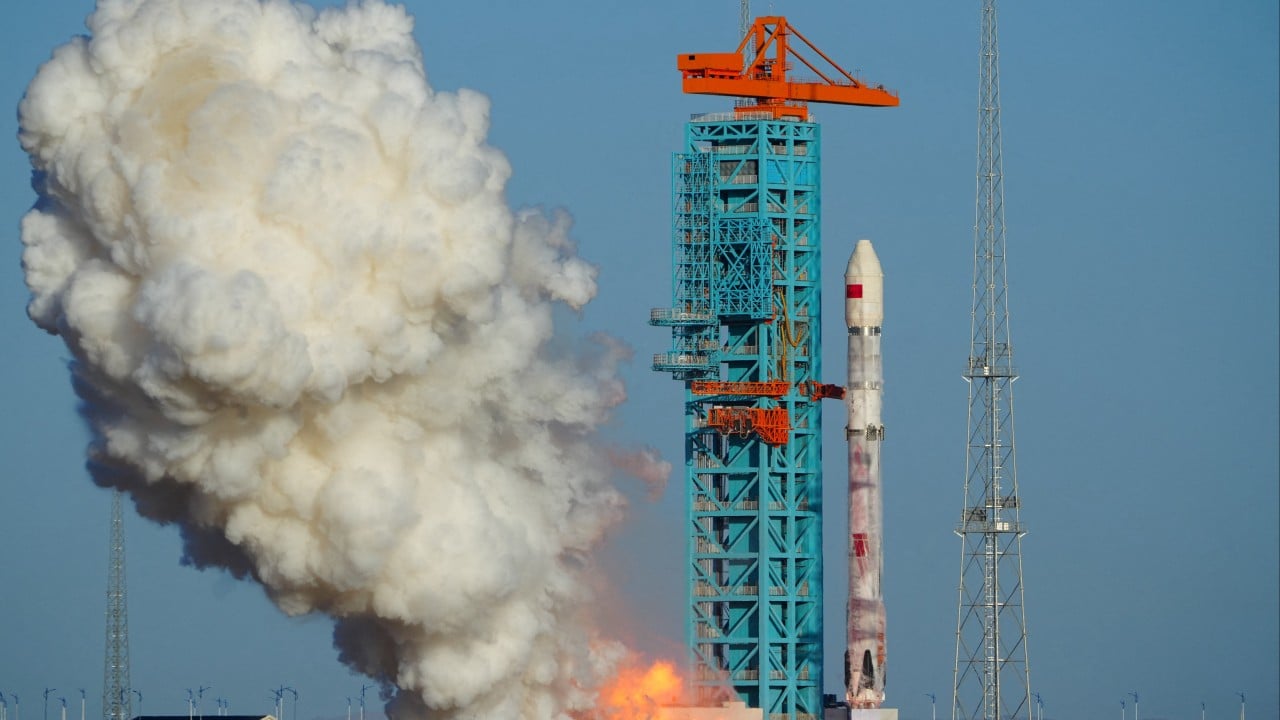
A sleek, silver cylinder lifts off a desert pad. It does not look like the crude, bolted-together tubes of the early space race. It looks organic, smooth, almost liquid in its symmetry. It punches a hole in the stratosphere, vanishes into the blue, and then—minutes later—the impossible happens again.
It comes back down.
The descent is a controlled panic. Plumes of orange fire erupt from the tail as the engine stutters, chokes, and reignites with pinpoint precision. The landing legs snap outward like the talons of a hawk breaking its dive. Dust explodes outward in a violent, golden wave, settling slowly over the scorched earth.
China’s state-backed aerospace endeavors and ambitious private startups, including firms like LandSpace and Deep Blue Aerospace, have crossed a critical Rubicon. They have successfully executed vertical take-off and vertical landing tests. They are mastering grid fin aerodynamics, high-pressure restartable engines, and the delicate art of hovering a skyscraper on a column of fire for three seconds before a whisper-soft touchdown.
They are no longer just catching up. They are running on parallel tracks.
The Invisible Stakes
Why does this matter to you, sitting at a desk thousands of miles away from a desert test site?
Because the sky is becoming a highway, and highways require asphalt that doesn't dissolve in the rain. Reusability changes the economics of human ambition. When the cost of reaching orbit plummets by an order of magnitude, the barrier to entry for medicine, climate monitoring, global internet connectivity, and materials science collapses.
Space is no longer a pristine, untouchable theater reserved for superpower posturing. It is an industrial zone. And the duopoly—or perhaps soon, the polyopoly—of reusable rocketry means that the infrastructure of the next century will not be dictated by a single corporate philosophy or a single national budget.
Competition breeds survival. When two technological titans chase the same holy grail, the timeline accelerates. Safety protocols are stress-tested in the harsh crucible of rivalry. Materials science leaps forward because failure is no longer just an expensive lesson; it is a lost race.
The Final Descent
We are standing at the edge of a new era, whether we look up or not.
The engineers in California and the engineers in Beijing are staring at the same equations, fighting the same stubborn laws of physics, and listening to the same mechanical heartbeat echoing through empty steel tubes. They are separated by oceans, politics, and ideological gulfs, yet united by a singular, burning obsession: to make the sky a two-way street.
The smoke clears over the pad. The metal cools, pinging softly in the quiet night air.
Another cylinder stands upright against the stars, scarred by fire, ready to fly again.