Latin America is currently the global laboratory for a radical brand of right-wing politics that has moved far beyond traditional conservatism. This shift is not a simple rejection of left-wing economics but a desperate, visceral response to a total collapse in public safety and institutional trust. From the shores of San Salvador to the government offices in Buenos Aires, a new generation of leaders is dismantling the post-Cold War consensus. They are replacing it with a "security-first" model that treats democratic norms as optional luxuries. The rise of the far right in this region is the direct result of a failed social contract where the state lost its monopoly on violence to gangs and cartels.
The Bukele Blueprint and the Death of Due Process
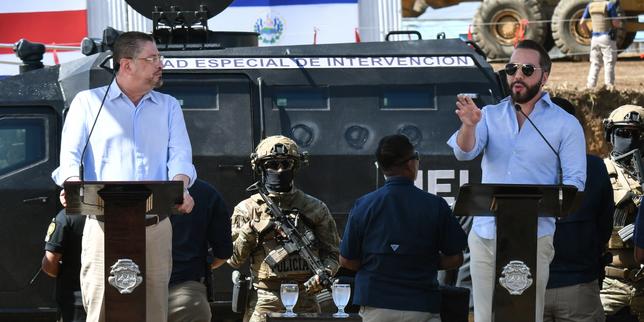
For decades, political analysts argued that Latin American voters would always prioritize bread-and-butter issues over everything else. They were wrong. Today, the most valuable political currency in the region is physical security. Nayib Bukele in El Salvador has provided the definitive proof of concept. By suspending civil liberties and incarcerating over 2% of his country’s adult population, he didn't just lower the murder rate; he created a political export. Recently making news recently: The Strait of Hormuz Peace Myth Why Global Markets Crave Tension Not Solutions.
This "Bukelization" of politics is spreading because it offers a clear, immediate result in a region exhausted by bureaucracy. When a citizen can finally walk to a corner store without paying a "rent" to a gang member, they generally stop caring about the independence of the supreme court. This is the brutal trade-off. We are seeing a fundamental shift where "human rights" are increasingly framed by populist leaders as "criminal rights," a rhetorical move that resonates deeply with a middle class that feels targeted and unprotected.
The mechanism is simple. A leader identifies a clear internal enemy—gangs, corrupt "castes," or drug traffickers—and declares that the existing legal framework is an obstacle to justice. By framing the constitution as a shield for predators, these leaders gain the mandate to sharpen the sword of the state. Further information regarding the matter are covered by TIME.
Why the Pink Tide Receded into Red
The previous decade was defined by the "Pink Tide," a wave of leftist leaders who promised that commodity-driven wealth would fix social inequality. While poverty did drop, the underlying structures of the state remained fragile. When the commodity boom ended, the money ran out, but the corruption remained.
The far right didn't win by promising a return to the 1990s. They won by being the loudest critics of a system that felt rigged. In Argentina, Javier Milei didn't just campaign on economics; he campaigned with a chainsaw. This wasn't just a metaphor for budget cuts. It was a promise to destroy a political establishment that had presided over 100% inflation. The right-wing surge is fueled by a sense of betrayal. Voters are not necessarily becoming more ideological; they are becoming more vengeful. They want to punish the elites who failed to keep the lights on and the streets safe.
The Evangelical Engine
While the rhetoric is often secular and security-focused, the logistical backbone of this movement is frequently found in the pews of Pentecostal churches. This is a factor many secular analysts in Washington and Brussels consistently underestimate. In Brazil, the "Bibles, Bullets, and Beef" caucus remains the most disciplined force in the legislature.
Evangelical networks provide a ready-made grassroots infrastructure that traditional political parties lack. They offer a moral framework that simplifies complex social issues into a battle between good and evil. For a voter living in a favela where the state is absent, the church is often the only institution providing childcare, drug rehabilitation, or job leads. When the pastor says a candidate is the "anointed one," it carries more weight than any TV advertisement.
The Disruption of the Military Neutrality
For thirty years, the goal in Latin America was to keep the military in the barracks. That era is over. Across the region, we see a "militarization of the civilian" and a "politicization of the military."
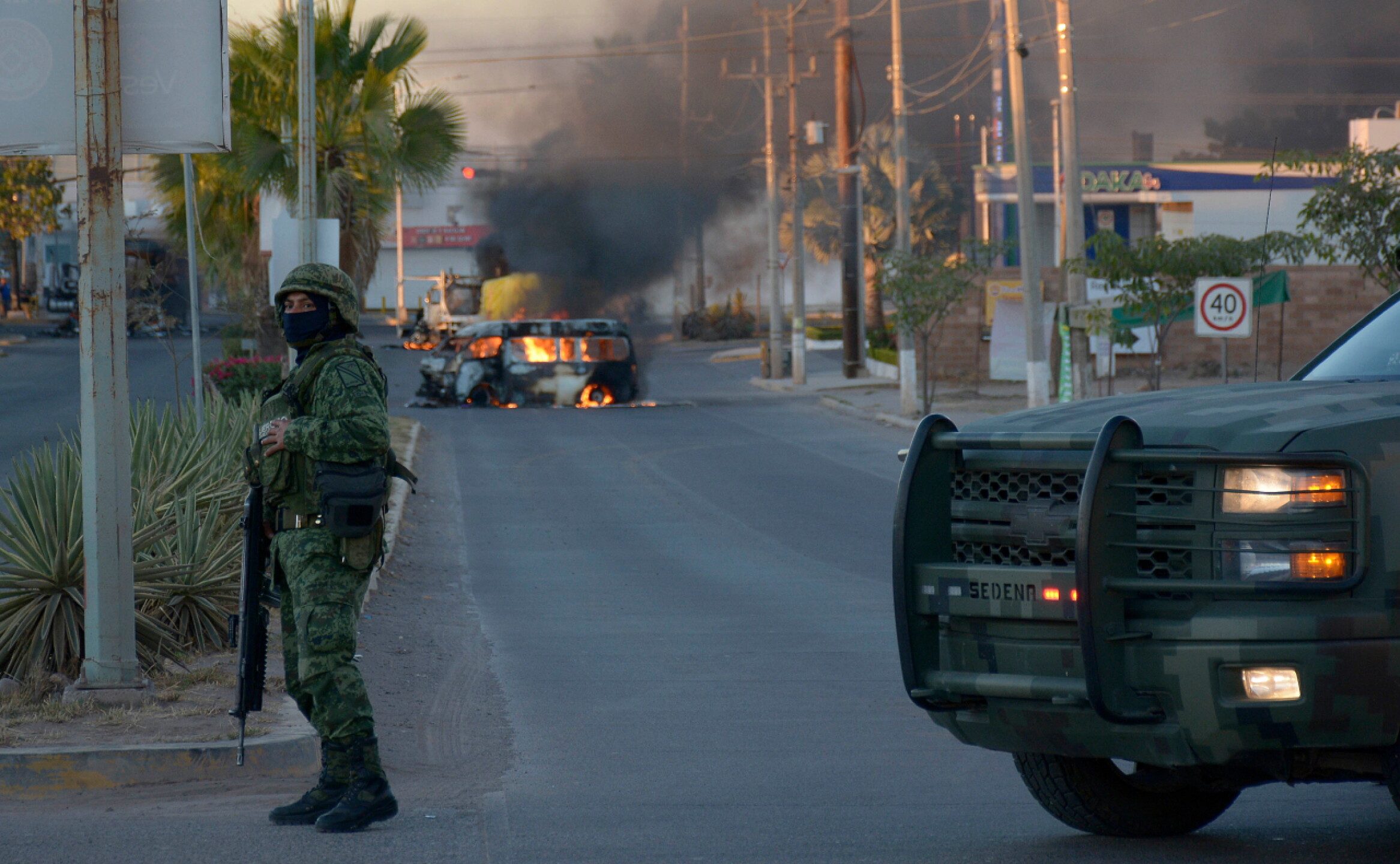
In Mexico, despite a nominally left-wing government, the military has been given unprecedented control over infrastructure and policing—a move the right wing intends to expand and permanentize. In Ecuador, the military is now the primary actor in domestic law enforcement. The far right has successfully argued that the police are either too corrupt or too outgunned to handle the "internal war" against narco-terrorists. By bringing the army back into the streets, these leaders are blurring the lines between national defense and municipal policing. This creates a dangerous dependency. Once a civilian leader relies on the generals to maintain daily order, the generals eventually start wondering why they need the civilian leader at all.
The Digital Architecture of Outrage
The rise of these movements is inseparable from a sophisticated mastery of direct-to-consumer communication. Traditional media in Latin America—long controlled by a handful of wealthy families—has lost its gatekeeper status.
TikTok Populism
The new right doesn't need a 30-minute interview on a major network. They need a 15-second clip of them shouting down a journalist or visiting a "mega-prison."
- Disintermediation: Leaders speak directly to the "pueblo" through social media, bypassing any fact-checking or context.
- Algorithmic Polarization: The content is designed to trigger anger. In a region with high social media penetration and low trust in traditional institutions, these digital ecosystems become echo chambers that reinforce the idea that the country is on the brink of collapse.
- Aesthetic of Strength: The imagery is always high-contrast, aggressive, and masculine. It is an aesthetic of action designed to contrast with the perceived "weakness" of liberal democracy.
This isn't just about PR. It is about creating an alternative reality where the only thing standing between the citizen and chaos is the "Strongman."
The Economic Mirage of Radical Liberalism
There is a glaring contradiction in the Latin American far right. While they demand a massive, intrusive state for security, they often demand a microscopic state for the economy. This "Security Statism" paired with "Economic Libertarianism" is a volatile mix.
In Chile, the rejection of the new constitution showed that while people want order, they are wary of losing the few social protections they have left. The far right’s biggest challenge will be delivering on the "Beef" part of the equation. You can arrest every gang member in the country, but if the price of eggs triples and the power grid fails, the honeymoon period ends. We are seeing a trend where leaders use security successes to buy time for economic experiments that would otherwise be rejected.
The Transnational Network of the New Right
This is not a series of isolated incidents. There is a conscious, organized effort to link these movements. Conferences like CPAC (Conservative Political Action Conference) now have regular iterations in Mexico and Brazil.
These leaders are sharing more than just memes. They are sharing legal strategies on how to weaken judicial oversight, how to label NGOs as "foreign agents," and how to rewrite school curricula. They view themselves as part of a global crusade against "Globalism" and "Wokeism," even if those terms mean very little to a farmer in rural Peru. By tapping into a global narrative, they gain a sense of legitimacy and a network of international allies that provides a buffer against diplomatic pressure from the US or the EU.
The Resilience of the Strongman Narrative
The most uncomfortable truth for observers is that these movements are often genuinely popular. This isn't a case of a small minority seizing power through a coup. These are democratically elected leaders who use their mandates to hollow out the very democracy that brought them to power.
The "Strongman" is a recurring character in Latin American history, but the modern version is updated for the 21st century. He doesn't necessarily want to abolish elections; he wants to make them irrelevant by controlling the information space and the judicial machinery. The appeal is the promise of a shortcut. Why wait for a decade of judicial reform when you can build a prison in six months?
The Erosion of the Middle Ground
As these populist forces consolidate power, the political center is vanishing. In countries like Colombia and Guatemala, the traditional parties have been hollowed out. You are either with the "Iron Fist" or you are an "enemy of the state." This polarization makes any nuanced policy discussion impossible. Issues like climate change, educational reform, or sustainable infrastructure are sidelined in favor of the perpetual theater of the "war on crime."
The danger is that this becomes a self-fulfilling prophecy. When you treat the opposition as an existential threat, they eventually become one. This leads to a cycle of political retribution where every new administration spends its first year trying to jail the previous one.
The Institutional Failure of the Liberal Order
We must acknowledge that the "liberal order" in Latin America often failed to deliver on its most basic promises. For many, democracy meant a vote every four years and a stagnant standard of living in between. The current surge of the far right is the invoice for decades of institutional neglect.
The legal systems were often slow, the bureaucracies were bloated, and the elites were insulated. The far right didn't create the anger; they simply harvested it. They are the only ones offering a clear, albeit violent, answer to the question: "Who is in charge?"
The False Promise of Stability
The irony of the "Iron Fist" is that it rarely produces long-term stability. It produces a temporary suppression of conflict. By dismantling the checks and balances that allow for peaceful transitions of power, these leaders are setting the stage for more explosive crises in the future. When the only way to change policy is to overthrow the person at the top, the risk of civil unrest becomes permanent.
The current model relies on the charisma and energy of a single individual. History shows that when these figures falter, the vacuum they leave behind is filled by the same chaos they promised to eliminate. The region is not entering a period of peace; it is entering a period of high-stakes containment.
The current wave of right-wing dominance across the territory is not a fluke or a temporary detour. It is the new operating system for a region that has decided that the risk of authoritarianism is preferable to the reality of anarchy. As long as the state cannot guarantee the safety of its citizens, the appeal of the "Iron Fist" will continue to outweigh the promises of the ballot box.