Putting a behind-the-scenes missile engineer in charge of a wartime defense ministry isn't just unusual. It's a loud admission about what Tehran thinks matters most right now.
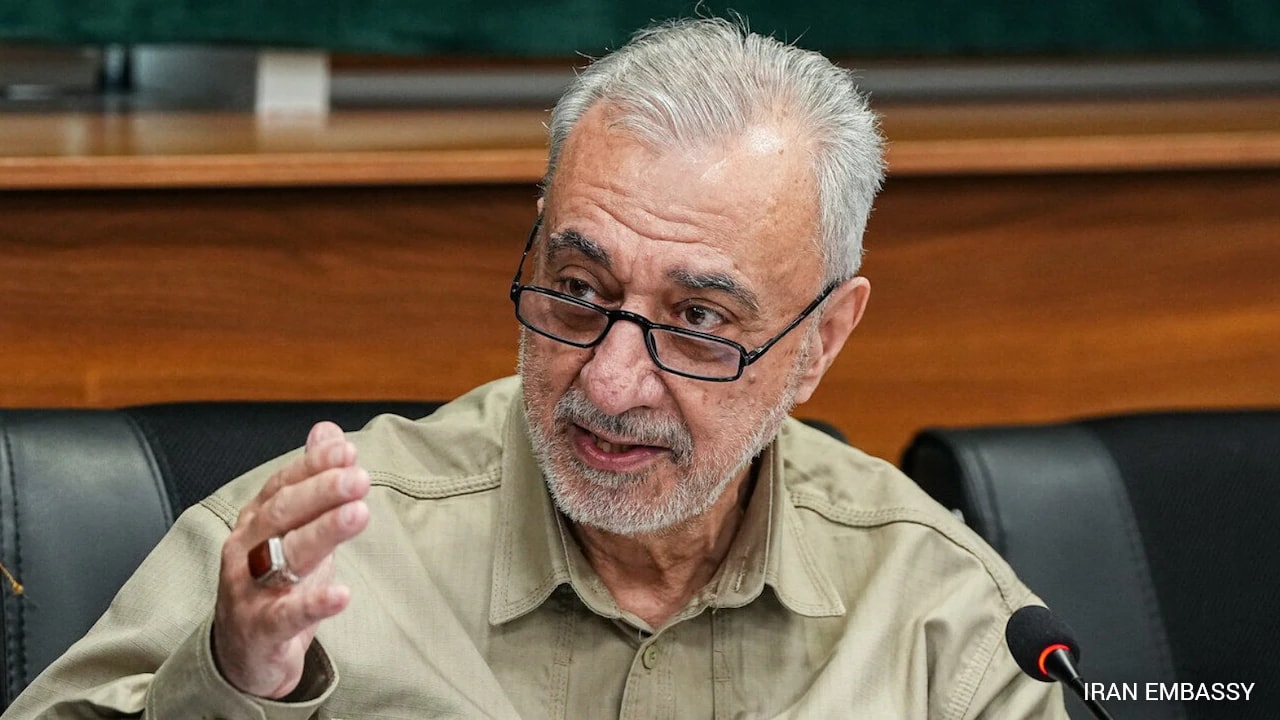
In October 2026, Iranian President Masoud Pezeshkian tapped Mehrdad Akhlaghi Ketabchi to run the defense ministry, and parliament quickly backed the move. Unlike past defense chiefs who came out of uniformed military commands, Akhlaghi spent over four decades inside the industrial and engineering engine of Iran's weapons programs. He knows solid-fuel rockets, guidance and control systems, and defense procurement cold.
That shift didn't happen in a vacuum. His predecessor, Aziz Nasirzadeh, died in the opening U.S.-Israeli strikes on February 28, 2026, leaving Seyed Majid Ebn Al-Reza as acting minister for nearly eight months before Akhlaghi stepped into the job formally.
Who Mehrdad Akhlaghi Ketabchi Actually Is
Most people outside specialized defense circles had barely seen a photo of Akhlaghi before his October nomination. When pictures finally circulated, he looked less like a battlefield commander and more like a veteran technical bureaucrat—bespectacled, wearing a civilian suit, surrounded by uniformed officers.
Born in Rasht in September 1958, Akhlaghi studied chemical engineering at Amirkabir University of Technology (Tehran Polytechnic) and went on to earn advanced degrees tied to control engineering and strategic management. His roots go deep into the industrial side of the Islamic Revolutionary Guard Corps (IRGC) missile ecosystem rather than field operations.
According to nonproliferation researchers writing for Arms Control Wonk, Akhlaghi entered Iran's missile sector in the mid-1980s through efforts around the Scud B at the Shahid Hemmat Industries Group, eventually leading guidance and control work. Later, he headed major defense industrial bodies, including the Shahid Bakeri Industrial Group and the Aerospace Industries Organization. Analysts at the Middle East Institute have pointed out that his career links him to the generation that built Iran's missile deterrent, including close ties to Hassan Tehrani Moghaddam, widely recognized as a founder of the IRGC's missile program.
Because of that exact track record, Akhlaghi has been under international scrutiny for years. He was sanctioned by the U.S. Treasury Department back in 2008, later hit with sanctions by Britain in 2023 over work tied to ballistic delivery systems, and placed on United Nations sanctions lists following the reimposition of international sanctions in September 2025.
Why a Missile Engineer Makes Sense After 2026 Strikes
If you only look at defense ministers as political figures or front-line generals, picking an engineer sounds odd. In practice, after months of heavy strikes and damaged production lines, a defense minister's biggest bottleneck isn't giving speeches—it's fixing supply chains, tooling, propulsion, and assembly.
Reports on the conflict's aftermath show a sharp gap between public claims and intelligence assessments. Public rhetoric in March 2026 from Israeli Prime Minister Benjamin Netanyahu suggested Iran had lost its ability to produce ballistic missiles, and U.S. officials have spoken of decimated military capabilities. Yet reporting cited by the Times of India from U.S. intelligence assessments estimates Iran still holds roughly 1,500 to 2,500 missiles, rebuilding at a slower pace using stockpiled components even after strikes hit manufacturing sites and launchers.
That's where someone with Akhlaghi's background earns his keep.
- Solid-fuel systems: Solid-fuel rockets store better and launch faster than liquid-fuel designs, which matters when facilities and launch sites face bombardment.
- Guidance and control: Better guidance turns basic rockets into far more accurate threats without needing massive numbers.
- Procurement workarounds: Sanctions squeeze imported parts and specialty materials, forcing engineers to improvise, substitute, or lean on clandestine networks.
Still, let's be honest about what a missile engineer can and cannot fix. Rebuilding factory lines and repairing launchers takes time, electricity, machine tools, and skilled technicians. And engineering skill doesn't automatically solve air-defense gaps, diplomatic deadlocks, or the risk of renewed strikes on hardened sites like the Pickaxe Mountain complex near Natanz.
What People Get Wrong About Iran's Missile Leadership
One common mistake is treating Iran's defense ministry as the sole brain of its military. In reality, the IRGC and the defense ministry have long overlapped, and a minister's title doesn't hand him total control over every branch overnight.
Another misconception is assuming a sanctioned weapons official is a "new face." Akhlaghi wasn't plucked out of obscurity because he had fresh ideas; he was brought forward because he already knew the plumbing of the system. In wartime, governments often reach for familiar operators who understand both the hardware and the political guardrails.
Intelligence estimates on missile stockpiles also come with real uncertainty. Counting missiles in storage isn't the same as knowing how many are fueled, intact, paired with working launchers, and ready to fire under pressure. Anyone reading headlines about remaining inventories should keep that distinction in mind.
How to Follow This Story Without Getting Played
If you're tracking Middle East security or defense news, don't stop at the headline that a "42-year missile veteran" took over. Watch what actually changes on the ground over the next few months.
- Track production and test signals, not just titles. Look for credible reporting on factory repairs, launcher refurbishments, and solid-fuel or guidance developments rather than assuming an appointment instantly restores pre-strike output.
- Compare multiple assessments. Cross-check defense analysts, sanctions trackers, and major news outlets rather than relying on a single wartime claim from any capital.
- Watch diplomacy alongside rearmament. Analysts at groups like the National Iranian American Council note that whether Tehran's rebuild deepens regional escalation or shapes talks depends heavily on negotiations and broader political choices, not hardware alone.
The Man Behind Iran's Sejjil Missile Now Leads Its Defence Ministry
This video coverage adds context on Akhlaghi's background with Iran's Sejjil ballistic missile program and why his appointment drew immediate international attention.