Seconds.
Sometimes a soldier only gets two of them before a drone drops out of a grey, dripping sky and turns a trench line into a crater.
I have sat in damp basements where the air tastes like wet chalk and diesel, watching young men stare at glowing screens while artillery thuds somewhere beyond the treeline. You learn quickly in a place like that how fragile time becomes. A packet of data takes milliseconds to cross half the globe. A human decision takes a beat longer. A slow connection takes just enough extra breath to turn an early warning into a late funeral.
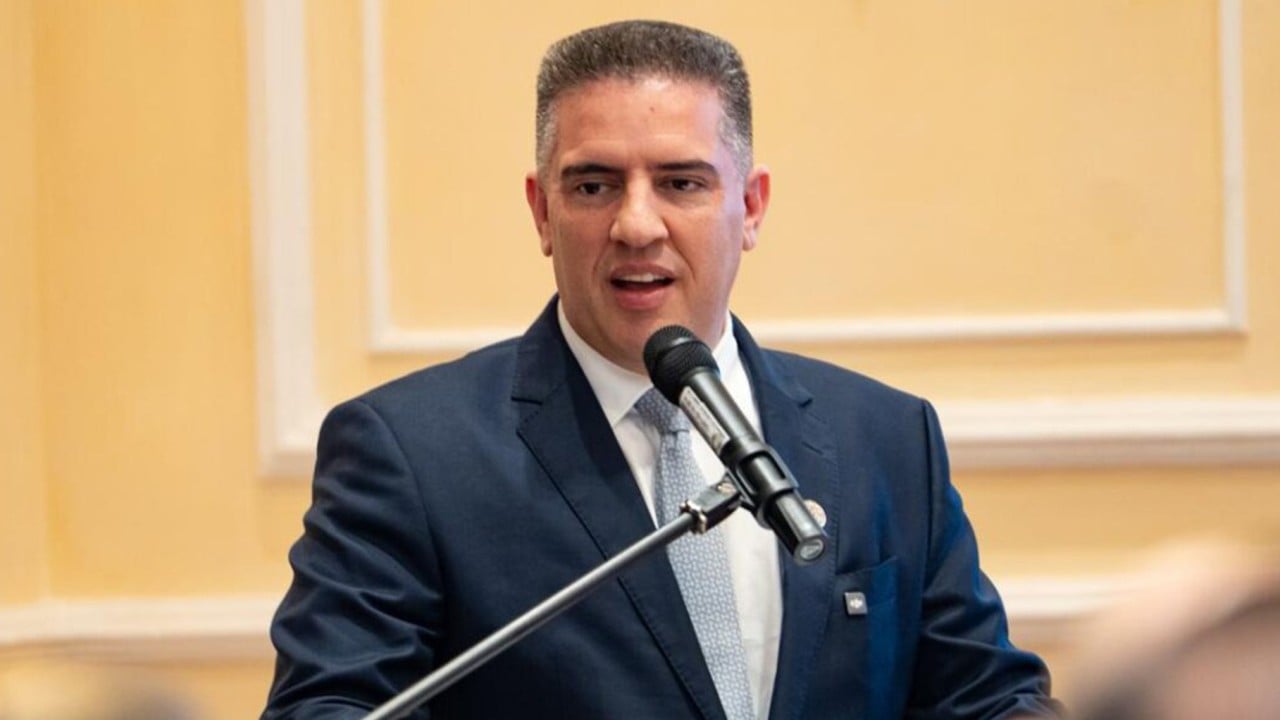
When a presidential adviser says Kyiv is in talks to lift a speed limit on a military satellite network, most readers skim the headline and move on. Bandwidth sounds like a telecom billing issue. Megabits per second sound like something an engineer argues over with a spreadsheet.
They aren't. Out on a muddy frontline, speed is oxygen.
Why a Throttle in Orbit Matters on the Ground
Satellite links in modern warfare do not exist so troops can stream movies or scroll feeds after dark. They carry telemetry from reconnaissance drones, coordinate artillery fire, route encrypted voice calls, and push real-time situational maps to units scattered across dozens of kilometers of open terrain.
When a network carries a speed cap or a throttling rule, that ceiling is rarely noticeable when everything is quiet. Quiet moments are deceptive. They lull you into thinking the pipe is wide enough.
Then a push begins. Three reconnaissance feeds go live at once. Electronic warfare jammers start hammering the spectrum, forcing terminals to hop frequencies, retransmit lost packets, and burn extra overhead just to stay connected. Suddenly, the ceiling is not an abstract number in a contract. It is a bottleneck squeezing every frame of video and every line of coordinates into a narrow straw.
(Note: The following vignette is a hypothetical scenario built to illustrate how bandwidth limits play out operationally, not a report of a specific incident.)
Picture a hypothetical drone operator—let's call him Taras—working out of a reinforced cellar near a contested sector. Rain patters against corrugated metal above him. On his monitor, a quadcopter hovers low over a tree line where armored vehicles might be staging. He needs high-resolution feed to distinguish a decoy from real armor, and he needs it without a two-second freeze every time another team in the sector transmits.
If the link is capped, Taras faces a terrible choice. Lower the resolution and risk missing the detail that matters. Wait for the buffer to catch up and lose the angle as the wind shifts. Neither option feels safe when lives hang off what appears on the glass.
I remember watching a commander once tap his finger against a ruggedized laptop screen, jaw tight, while a map refused to refresh cleanly during a sudden barrage. Nobody in that room cared about telecommunications jargon. Everyone cared about whether the picture arrived before the incoming round did.
The Quiet Tug-of-War Behind Every Signal
Negotiating to lift a speed limit on a military satellite network is never just a technical tweak. It is a negotiation about risk, cost, physics, and control.
Satellites in low Earth orbit move fast, pass over coverage zones, and share radio spectrum with civilian traffic, commercial clients, and defense systems. Operators manage congestion across thousands of terminals simultaneously. If one theater pulls maximum throughput without limits, another area—or another priority tier—can feel the squeeze.
There is also the uncomfortable truth of dependency. Relying on a commercial or allied satellite architecture means working within rules set by people far from the mud. Even when intentions are aligned, contracts have clauses, technical configurations have guardrails, and diplomatic talks move at their own pace.
Consider what happens next: a team in Kyiv sits across from counterparts and technical specialists trying to uncap a limit. On paper, it looks like a policy adjustment. In practice, it is an argument over how much trust, capacity, and priority can be unlocked without breaking the wider network.
I am not a satellite engineer, and I will not pretend the orbital math is simple. Spectrum management is genuinely confusing, even to people who work around communications gear every week. When signals get jammed, bounced, or throttled, you can feel the frustration in the room even when nobody explains the exact protocol behind the lag.
That uncertainty is part of what makes these talks so tense. Until an agreement is signed and tested under real load, a lifted speed limit is just a promise on paper.
Speed as a Form of Protection
History shows that every shift in how armies see and talk across distance changes the tempo of survival.
Telegraph wires once let commanders react to movements miles away instead of riding blind on horseback. Radio freed infantry from fixed cables, though early sets were heavy, noisy, and easy to intercept. Each leap shortened the gap between spotting danger and answering it.
Modern warfare compresses that gap to near zero. Sensors spot movement continuously. Algorithms and human analysts sort targets in minutes or seconds. A throttled data link stretches time back out at the exact moment defenders need it shortest.
Think of a highway with a posted speed limit of forty miles per hour. For Sunday drivers, forty is fine. For an ambulance racing through a storm, forty feels like standing still.
(Note: That highway comparison is a metaphor—satellite throughput governs data transfer rates across a shared network, not vehicle speed on a road.)
Faster throughput does not win a war by itself. Better bandwidth cannot fix bad tactics, tired crews, or shortages of ammunition. Anyone who claims a faster connection solves everything is selling fairy tales.
What higher speed actually buys is margin. Margin for sharper video from overhead cameras. Margin for faster file transfers when a unit needs updated maps or imagery right now. Margin so a busy relay node does not choke when ten things happen at once.
I have seen what happens when a crew has clean, fast connectivity versus when they are fighting a laggy link. The difference shows up in posture. Shoulders drop an inch. Voices stay calmer. People spend less time yelling "Say again, you're breaking up" into a handset while metal screams overhead.
What Talks in Kyiv Really Put on the Table
When word gets out that Ukrainian officials are negotiating to remove a speed cap on a military satellite system, the story is bigger than one technical setting.
It points to a deeper reckoning about modern defense. Modern militaries run on data just as surely as they run on fuel and steel. Every radar ping, every drone flight, every encrypted message is part of a nervous system. If a nerve is pinched, the whole body reacts slower.
At the same time, lifting a speed limit raises sharp questions that do not have easy answers. How do you keep a high-capacity link resilient when adversaries try to blind or jam it? How do you balance urgent military demand against broader network stability? How do you avoid building a system where one bottleneck can still choke the flow?
These are hard questions, and I do not have neat, tidy answers to all of them. Anyone who watches modern conflict up close learns to distrust easy certainty. Plans collide with weather, jammed frequencies, human error, and sudden shifts on the ground.
Still, the direction of the effort is unmistakable. Getting rid of artificial ceilings on military satellite speeds is about refusing to fight with one hand tied behind your back in the digital sky.
Out there past the last checkpoint, nobody asks what kind of agreement was signed in a conference room. They only know whether the screen updates, whether the call goes through cleanly, and whether the warning arrives in time.
A second saved in the air can be a life kept breathing in the dirt.