The diesel engine of the BRP Teresa Magbanua does not hum. It thumps. It is a deep, bone-rattling vibration that settles in the chest of every sailor on board, a constant reminder that they are floating over an abyss.
For weeks, the crew of this Philippine Coast Guard vessel has looked out at the same monotonous horizon of the South China Sea. The water here is a deceptive, brilliant turquoise. Under the blinding tropical sun, it looks like a postcard. But for the men and women stationed at Sabina Shoal, the beauty is a backdrop to a quiet, suffocating tension. Don't forget to check out our recent article on this related article.
They are living on the edge of a geopolitical fault line.
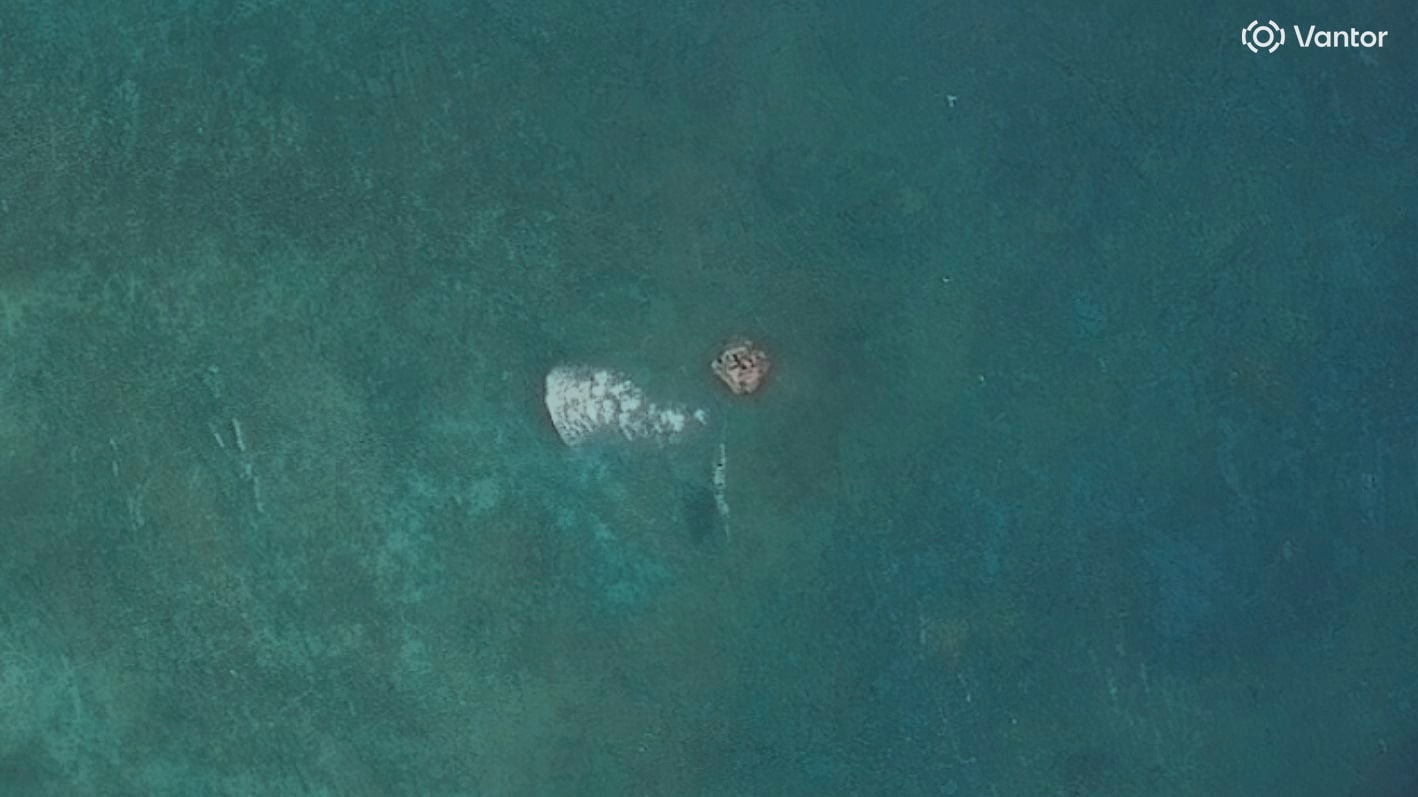
A few miles away, just beyond the crest of the waves, sits a collection of dark, metallic shapes. To a casual observer, they look like industrial debris, perhaps abandoned pontoons or standard maritime markers. But in this part of the world, nothing is accidental. These are floating structures, recently deployed by Chinese vessels. They are anchored firmly into the seabed, deep within the Philippines’ 200-nautical-mile Exclusive Economic Zone. If you want more about the context of this, The New York Times provides an in-depth breakdown.
To the bureaucrats in Manila and Beijing, this is a matter of coordinates, treaties, and diplomatic protests. But to the fishermen who rely on these waters for their survival, and to the coast guard crews tasked with holding the line, those floating structures are something else entirely. They are a fence. And it is being built in their backyard.
The Weight of a Wooden Hull
To understand what is happening at Sabina Shoal, you have to leave the air-conditioned briefing rooms of the capital and step onto the peeling paint of a bangka—the traditional wooden outrigger boat used by generations of Filipino fishermen.
Consider a man like Eduardo. He is forty-two, though the salt air and relentless sun have etched lines around his eyes that make him look ten years older. His hands are calloused from pulling nylon lines out of the deep. For decades, Eduardo’s father and grandfather sailed from the coast of Palawan out to these shallow reefs. The shoals were a sanctuary. When the open ocean grew too rough, the reefs offered shelter. When the deep water was barren, the shoals were teeming with grouper and snapper.
Now, Eduardo watches the horizon with a pair of rusted binoculars.
Every year, the space available to him shrinks. First came the massive steel-hulled Chinese trawlers, vessels that dwarf his wooden boat by a factor of ten. Then came the coast guard cutters, painted a stark, intimidating white, flashing lights and sounding horns that echo across the open water. And now, the floating barriers.
When a structure is placed in the water, the space changes instantly. It is no longer open ocean. It becomes a claim. If Eduardo sails too close to these new installations, a speedboat will detach from a nearby Chinese mothership. It will intercept him. The message is rarely spoken; it is delivered through the sheer physics of a larger hull cutting across his bow, forcing him to turn back.
This is the human cost of a "diplomatic incident." It is not measured in GDP or naval tonnage. It is measured in the shrinking yield of a fisherman’s daily catch. It is measured in the quiet calculation a father makes at night, wondering if the risk of sailing to his traditional fishing grounds is worth the price of a collision that would splinter his livelihood into kindling.
The Strategy of the Slow Encroachment
The deployment of these floating structures follows a predictable, highly effective pattern. It is a masterclass in what strategic analysts call "gray zone warfare," but it feels much simpler when you are watching it happen in real time. It is the art of taking territory without ever firing a shot.
Imagine walking into your front yard one morning to find your neighbor has placed a single, heavy concrete block just inside your property line. You complain. The neighbor ignores you. You call the authorities, but by the time they arrive, the neighbor says the block is just temporary, a marker for a project, or perhaps they claim the land was always theirs.
A month later, there are three more blocks. Then a fence post.
If you use force to remove the blocks, you are labeled the aggressor. If you do nothing, the fence becomes permanent. This is the exact dilemma facing the Philippine government.
The legal reality is clear. In 2016, the Permanent Court of Arbitration in The Hague delivered a landmark ruling. It invalidated China’s expansive "nine-dash line" claim, which covers nearly the entire South China Sea. The court affirmed that Sabina Shoal lies well within the Philippines’ exclusive economic zone, a area where Manila holds sole rights to explore and manage natural resources.
Yet, international law is only as strong as the willingness of nations to enforce it. On the water, a piece of paper signed in Europe feels incredibly far away.
The physical structures deployed at the shoal serve multiple purposes. They act as staging areas. They can be used to moor fleets of Chinese maritime militia vessels—essentially fishing boats acting as a de facto paramilitary force. By tying up to these structures, dozens of large ships can remain stationary for weeks at a time, creating a human and steel barrier that effectively locks out local fishermen and prevents Philippine government vessels from patrolling.
The Lonely Patrol
On board the BRP Teresa Magbanua, the days are defined by a surreal mix of intense boredom and sudden, adrenaline-spiking confrontation.
The ship has been stationed at Sabina Shoal for an extended deployment, tasked with monitoring the Chinese activities and ensuring that the floating structures do not become the foundation for something more permanent, like an artificial island. We have seen this transformation happen before at Mischief Reef and Subi Reef—places that were once submerged coral features and are now fortified military outposts with runways and missile batteries.
The crew lives in a state of hyper-vigilance. The radar screen in the bridge is a crowded constellation of blips. Every blip is a Chinese vessel, tracking their movements, recording their communications, waiting for them to leave.
Fresh food runs low after the first month. The water from the ship’s desalination plant tastes faintly of metal. The heat inside the hull, despite the air conditioning, is heavy and oppressive. But the emotional toll is heavier. The sailors are intensely aware that they are a tiny dot of sovereignty in a sea controlled by a superpower.
A single miscalculation by a young officer on the bridge could spark an international crisis. If a Philippine vessel collides with a Chinese ship, or if water cannons escalate to live ammunition, the mutual defense treaty between Manila and Washington could be triggered. The stakes are not just regional; they are global.
But when you talk to the sailors on deck during the quiet hours of the night watch, they don't talk about Washington or Beijing. They talk about their families in Luzon or the Visayas. They talk about the absurdity of guarding a patch of water that looks identical to the thousands of square miles surrounding it.
Yet, they stay. They stay because they understand that if they retreat from Sabina Shoal, the invisible line of their nation's border moves miles closer to their homes.
The Paper Shield
In response to the latest structures, the Philippine Department of Foreign Affairs has lodged formal diplomatic protests. They have summoned Chinese diplomats. They have issued stern statements to the press, condemning the "illegal presence and provocative actions" of the Chinese vessels.
It is a necessary ritual of modern statehood. It creates a paper trail. It signals to the world that the Philippines is not consenting to the occupation of its waters.
But out on the shoal, the diplomatic protests feel like whispers against a typhoon. The Chinese response is equally scripted. Beijing maintains that its vessels are operating in "inherent territory" and urges the Philippines to stop "infringing on China's sovereignty."
This geopolitical gaslighting is perhaps the most frustrating aspect of the conflict for those who live it. It requires a denial of reality. To stand on a Philippine vessel, looking at a Philippine coastline on the radar, and be told by a voice over the radio that you are trespassing in China is a disorienting, infuriating experience.
The real problem lies in the asymmetry of power. The Philippines cannot match the sheer naval and economic might of its neighbor. It must rely on asymmetric tactics—using transparency as a weapon. By embedding journalists on coast guard ships, by releasing drone footage of the floating structures, and by exposing the swarming tactics of the Chinese fleet to the international community, Manila is trying to shame a superpower into compliance.
It is a high-stakes gamble. Shame is a powerful tool in international diplomacy, but it has its limits. When a nation values strategic dominance over international reputation, a video clip of a floating barrier is unlikely to change its course.
The Changing Tides
The sun begins to set over Sabina Shoal, painting the sky in bruised shades of purple and orange. The dark silhouettes of the Chinese vessels and their floating structures grow sharp against the fading light.
For now, the situation remains a stalemate. The structures are still there, bobbing gently in the tide. The BRP Teresa Magbanua remains anchored nearby, its engines thumping, its crew watching. Eduardo has turned his wooden bangka back toward the coast of Palawan, his hold only half-full of fish, calculating how much fuel he has left for tomorrow.
This conflict is often described in terms of grand strategy, a chess game between empires for control of the world's most vital shipping lanes. But chess pieces do not bleed, and they do not worry about how to feed their children.
The South China Sea is not a game board. It is a workplace, a home, and a sovereign territory. Every floating structure dropped into these waters is a quiet rewriting of geography, an incremental theft of a nation's future, happening one foot of water at a time.
The tide rises, lifting both the massive steel warships and the fragile wooden outriggers, indifferent to the flags they fly. But as the darkness settles over the reef, the tension remains, suspended in the salt air, waiting for the next piece of steel to drop into the sea.