The hospital room smelled of eucalyptus and cold linoleum. Sarah stared at her newborn son, Leo, tracking the rhythmic rise and fall of his tiny abdomen. He breathed differently than other babies. His chest pulled inward with every breath, a subtle mechanical stutter that made her skin prickle with an unnamed dread. The pediatrician smiled, patted her shoulder, and blamed it on early arrival. He was premature, they said. He just needed time to catch up.
Time was the one thing they did not have.
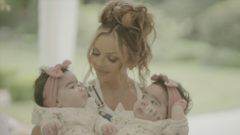
Across the country, a similar quiet panic had consumed pop singer Jesy Nelson. When her twin daughters, Ocean and Story, were diagnosed with spinal muscular atrophy type 1—a devastating genetic condition that strips away muscle strength, movement, and the ability to breathe independently—the ground fell out. Like Sarah, Nelson had watched her babies breathe from their bellies. Like Sarah, she had been told to wait. But waiting, in the cruel arithmetic of spinal muscular atrophy, means watching precious motor neurons wither away before treatment can intercept the damage.
A simple heel-prick blood test at birth can change everything. Catch the condition before symptoms tear through the body, and gene therapies can rewrite a child's future, sparing them from feeding tubes and profound physical paralysis. Yet for years, this life-saving screen remained absent from standard newborn blood spot tests in England, leaving parents entirely in the dark until the disease began to steal their children.
Then came the campaign. Backed by a petition with over one hundred and fifty thousand signatures and driven by relentless public pressure from families and advocates, the government yielded. The Department of Health announced that screening for spinal muscular atrophy would finally roll out.
Victory tasted bitter on the tongue.
Because the rollout was restricted to laboratories already equipped with specific machinery, the initial implementation covered only a fraction of the country. Families quickly realized that a geographic boundary could dictate whether their newborn received a life-altering screening or slipped through the cracks. A postcode lottery.
Imagine holding your child in a maternity ward, completely unaware that a invisible geographic line separates a routine test from a lifetime of preventable grief.
Medical innovation means nothing if distribution is crippled by geography. Health officials argued that testing must begin where infrastructure already exists, scaling up carefully through evaluation programs. But parents living outside those privileged zones felt a sharp, suffocating sting of abandonment. Every day of delay means another batch of infants born without protection, sliding past the critical window where early intervention is most potent.
Consider what happens next: a mother in an uncovered county kisses her newborn, trusting the system blindly, while miles away across an invisible county border, another baby receives the heel-prick test that secures their tomorrow.
The human cost cannot be measured in spreadsheets or administrative logistics. It is measured in the quiet heartbreak of parents who learn too late that their child's condition was detectable, treatable, but ultimately missed because of where the delivery van stopped or which laboratory possessed the right piece of hardware.
Medical equity is not a logistical bonus. It is the core of healthcare justice. When life-saving diagnostics exist, withholding them from a segment of the population due to regional lottery mechanics turns basic protection into a matter of sheer luck.
The campaign spearheaded by families and public figures exposed a fracture in the system, forcing a conversation that administrators could no longer ignore. Yet the work remains unfinished until every maternity ward in every corner of the nation shares the same standard of care.
Leo grows older now, his breathing monitored closely, his parents hyper-aware of the margins that separate safety from oversight. The system is changing, slowly, reluctantly, pushed forward by the raw grief and fierce love of mothers who refused to stay quiet. But until that national grid is total, until every single newborn is granted the exact same shield against the invisible threats of genetics, the line remains drawn. And parents keep watching the cradle, waiting to see which side they landed on.