The Sound of a Quiet Kitchen
It starts with a dull thud against a wooden cutting board.
The blade moves with practiced rhythm. Down, across, and through. The vegetable parts under the steel with a crisp, watery snap. For anyone who has worked a line, stood over a home stove on a sticky Tuesday evening, or prepped ingredients for a weekend gathering, this is the soundtrack of creation. Bright green walls of skin. Ribs of pale white pith. Tiny, tightly packed seeds holding a quiet, latent fire. Recently making news lately: Structural Resilience Under Fire The Mechanics of Wartime Hospital Continuity.
We love this heat. We seek it out. We build entire culinary traditions around the sting of capsaicin hitting the back of the throat, the quick gasp for air, the cold sip of water that resets the palate. Food is supposed to wake us up. It is supposed to carry flavor, memory, and culture.
Sometimes, it carries something else entirely. Further insights on this are covered by Mayo Clinic.
When you slide a diced pepper into a mixing bowl of salsa, or scatter raw slices over a sizzling plate of tacos, you do not think about logistics. You do not think about water tables thousands of miles away, or the temperature inside the bed of a refrigerated semi-truck idling at a distribution hub in the dead of night. You trust the process. You trust that the earth, the hands that pulled the crop from the soil, the trucks, the grocery store aisles, and the checkout counter have all maintained an unbroken chain of safety.
That chain breaks quietly.
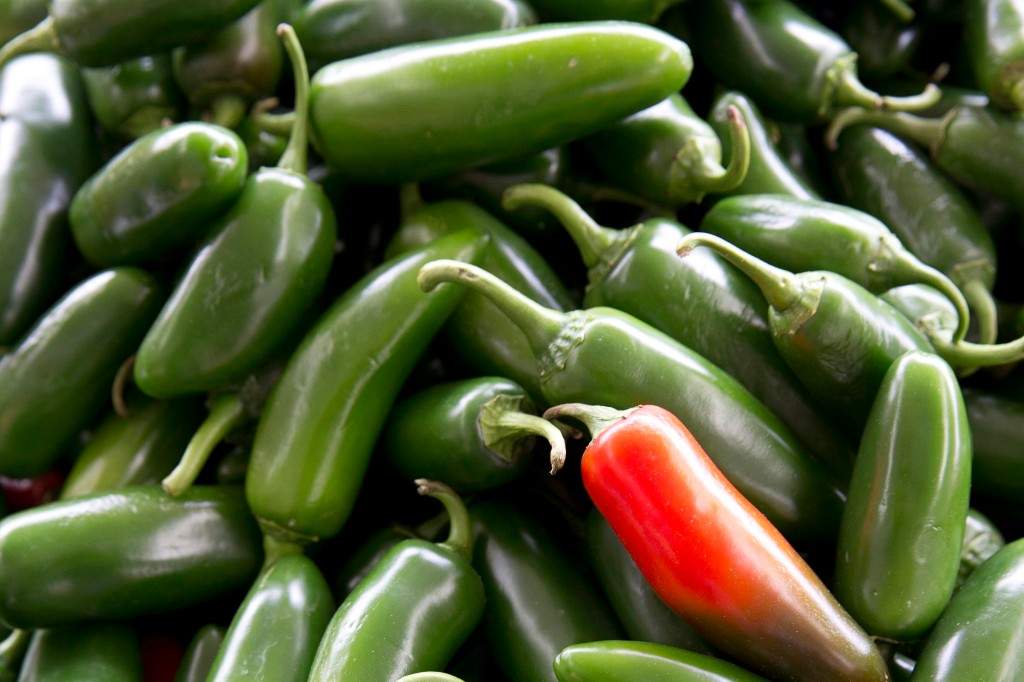
Across twenty-seven states, an invisible strain of bacteria was already moving through that trust long before the first plate hit the table. It did not announce itself with a foul smell or a bruised skin. The jalapeños looked pristine. They sat in neat, glistening pyramids under the bright fluorescent lights of produce aisles, waiting to be chosen.
Consider what happens next: A family dinner in Ohio. A quick lunch in Texas. A late-night snack in Georgia. Dozens of entirely separate lives, bridged by a single, microscopic thread.
The Arithmetic of an Outbreak
Public health reports are cold things. They are built from tables, spreadsheets, and retroactive phone calls. They use words like surveillance, case cluster, and epidemiological linkage.
When the numbers started climbing—dozens, then hundreds, spread across more than half the country—they looked abstract on a morning news ticker. But numbers are just human beings stacked vertically. Behind every confirmed infection in this nationwide cluster is a sudden, violent interruption of ordinary life.
It hits without warning.
One moment you are folding laundry or answering emails. The next, your body turns against you with a fierce, exhausting fury. Cramps that double you over. A fever that blurs the edges of the room. Hours spent staring at a bathroom ceiling tile, wondering what you ate, what you touched, where you went wrong.
Note: In cases like this large-scale foodborne event, federal investigators rely heavily on traceback investigations, asking patients to recall every single meal ingredient consumed over a two-week incubation window.
Memory is a notoriously poor detective. When investigators ask what you ate twelve days ago on a rainy Thursday, your mind comes up blank. You remember the major milestones—a birthday, a flat tire—but you do not remember the specific origin of the diced peppers mixed into a quick weekday burrito bowl. Yet, multiplied across hundreds of victims, those fragmented memories form a pattern. They point back to a common denominator. A distribution center. A farm. A harvest touched by water that carried what the eye could never see.
Salmonella does not care about your schedule. It does not care that you have a presentation tomorrow, a flight to catch, or a child’s soccer game to coach. It simply multiplies, exploiting the fragile machinery of our gut, turning a routine meal into an ordeal of survival and rehydration.
How the Chain Breaks
To understand how a single agricultural crop becomes a vector for nationwide illness, you have to look backward down the supply chain, away from the kitchen and deep into the fields.
Agriculture is an open-air enterprise. Unlike a sterile pharmaceutical laboratory, a farm exists at the mercy of the elements. It relies on open irrigation canals, seasonal rainfall, and wildlife moving across borders of dirt and crop rows.
Imagine an irrigation pond reflecting the wide-open sky of a dry agricultural region. On the surface, it looks peaceful. Below the surface, variables shift with every passing rainstorm or upstream runoff. If that water is drawn upon to spray crops, or if it makes contact with the fruit as it hangs heavy on the vine, the risk shifts from theoretical to immediate.
Produce is fragile. Unlike beef or poultry, which undergo strict kill-steps through high-temperature cooking before they reach a plate, many of our favorite vegetables are eaten raw. Think about the anatomy of a jalapeño. Its porous skin and internal crevices can harbor moisture and microscopic hitchhikers. Once contaminated in the field, washing at home offers only partial defense. The bacteria can cling stubbornly to the waxy exterior or find shelter inside the stem scar.
And then the journey begins.
Harvested peppers are sorted, packed into boxes, loaded onto pallets, and shipped across state lines. Along the way, temperature control is paramount—though not in the way most people think. If warm produce is packed without adequate cooling, or if temperature fluctuations cause condensation inside packaging, it creates a microscopic greenhouse. For bacteria doubling in number every twenty minutes, a cross-country truck ride is not just transit; it is an incubator.
By the time those peppers land in a regional warehouse, they are distributed to local grocers, restaurants, and food service companies. The contamination has traveled silently, mutating from an agricultural mishap into a localized health crisis, repeating the same pattern in dozens of different zip codes simultaneously.
The Weight of Uncertainty
The scariest part of any outbreak is not the illness itself; it is the blind spot.
For weeks while the tracking data accumulates, there is a dangerous window where the public remains unaware. People continue to buy, chop, and eat. They feed their children. They trust the system. During this lag, federal agencies like the Centers for Disease Control and Prevention and the Food and Drug Administration work like forensic detectives working a cold case, comparing notes from state health departments, running genetic sequencing on bacterial samples, and interviewing people who are currently too sick to leave their beds.
When the advisory finally drops, it lands with a strange mixture of relief and frustration.
Avoid certain brands.
Check your refrigerators.
When in doubt, throw it out.
Throw it out. It sounds simple. But standing in front of an open refrigerator, looking at a half-used container of homemade salsa or a bag of fresh peppers bought on impulse three days ago, the instruction feels heavy. You paid for it. It looks fine. It smells fine. You have to make a choice based entirely on trust in a distant warning.
This is the hidden tax of modern food distribution. We live in an era of miraculous abundance. In the middle of winter, we can buy fresh tropical fruit, crisp greens, and spicy peppers flown in from thousands of miles away. We enjoy a global pantry without ever seeing the farm, the farmer, or the logistics network that made it possible. But that convenience comes with a trade-off. When a single node in that vast, intricate web fails, the ripple effect reaches across state lines before anyone even realizes the water has stirred.
What Remains on the Plate
The outbreak eventually fades from the headlines. New news cycles wash over us. The numbers in the public health bulletins stop climbing, the warning advisories are archived, and the produce bins fill up with fresh shipments from new harvests.
The supply chain adapts. New protocols are drafted. Farmers scrub their operations, sanitation audits tighten, and testing becomes more rigorous. The machine fixes itself, moving forward because it has no other choice.
Yet something lingers in the way we look at our food.
The next time you stand at the edge of a kitchen counter with a knife in your hand and a bright green pepper on the board, the automatic rhythm pauses for just a fraction of a second. You look closer at the skin. You run it under the faucet a little longer. You feel the sharp, familiar weight of the knife, balanced between the desire for flavor and the quiet, permanent knowledge of how fragile our connection to the earth really is.
The blade comes down. The snap rings out. Life goes on, careful and aware, seasoned by the invisible lessons of the past.