Two rooms. Thousands of miles apart. In one, quiet deliberation unfolds behind closed doors in Geneva or Washington; in the other, the hum of server racks fills a basement in Beijing with a sound like a perpetual autumn wind. Between them sits a single, heavy question that neither capital can ignore.
Code does not carry a passport. It does not care about national anthems, trade tariffs, or the shifting rhetoric of election cycles. Yet, the people writing it are bound entirely by maps.
Consider a hypothetical engineer sitting at a dual-monitor workstation in Shenzhen. Let us call him Lin. His coffee is cold. On his left screen, a neural network is learning to interpret high-resolution satellite imagery with terrifying accuracy. On his right screen, an automated warning light blinks amber—a notification that new export controls on advanced silicon have just tightened another notch. Lin does not care about geopolitics. Lin cares about whether his loss function will converge before sunrise.
Across the ocean, in a glass-walled conference room overlooking the Potomac, a policy advisor rubs tired eyes. She has spent fourteen hours reviewing simulation data showing how easily an autonomous decision-making algorithm can misinterpret a defensive maneuver as an act of aggression. She knows that treaties written for steel and gunpowder are useless here. You cannot point a nuclear deterrent at a vector database.
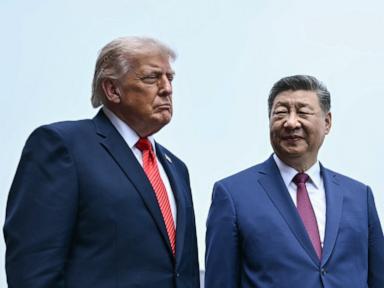
This is the quiet backdrop of the recent diplomatic exchanges between the United States and China regarding artificial intelligence safety. Ahead of the high-stakes summit between President Joe Biden and President Xi Jinping, diplomats and technical experts have been forced into an uncomfortable realization. They are trying to build guardrails around a runaway train while it is already accelerating down the track.
The danger is not a cinematic dystopia of rogue machines waking up with malicious intent. The danger is much more mundane, and infinitely more likely. It is the danger of speed without comprehension.
Think back to the early days of aviation. When the Wright brothers first achieved powered flight at Kitty Hawk, they did not immediately need international airspace regulations. The sky was vast, and the planes were fragile. But within decades, crowded skies demanded standardized radio frequencies, altimeter settings, and air traffic control. Without those invisible agreements, the sky would have become a graveyard.
Now apply that logic to machine learning models that can process language, generate code, and coordinate logistics millions of times faster than a human brain.
When two major powers develop these systems in parallel silos, the race dynamic takes over. Safety protocols become a luxury feature, something to be trimmed away in the frantic push to avoid falling behind. If Washington believes Beijing is cutting corners on algorithmic oversight to gain an economic edge, Washington will feel compelled to lower its own safety thresholds. If Beijing suspects Washington is weaponizing proprietary safety research for geopolitical leverage, Beijing will slam the door shut on international cooperation.
It is a classic prisoner's dilemma played out on a planetary scale.
During the preliminary discussions leading up to the summit, negotiators faced a steep credibility gap. How do you verify that your rival is actually adhering to safety standards when the very nature of advanced code is opaque? You cannot simply inspect a warehouse full of centrifuges. Software can be replicated, distributed, and obfuscated with a keystroke.
This is where technical diplomacy has had to evolve. The conversations have shifted away from naive proposals for total bans—which everyone knows are unenforceable—toward something resembling arms control negotiations for the digital age. Think of it as agreeing on common safety baselines: shared benchmarks for testing model behavior, mutual transparency regarding catastrophic risks like automated cyberattacks or biological design, and channels for emergency communication if an autonomous system behaves in an entirely unexpected way.
Walk down the hallway of any major AI research lab today, and you will feel the palpable tension of this era. Researchers are fluent in mathematics and linear algebra, but they are suddenly thrust into the role of nuclear strategists. They speak casually of alignment problems, reward hacking, and catastrophic capability overhangs, phrases that sound like science fiction to the outside world but keep chief technology officers awake at night.
The human element gets lost in the acronyms. We talk about Gross Domestic Product impacts, geopolitical positioning, and export controls. But behind every benchmark score is a team of young researchers who honestly believe they are building the tool that will cure cancer, or alternatively, the tool that will destabilize global financial markets before lunchtime.
When leaders from the world's two largest economies sit down at the summit table, the temptation will be to issue sweeping, platitudinous communiqués about cooperation and peace. History suggests those documents are often forgotten the moment the cameras turn off.
Yet, the technical tracks moving quietly beneath the surface tell a different story. Below the level of public grandstanding, mid-level bureaucrats and computer scientists are quietly mapping out the contours of a shared reality. They are finding that mathematics remains a common language even when spoken with different accents. They are realizing that a hardware failure or an algorithmic hallucination does not check a customs form before causing damage.
The summit is not the end of this story. It is merely the moment the actors acknowledge that they are on the same stage, performing in a play where the script is being written as they speak.
If they succeed in carving out areas of mandatory technical collaboration, the future remains navigable. If they fail, the invisible handshakes will turn into a cold war fought with weights and biases, where the margin for error shrinks with every passing clock cycle.
The server racks in Shenzhen keep humming. The monitors in Washington keep glowing. And somewhere in the dark between them, the code compiles.